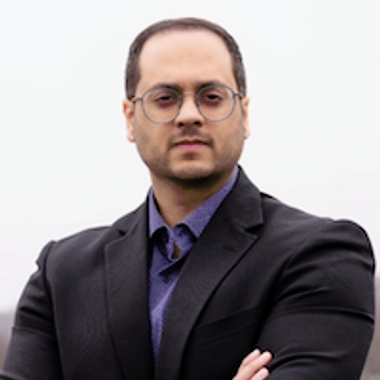
Join RAPS Boston for an in-person dual speaker presentation on the topic of practical regulatory and design control practices employed today to bring an AI-enabled wearable medical device to market. Our speakers are two seasoned regulatory veterans in the field of AI-augmented medical devices development, Robert Michalik, JD, RAC from RegulatoryPro Consulting, and Tahir Rizvi, M.S., VP of Regulatory Affairs, Beacon Bio.
In their two-part presentation, they will dovetail basic practices related to design, quality, regulatory and post-marketing issues that regulatory professionals need to consider and address when guiding an AI development team through the complex areas of product development and marketing clearance for Class II AI wearable devices.
The event will feature a case study of a Class II, FDA-cleared AI-enhanced neurological device indicated for use in sound sleep and wellness. Importantly, concepts and practical insights into Predetermined Change Control Plan (PCCP) design and execution will be highlighted.
From first submission to real-world evidence generation, AI-based devices present unique and evolving regulatory challenges. This session covers practical lessons across the full device lifecycle, the growing role of AI device tools in Drug trials, and how to structure a Predetermined Change Control Plan (PCCP) for iterative algorithm updates. We'll close with a forward look at where AI regulation is headed and what future frameworks may look like.
Learning Objectives:
- Understand the nexus and nested relationship in executing an AI-enabled wearable medical device design control development program. Realize that AI development is not different from traditional design control, it’s quite similar to standard software as a medical device (SaMD) but layered technology with novel technology and risks.
- Learn how to leverage AI/ML large language model technology to expedite new medical device development and regulatory clearance or approval
- Identify regulatory best practices and risk mitigation approaches to optimize clinical program development and agency engagement.
- Discuss leveraging Q-Sub meeting and post-submission interactions with FDA CDRH including Predetermined Change Control Plan (PCCP) negotiations to smooth technical & regulatory concerns to minimize delays in Class II 510(k) clearance.
- Learn how wearable AI devices are being used in nontraditional settings such as empowering pharmaceutical clinical studies
Agenda
| 4:30 — 5:00 pm: | Welcome reception and networking |
|
5:00 — 5:45 pm: |
Practical Aspects of AI-enabled wearable medical device development: From Design Control to 510(k) Submission, Robert Michalik, JD, RAC |
|
5:45 —6:30 pm: |
Bringing AI Wearables to Market: Practical Strategies from 510(k) to Commercialization, Tahir Rizvi, M. Eng |
|
6:30- 7:00 pm: |
Open Discussion; Q&A session |
Location
Cognition Corporation
24 Hartwell Avenue
Lexington, MA 02421
Light refreshments will be served at this event.
Cancellations and Refunds
RAPS reserves the right to cancel this program at its sole discretion. RAPS will not be responsible for travel or other costs incurred due to cancellation. All cancellation requests must be submitted in writing to [email protected]. Cancellations will receive a full refund minus a 20% administrative fee. RAPS is unable to accept cancellations by phone.
Substitutions
Paid registration substitutions may be accepted with written approval from RAPS for requests received before the start of the event. To transfer a registration, email [email protected] with the event title, name of the original registrant and the contact information for the new attendee.
Proof of Attendance
A certificate of attendance can be downloaded from the RAPS Learning Portal following the event.
Questions
Contact the RAPS Support Center:
Call +1 301 770 2920, ext. 200 (8:30 am–5:30 pm EST, Monday–Friday) or email [email protected].
Speakers
Practical Aspects of AI-enabled wearable medical device development: From design control to 510(k) Submission

Robert Michalik JD, RAC
Bringing AI Wearables to Market: Practical Strategies from 510(k) to Commercialization
Tahir Rizvi M. Eng
Sponsor