
Why collecting information isn’t the biggest challenge in regulatory intelligence
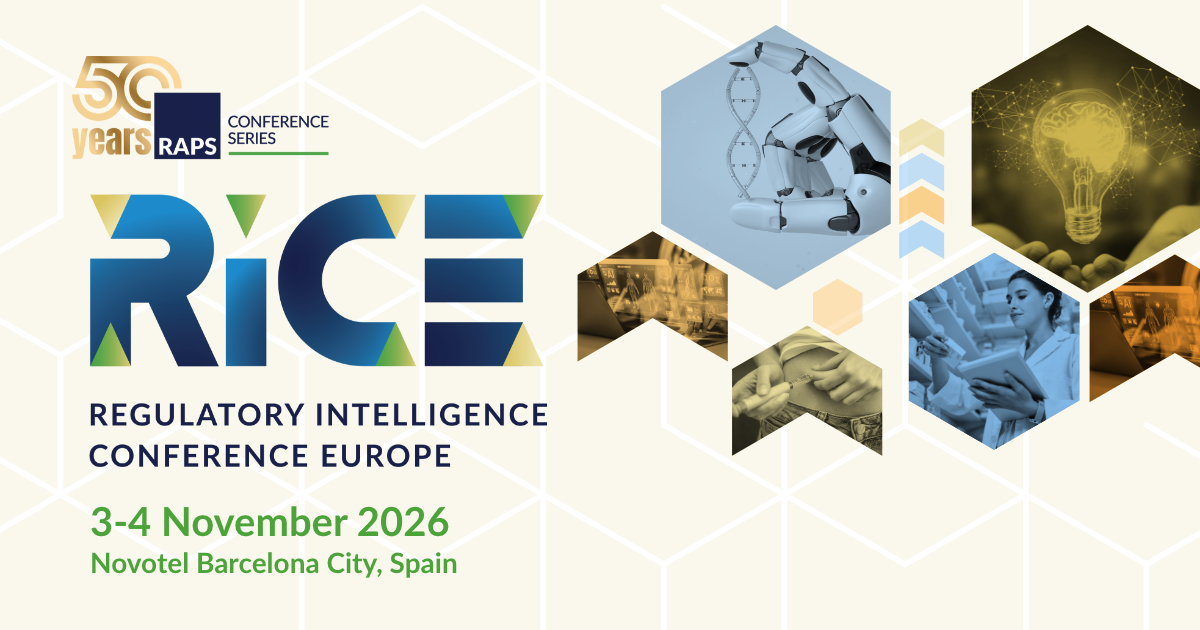
The RAPS Regulatory Intelligence Conference Europe is coming to Barcelona on 3-4 November 2026, where Europe’s regulatory intelligence community will unite to strengthen our collective knowledge as we transform regulatory information into actionable intelligence across all areas of healthcare, from pharmaceuticals to medical devices and IVDs.
We spoke with the conference planning committee to get their thoughts on the evolution of regulatory intelligence, their role in organisations, and what they are looking forward to at this year’s event.
What role does regulatory intelligence play in your day-to-day job responsibilities?
"Regulatory intelligence is a core part of my role because it helps transform external regulatory developments into actionable business decisions. My focus is not only on monitoring regulatory changes, but also on ensuring that emerging requirements, inspection trends, and regulatory expectations are assessed, prioritized, translated into actions, and embedded within our processes. It provides the forward-looking perspective that enables proactive compliance rather than reactive remediation.”
Barbara Bovy, Head of Quality Intelligence and QMS at UCB BioPharma
“Regulatory intelligence is a core part of my role. I use it to identify emerging regulatory trends, understand evolving health authority expectations, and translate that information into practical scientific and regulatory advice that supports development programmes and strategic decision-making. Increasingly, it’s also about helping the organisation move from simply tracking information to generating actionable insights.”
Ola Oyinloye, Regulatory Science and Intelligence Director, Novo Nordisk
“Intelligence is pivotal to my day in and day out. Our teams need up-to-date and accurate information to support their everyday decision making. And as a regulatory professional, I actively use intel every day, whether that is to support sustainability colleagues on emerging legislation like PPWR, to evaluate regulatory pathways and competitor intelligence for devices in development, or to understand what submission requirements are in play for our next launch. Reliable information helps guide decision making at a senior level, which helps to make sure we invest in the right strategies and avoid surprises that can cost the business down the road.”
Adam Gregory, Director of Regulatory Affairs, Advanced Wound Dressings and Operations at Coloplast
“We've set up a dynamic global regulatory intelligence team at Bausch + Lomb in the past year. This team proactively supports and drives reg intel-related activities in our organization. Reg intel is in-built into everything we do, if we think about it, and the landscape is ever changing. As a company who manufactures both medical devices and pharmaceutical products, it's a bigger challenge to keep on top of it.”
Alice Forde, Senior Director, Global Regulatory Affairs - Vision Care, Regulatory Information Management and Regulatory Intelligence at Bausch + Lomb
When did regulatory intelligence become a part of your career path, and how does that experience inform your day-to-day work?
“Regulatory intelligence has always been part of my work in regulatory affairs. Throughout my career, I’ve used it to understand evolving regulatory expectations and support scientific and regulatory decision-making. My current role in science and intelligence has given me the opportunity to focus on regulatory intelligence much more intentionally, bringing together information from multiple sources to identify emerging trends and help my organisation stay ahead of regulatory change.”
Ola Oyinloye
"It started early in my career when I was a young professional working on new product developments looking into new standards, guidance documents, legislative amendments to help create the best regulatory strategy for a device. Since then, I have taken ownership of tools, processes, and approaches to support the companies so my organisations can get most out of their regulatory intelligence. The end goal is creating a culture of curiosity in our teams for their regulatory surroundings and empowering our organisations to use intelligence as a competitive advantage.”
Adam Gregory
“Regulatory Intelligence became a part of my career path about 13-14 years ago when the initial draft revisions to the device directives happened in Europe. Since then, the importance of keeping up to date with new and changing requirements has been inherent in everything I do. Any decisions I make rely on having the most up to date, accurate regulatory intelligence.”
Alice Forde
“Although I formally took on a dedicated regulatory intelligence role two years ago, regulatory intelligence has been woven into my career from the very beginning. Keeping pace with new regulations and understanding where regulatory expectations are heading has always been critical to staying agile and helping organizations anticipate change rather than react to it. Today, that mindset is deeply embedded in how I work. It is not just part of my role, but part of who I am professionally.”
Barbara Bovy
What is one skill you think today’s professionals often overlook when it comes to regulatory intelligence?
"Stakeholder management. Once you have a tool or system and find a good way to systematically collect and collate intelligence that is important to the business, you are rolling. The big task is mobilising the organisation to hear about this intelligence, respect it and then commit resources to doing something with it. Often that requires a strong network in your organisation to make sure everyone is committed to the goal of keeping the business moving in the right direction. This is often complicated by projects, resource limitations, and general resistance to change that requires some strong stakeholder management to keep the wheels turning. The real value of regulatory intelligence is only realised once it actively impacts decision making and direction across the organisaiton."
Adam Gregory
“Using AI to help with searching, gathering and collating information. But don't forget the human in the loop!”
Alice Forde
"The ability to translate information into action. Many professionals are excellent at monitoring regulations, but the real value comes from understanding business impact, connecting the right stakeholders, and driving implementation. Regulatory intelligence is most effective when it enables decisions, not when it simply generates awareness.”
Barbara Bovy
“The ability to connect the dots. Collecting information is relatively easy. Understanding what it means, recognising emerging patterns, and translating those insights into actions that influence strategy is where regulatory intelligence really adds value.”
Ola Oyinloye
Bringing Europe's regulatory intelligence community together
The RAPS Regulatory Intelligence Conference Europe is where experts from industry, regulators, and notified bodies unite to share cutting-edge strategies for tracking, gathering, analyzing, and transforming the tremendous amounts of regulatory information we all receive into actionable intelligence.
Regulatory intelligence might seem like a solitary function. What does our regulatory community gain by coming together?
"No single individual or function can understand every regulatory development and its implications. Bringing the regulatory community together enables collective intelligence, benchmarking, knowledge sharing, and cross-industry collaboration. It helps us challenge our assumptions, learn from different perspectives, and identify emerging trends earlier. Most importantly, it allows us to move from fragmented responses to coordinated and proactive approaches that create greater value for our organizations and, ultimately, for patients.”
Barbara Bovy
“No single person or organisation has the full picture. Bringing the regulatory community together allows us to share perspectives, challenge assumptions, learn from each other’s experiences and ways of working, and better understand how regulatory thinking is evolving across different sectors and regions. Those conversations often provide insights that you simply can’t get from reading guidance documents alone.”
Ola Oyinloye
“Each organisation and sector has its own challenges. Luckily, everyone’s experiences are not totally unique. We have a lot to share and learn from our collective experiences. Things like how we communicate to senior management, how we mobilise the organisation, and how we filter the noise are all fantastic ways for for each of us to continue to improve how we work and tailor our approaches to maximise efficiency and output from what is often and overlooked mechanism in the business. By sharing our approaches, experiencing new systems and utilsiations of AI, we can support each other on our journeys instead of solving the same problems independently!”
Adam Gregory
“The knowledge that reg intel is not standalone — it plays a part in all of our day-to-day roles, and not just for regulatory personnel. Coming together helps us to better understand how that works and how better to build processes, benchmark and communicate intelligence to inform solid business decisions.”
Alice Forde
Why should regulatory affairs professionals join us at the Regulatory Intelligence Conference Europe?
“The regulatory landscape is evolving faster than ever, making it essential to anticipate change rather than simply react to it. The Regulatory Intelligence Conference Europe offers a unique opportunity to learn from peers, explore emerging practices, and strengthen the networks needed to turn regulatory insight into strategic advantage.”
Barbara Bovy
“Regulatory intelligence is evolving rapidly, and this conference is a great opportunity to learn how others are turning information into better regulatory decisions. It’s also a chance to build connections, exchange practical experiences, and stay ahead of emerging trends shaping our profession.”
The RAPS Regulatory Intelligence Conference Europe is part of the RAPS Conference Series, which includes the RAPS AI in Regulatory Conference, also taking place in Barcelona the same week in November.
Ola Oyinloye
“Regulatory Intelligence is more than just a support function. It’s a strategic capability for your organisation. Come to the Regulatory Intelligence Conference Europe to see how that capability is being expanded across the medtech and pharma section, how you can challenge your approaches and connect with colleagues who are sharing the same problems so you can team up to solve them together!”
Adam Gregory
“Key experts from across medical devices and pharmaceutical industries will come together to discuss state of the art approaches, processes and debate key elements. Don't miss out!"
Alice Forde
Can you tell us about one session you are excited for at this event?
“Inputs & Outputs: Regulatory Intelligence Processes Within Your QMS. I'm excited to hear expert speakers explain how to design a regulatory intelligence process as part of a QMS.”
Barbara Bovy
“I’m particularly looking forward to my presentation on Using Regulatory Intelligence to Drive Strategic Growth and Collaboration. As the volume and complexity of regulatory information continues to grow, understanding how we can use new tools to generate meaningful insights will be increasingly important for the future of regulatory affairs.”
Ola Oyinloye
“Using Regulatory Intelligence to Drive Strategic Growth and Collaboration. There is always something special about hearing regulators across sectors discuss how they are working and setting the stage for the future.”
Adam Gregory
“I am really excited for the Closing Session - Inspiration, Insights and Action. I know it will have tangible takeaways for all conference attendees.”
Alice Forde
Join Europe's regulatory intelligence community
At the RAPS Regulatory Intelligence Conference Europe this November in Barcelona.