Risk Management Principles for Devices and Pharmaceuticals, Third Edition
Table of Contents
Section I: Risk Management Regulations
Chapter 1 Risk Management Regulations in the US
Chapter 2 Regulations Related to Risk Management in Japan
Chapter 3 European Experience with Additional Risk Minimization and its Impact on Benefit-Risk
Chapter 4 Risk Management of Medicines and Biologicals in Australia
Chapter 5 Risk Management in Canada
Section II: Benefit-Risk Management Principles and Practices
Chapter 6 The Impact of Preclinical Planning and Study Outcome on the Risk Management of Biologicals
Chapter 7 Risk Management in Medical Devices and Artificial Intelligence
Chapter 8 Quality Risk Management: A Gateway to Quality by Design
Chapter 9 Quality Management Systems for Medical Devices
Chapter 10 Risk Management Principles and Processes for OTC Medicines
Chapter 11 Clinical Evaluation Reports
Chapter 12 EU Postauthorization Safety Studies (PASS), US Postmarket Requirement (PMR), and US Postmarket Commitment (PMC)
Chapter 13 Minimizing and Monitoring Safety
Chapter 14 Use of Pregnancy Exposure Registries and Outcomes Studies for Risk Management
Chapter 15 Clinical Evidence and Acceptable Benefit–Risk Evaluation
Chapter 16 Benefit-Risk Assessment: Art or Science
Chapter 17 Risk Management in the Future: Expanding the Use of Electronic Health Records in Drug Development
Section III: Case Studies in Risk Assessment and Management
Chapter 18 Postmarket Pharmacoepidemiology Database Study Development to Evaluate Long-Term Drug Safety—An Example, Prolia
Chapter 19 EHR Use for Stimulated Reporting of Adverse Drug Events
Chapter 20 RM During Peri-Approval Process: A Case Study of Actonel
Section IV: Risk Communication, Dissemination, and Implementation
Chapter 21 Social Science Theory as a Framework for Designing and Evaluating Pharmaceutical Risk Management Dissemination and Implementation Strategies
Chapter 22 Using Mixed Methods to Evaluate Therapeutic Risk Minimization Programs: An Introduction and Case Study
Section V: REMS
Chapter 23 Developing, Implementing, and Operating REMS Programs
J. Michael Sprafka, MPH, PhD, editor
About the Book
Available formats: print and e-book.
The benefit-risk assessment is a foundation upon which the development of medicinal products and medical devices are built. The process begins – and ends – with identifying, understanding, analyzing, and mitigating the risks of an investigation product.
Risk Management Principles for Devices and Pharmaceuticals, Third Edition, aims to document the rules and regulations regarding peri- and postmarketing risk management principles and practices, providing readers with the up-to-date information they need as they work to minimize the harms and maximize the help provided by the medicinal products and medical devices they seek to bring to market.
This updated book contains all the practical information of its predecessor, including preclinical, clinical and postmarketing risk evaluation; regional risk management requirements; benefit-risk assessment; pregnancy registry use; and quality risk management. The content is augmented by in-depth case studies that will provide readers with a concrete understanding of how to be a strategic partner on a risk management team within their organizations.
Within its pages, readers will find a greater understanding the regulatory environment of risk management in selected countries throughout the world, enhancing their ability to implement global risk management strategies.
Bonus: Free Book with Every Purchase
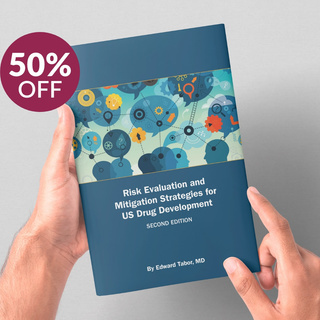
Buy this book and receive a complimentary copy of Risk Evaluation and Mitigation Strategies for US Drug Development, Second Edition by Edward Tabor, MD, published by RAPS in 2018. This book contains the history of the US Food and Drug Administration’s REMS program, as well as analysis of numerous guidance documents and policy changes that have modified EMS development requirements, format and processes.
Who will benefit from this book?
This book was developed for regulatory professionals of all levels of RAPS Regulatory Competency Framework, including newcomers and seasoned professionals as well as academics and governmental employees. Regulatory professionals at Levels 1 and 2 of the framework will be able to easily access relevant regulations and guidance in specific countries and how to apply them in one convenient place. For more senior professionals at Levels 3 and 4 responsible for global regulatory strategy, the book will serve as a valuable resource to facilitate strategic discussions on regulations and policy worldwide.
Risk management is increasingly complex, with the globalization of requirements; increased availability of data through advanced technology and digitization; and changes to the healthcare delivery system. The complexity and nature of clinical development and postmarket experience require a proactive, systematic, and scientific approach to measuring or assessing risk and developing strategies to manage or mitigate it. This book aims to help readers assess and mitigate risk as they work to bring new medicinal product to market.
Purchasing Options
This book can be purchased in the following formats:
- Digital e-book. Single purchase; accessible online via RAPS Library online reader and downloadable.
- Printed book.
This book can also be purchased as part of the following bundles:
- All Access Library (12-month digital subscription)
Published by RAPS © 2023. Paperback. 380 pages. ISBN (print): 978-1-947493-84-1. ISBN (digital): 978-1-947493-85-8.