
Experts weigh in on FDA’s transparency roadmap
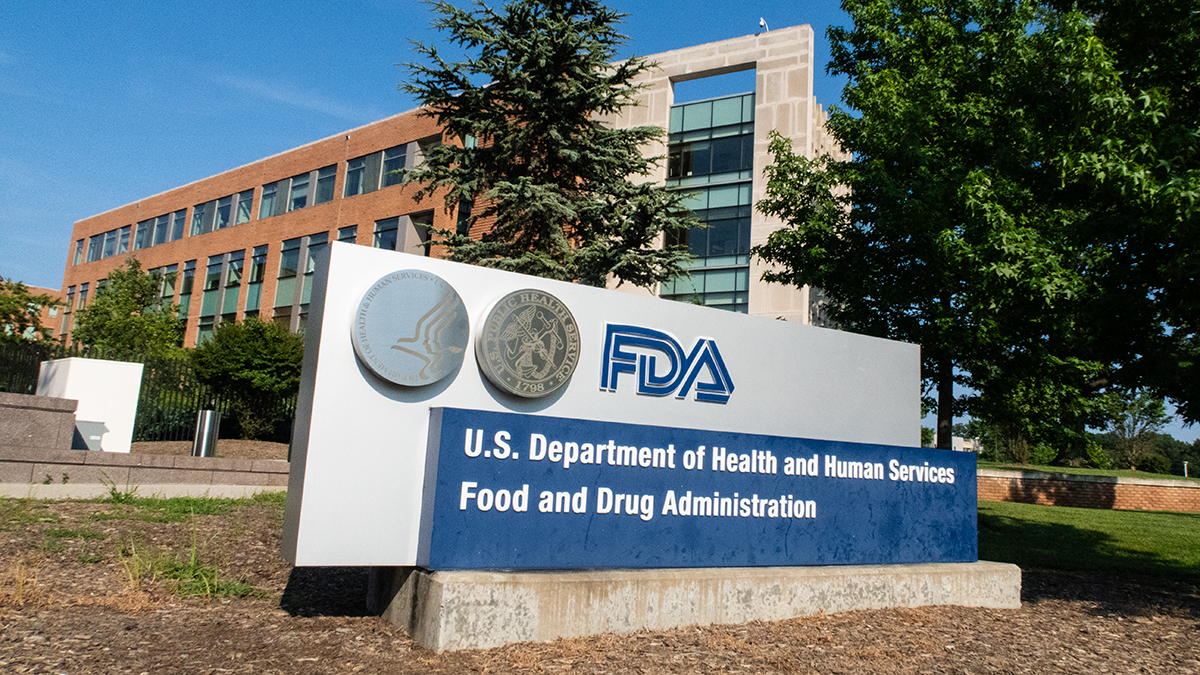
The US Food and Drug Administration (FDA) recently released a transparency roadmap outlining its achievements in FY 2026 and its priorities for FY 2027. Two key priorities for the future include a proposal to require public disclosure of new drug applications (NDAs) and biologics license applications (BLAs) upon filing, as well as proactively publishing all inspection reports.
Two former high-ranking FDA officials who spoke with Focus and who have previously advocated for increased transparency at the agency said they support the roadmap.
The roadmap was detailed in a blog post last week by Lowell Zeta, FDA's deputy commissioner for strategic initiatives. This initiative focuses on enhancing application disclosures, issuing Complete Response letters (CRLs), promoting patient-centered labeling, and providing access to inspection records.
Zeta said that “an agency that is open about its reasoning and processes is one that innovators can navigate with confidence, that investors can trust with capital, and that patients can rely on for honest answers. Transparency is therefore not merely a good-government value — it is an accelerant for the next generation of medical innovation.”
Critically, the roadmap suggests that the agency will initiate rulemaking to publicly disclose submission of NDAs, BLAs, abbreviated new drug applications (ANDAs), and “related applications” to increase transparency around product submissions.
CRLs
FDA reiterated its continued commitment to publishing CRLs in the blog post. In July 2025, the agency announced it would publish CRLs for unapproved products as part of a move towards "radical transparency" under former Commissioner Marty Makary. The agency also said it plans to issue a proposed rule on the matter this year. (RELATED: FDA publishes 200 complete response letters in transparency effort, Regulatory Focus 10 July 2025)
“FDA is committed to being as forthcoming as possible about the scientific basis for its regulatory determinations, to help address what some have seen as a historical imbalance in what information the public sees about FDA-regulated products,” Zeta wrote, noting that a previous analysis found that 85% of FDA’s safety and efficacy concerns specified in CRTs were not mentioned by sponsors when publicly announcing non-approvals. This pattern, he said, “risks misleading patients and investors alike.”
INDs
In the roadmap, FDA encouraged companies to pursue “greater transparency across the application lifecycle” by publicly announcing the existence of an Investigational New Drug Application (IND) upon filing.
Zeta said that the vast majority of applicants—96% of novel drug or biologic filings—are already disclosed.
Form 483s
FDA also plans to “build on” existing inspection observation datasets by proactively publishing redacted Form 483 reports and additional establishment inspection reports (EIRs) “where appropriate.” Currently, reports that are not released are made available upon request through a Freedom of Information Act (FOIA) request.
Medication guides
FDA also confirmed plans to issue a final rule that would establish a new type of medication guide called “patient medication information” for prescription drug products.
The final rule will establish an FDA-approved, one-page document with standardized format and content that will provide patients with “clear, concise, accessible, and useful written prescription drug product information delivered in a consistent and easily understood format to help patients use their prescription drug products safely and effectively.”
SEC MOU
In August, FDA signed a memorandum of understanding (MOU) with the Securities and Exchange Commission (SEC) which established a formal framework for sharing nonpublic information between the two agencies.
Under the agreement, the FDA is permitted to share relevant information regarding products, activities, and individuals or companies involved in the manufacturing or distribution of these products. In return, the SEC can utilize this information during the review of public company filings, enforcement investigations, legal proceedings, and civil actions.
This includes situations where an FDA-regulated company may have shared false or misleading statements with investors, such as regarding the status of FDA reviews, product approvals, or clinical trial results—situations that could influence investors’ decisions.
Zeta called the MOU a “significant milestone.” He said the agreement “reinforces the FDA’s transparency commitments by ensuring that companies cannot selectively communicate FDA regulatory developments to markets — and that when they do communicate, they do so accurately and completely. For sponsors, awareness of this formal interagency channel is itself a transparency measure: companies should understand that the FDA’s regulatory record is a relevant input to capital market oversight.”
Roadmap supported
The roadmap was supported by former FDA Commissioner Joshua Sharfstein, who told Focus that “the FDA’s new roadmap is a meaningful step forward for transparency at FDA. It recognizes that in one fell swoop, greater sharing of information and agency decision making benefits patients and clinicians, researchers, and regulated industry. I hope that FDA continues moving in this direction as there are important opportunities for progress.”
Sharfstein is the current vice dean for public health practice and community engagement at the Johns Hopkins Bloomberg School of Public Health. Sharfstein served as FDA’s principal deputy commissioner from March 2009 to January 2011 and chaired the FDA Transparency Task Force under former President Barack Obama.
Peter Lurie, president and executive director of the Center for Science in the Public Interest (CSPI) also endorsed the roadmap. Previously, Lurie was the associate commissioner for public health strategy and analysis at FDA, serving from 2014 to 2017. Lurie also led the FDA Transparency Task Force during his tenure at the agency.
“Greater transparency is good for science and it’s good for the public. It is useful for people to know if a product has failed. A product that is given to us that fails means it is more likely that a second product in the same class will fail as well. A company or an investor may be interested in taking their money somewhere else. This is one of those situations where the interest of the investor class coincides quite well with the interests of the public. It is not in the public’s interest for companies to be sinking money into categories of products that have been proven to be unsuccessful,” he said.
Lurie stated that the move to make NDAs public “is in my mind is even more substantial than the CRLs, as much as I am an advocat for CRLs. The reason is that making the public for one thing it logically leads to the release of CRLs. It takes care of the CRL problem on its own. The lack of acknowledgement of an NDA is a real problem.” He added that most companies disclose their NDA filings anyway.
Yet Eva Temkin, an attorney and partner at Arnold & Porter, stated that the proactive disclosure of CRLs could prompt legal challenges.
“FDA's regulations and broader confidentiality framework generally bar the agency from acknowledging the existence of an unapproved application, including a CRL to that application, not just the specific trade secrets the CRL contains, as well as other information contained in an unapproved application,” she said. “In addition to being out of sync with relevant substantive regulations, the way that FDA has posted CRLs for pending applications without public engagement runs counter to the Administrative Procedure Act and FDA’s own Good Guidance Practices, among other things.”
Temkin added that the initiative “not only that it doubles down on the disclosure of CRLs, but also that it pushes further to other arenas in which FDA intends to disclose information that historically has been treated as commercially confidential and so protected from disclosure.”
She said that welcomes the move to notice-and comment rulemaking on the CRL issue. “Stakeholders should have a real opportunity to weigh in, and FDA should consider that input before implementing any new policies.”