

FDA official expects user fee reauthorization despite midterm shakeup
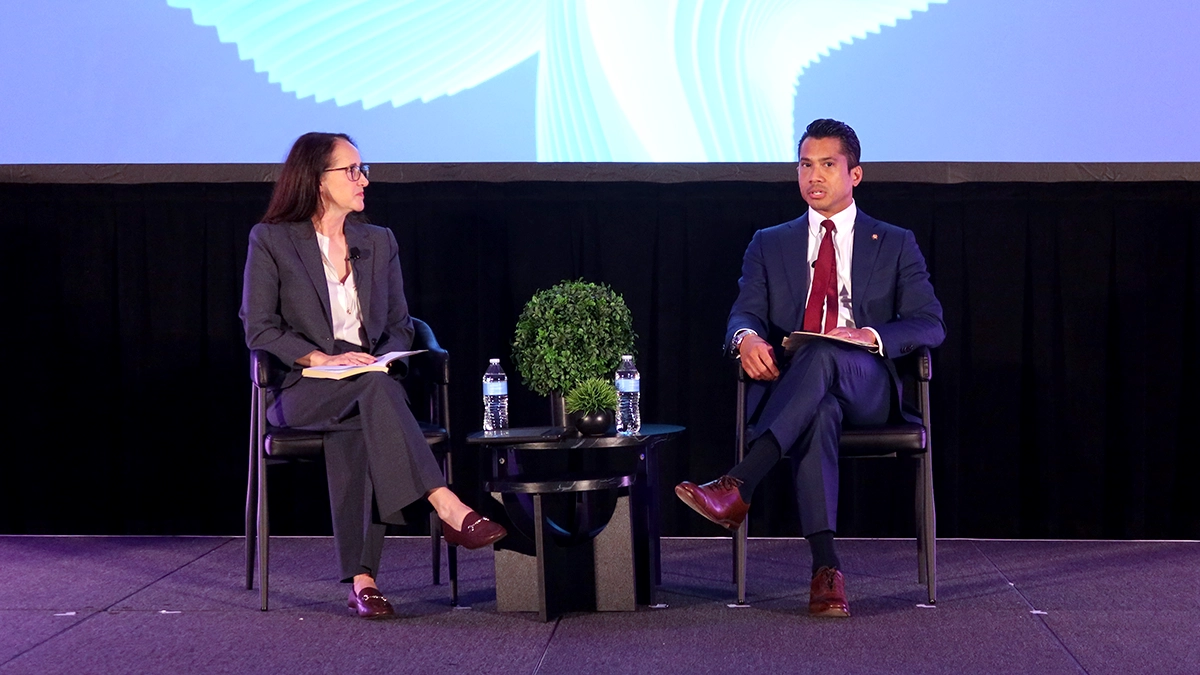
BETHESDA, MD – A top US Food and Drug Administration (FDA) official stated that the midterm congressional election results will not likely impact the reauthorization of the agency’s user fee agreements, which have been negotiated for FY 2028-2032.
Political outlook
Lowell Zeta, the acting chief of staff for Office of the Commissioner at FDA, made these remarks during a fireside chat at the Association for Accessible Medicines’ (AAM) GRx+Biosim conference on Wednesday. Zeta discussed the recent election and FDA’s policy priorities with Maryll Toufanian, senior vice president of regulatory strategy and government affairs at Amneal Pharmaceuticals.
When asked about the election’s implications on user fee reauthorizations, Zeta commented that “there was a shift on the Hill.” Yet he asserted that “I think the assumptions remain. There’s been great bipartisan support for the user fee programs.” He noted that the four user fee packages will be presented to new members of Congress and their staff, creating “educational opportunities” for FDA to inform those who are new to office. He expressed confidence in the agreements, stating that “we feel confident and stand behind them.”
The agency’s current user fee programs for medical devices, prescription drugs, generic drugs, and biosimilars are set to expire on 30 September 2027. According to a recent report looking at the agency’s FY 2025 budget, user fees accounted for 49% of FDA’s overall budget. The statutory reauthorization of these user fee programs is considered “must pass,” or essential, legislation.
With Democrats securing a majority in both the House and Senate, leadership changes are expected in two committees that oversee user fee legislation: the Senate Health, Education, Labor, and Pensions (HELP) Committee and the House Energy and Commerce Committee. Sen. Bernie Sanders (I-VT) is anticipated to lead the HELP Committee, while Rep. Frank Pallone (D-NJ) is poised to take over leadership of the Energy and Commerce Committee.
According to STAT News, Sanders was the sole senator on the HELP committee to vote against the Prescription Drug User Fee Act (PDUFA) during roll call votes in the reauthorization cycles for the PDUFA IV, V, and VI cycles, though he voted to reauthorize PDUFA VII.
Staffing and transparency
During a discussion of the agency’s priorities, Zeta emphasized that “staffing and hiring has been a top priority of mine.” He noted that FDA has hired 3,200 new staff, with 1,300 of these hires at its White Oak campus, with some employees being former FDA staff who have returned to the agency.
Another key priority for FDA is its ongoing commitment to transparency, according to Zeta. This includes the publication of “hundreds of complete response letters (CRLs).” FDA is also making redacted Form 483 reports and Establishment Inspection Reports (EIRs) available on the agency’s website.
In another move aimed at greater transparency, Zeta said that FDA has published a database on new approach methodologies (NAMs) used in approved regulatory submissions “to see what has worked.” These NAMs include computational modeling and organ-on-a-chip platforms that are used as alternatives to animal testing.