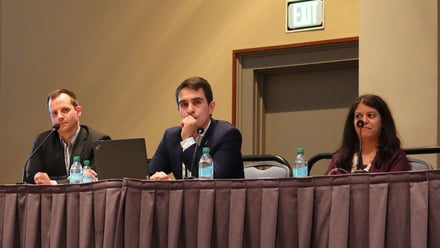
LISBON – Orphan medical device makers should be deliberate in their questions to expert panels and ensure their post-market clinical follow-up (PMCF) plan is realistic, according to experts who spoke at RAPS Euro Convergence 2026 on Thursday.
The US pharmaceutical industry expressed support for the US Food and Drug Administration’s (FDA) proposed framework for increasing access to treatments for ultra-rare diseases yet raised questions concerning various aspects of the program.
Welcome to the Journal of Regulatory Affairs, featuring articles on in vitro diagnostic (IVD) medical devices and the associated workflow between notified bodies and reference laboratories in the EU, the Eurasian Economic Union (EAEU) regulatory pathway, comparability protocols, commercial investigational new drug (IND) applications in the academic setting, and regulatory intelligence on cell and gene therapies.
This article presents a case study outlining the development and submission of a commercial investigational new drug (IND) application for a new chemical entity (NCE) developed at The Ohio State University (OSU). Drawing on their experience as academic drug developers directly involved in the project, the authors describe the regulatory pathway from academic discovery to IND submission. They explore the unique challenges and opportunities for academic drug development and provide valuable insights for other academic institutions embarking on similar paths to an IND submission. Key lessons include the importance of thorough preparation, regulatory strategy, interdisciplinary collaboration, regulatory expertise, and the ability to swiftly respond to feedback.
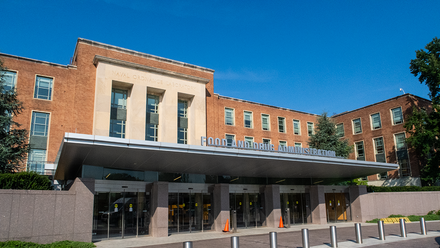
WHITE OAK, MD – The US Food and Drug Administration (FDA) has announced plans for a future pilot program intended to facilitate the real-time review of clinical trials by regulators, as well as the launch of two proof-of-concept studies that will gather and report endpoints and other signals to regulators in real time.
The US Food and Drug Administration (FDA) has released draft guidance on how sponsors can utilize next-generation sequencing (NGS) methods in nonclinical studies to assess the safety risks associated with gene therapy products. This guidance aims to support the submission of investigational new drug applications (INDs) and biologics license applications (BLAs).
Many of the bispecific antibodies (BsAbs) approved by global regulators have yet to demonstrate robust clinical benefit beyond surrogate endpoints that led to their initial approval, according to research published in BioDrugs.
Two former US Food and Drug Administration (FDA) officials have commented on and proposed changes to the agency’s recent draft guidance on the development of a plausible mechanism framework for individualized therapies to treat rare diseases.
The European Medicines Agency (EMA) has provided guidance to help manufacturers adhere to good manufacturing practices (GMPs) when using three-dimensional (3D) printing technology, also known as additive manufacturing, in the production of solid oral dosage forms.
Officials from the US Food and Drug Administration (FDA) and representatives from the generic drug industry met on 19 February as part of the negotiations for the fourth iteration of the Generic Drug User Fee Amendments (GDUFA) program. The topics addressed during the meeting included drug master files (DMFs), internal consultations, and imminent actions.