Euro Convergence: Deliberate questions, follow-up are key to orphan device development

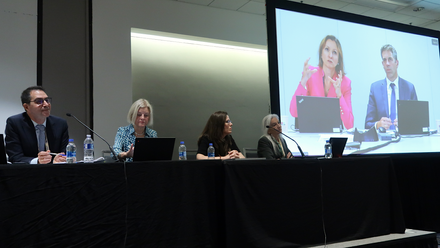
Left to right: Suzanne Halliday, Breda Kearney, Sandra Thiollière, Silvy da Rocha Dias, and Estelle Douceron. (credit: Ferdous Al-Faruque)
LISBON – Orphan medical device makers should be deliberate in their questions to expert panels and ensure their post-market clinical follow-up (PMCF) plan is realistic, according to experts who spoke at RAPS Euro Convergence 2026 on Thursday.
The experts noted the Medical Device Coordination Group’s (MDCG) 2024-10 guidance on the clinical evaluation of orphan devices and the recently concluded European Medicines Agency (EMA) advice pilot program, both of which were intended to help manufacturers with the difficult reality of developing products for small patient populations.
Regulatory landscape
Estelle Douceron, a senior consultant at RQM+, discussed the regulatory landscape for orphan devices. She told attendees that the Medical Device Regulation (MDR) imposes more stringent safety and performance requirements, meaning orphan device developers face greater financial burdens and higher clinical data-generation requirements. However, she said that the MDCG 2024-10 orphan device can help developers find a more balanced approach for such products.
"There is a real risk that essential devices for rare conditions could disappear from the EU market," said Douceron. "This is exactly why this MDCG [guidance] was developed to introduce a more proportionate and realistic approach."
To qualify as an orphan device, Douceron said the device must be for a small patient population and fill an unmet medical need. She added that the device must be intended to treat a disease or condition that affects fewer than 12,000 people in the EU annually, or a disease or condition that affects at most 5 in 10,000 people, and will only be used to treat at most 12,000 people annually. Furthermore, she said that the device must be used to treat a disease or condition for which there are inadequate treatment, diagnosis, or prevention options, or that it offers a significant clinical benefit over existing alternative treatments or the standard of care.
Douceron said MDCG guidance is intended to help patients maintain access to critical devices while giving manufacturers more flexibility and predictability.
"The core principle of this guidance is proportionality," said Douceron. "It acknowledges that traditional clinical evidence pathways are not always feasible for orphan devices, so instead, it allows limited preclinical data, greater reliance on non-clinical evidence, and a stronger emphasis on post-market data collections.
"Importantly, this does not lower safety requirements," she added. "It shifts when and how the evidence is generated."
Expert panels
Silvy da Rocha Dias, head of the office for expert panels and groups at the European Medicines Agency (EMA), discussed how expert panels were established under the MDR to provide independent scientific advice and assessment, and noted the recent creation of an expert panel specifically for pediatric and rare diseases. She also noted that generally, the panels were created to provide opinions to notified bodies for the clinical evaluation consultation procedure (CECP).
Da Rocha Dias said there have been several pilots and initiatives so far, including one to advise orphan device status (ODS) to support clinical development and clinical assessment based on the MDCG 2024-10 orphan device guidance.
She also provided insight into how manufacturers and experts evaluated the recently concluded orphan device advice pilot program that launched in July 2024, noting that two-thirds of respondents found pre-submission meetings to be helpful for an initial discussion with the applicant, while four-in-five found the final meeting to discuss a list of questions and issues raised by the expert panel helpful. However, only a one-third said the duration of the procedure would be sufficient to provide advice to applicants if a regular orphan device program is rolled out, and only a one-fifth said the time commitment required to participate in the procedure and provide the advice was manageable.
"The methodological support that we also gave from the EMA was also found to be very useful in certain cases, especially if it's a complex case," said da Rocha Dias. "Sometimes it can be very straightforward if you have very good quality data for epidemiology in Europe, and the support from EMA was very much supported by the experts.
"Interestingly enough, in terms of resources from the company side ... some actually found that it required a lot more resources than they thought," she added. "That might be the fact that this was a new process, and it's still very new to many manufacturers, but we do think that having those resources early, will definitely be a payoff in the end."
Pilot program
Sandra Thiollière, regulatory affairs director at Carthera, discussed her experience leading the orphan advice designation and the subsequent expert panel consultation for her company. Her company is developing a transient ultrasound-mediated blood-brain-barrier (BBB) disruption device to be used with chemotherapy to increase intracerebral bioavailability to treat grade IV primary malignant brain tumors. She noted that they submitted a letter of interest through the EMA ServiceNow portal, which enabled them to include administrative and device information.
At this stage, Thiollière said her company needed to justify its entry into the pilot program using the prioritization criteria by certifying that it is meant to treat a life-threatening disease or condition, is intended for a pediatric population, and is a novel device. She also noted that her company needed to submit specific questions for the expert panel.
"To be honest, in our case, those initial questions have evolved significantly later on, because we were preparing more and more for these interactions," said Thiollière. "However, it seems important here to show the expert panel ... that you have a clear and well-reasoned view on the topics you want to address.
"My main recommendation here is to take some time to clarify and to clearly define your objective as a company," she added. She emphasized that it is important for companies to ask themselves what they consider a successful consultation, so they don't waste time asking questions that ultimately yield responses they can't use.
"You need to identify the key aspects of your development where the expert panel input is the most valuable," said Thiollière. "It's essential to anticipate now at this stage, the next steps you will need to build a solid and comprehensive clinical data package to support both the designation request and the clinical advice."
After being accepted into the pilot, Thiollière said her company compiled dossiers using dedicated templates and received feedback on three questions from the expert panel, which included whether the data they planned on collecting would be sufficient, the feasibility of relying on clinical data from other similar programs, and whether their proposed post-market clinical follow-up (PMCF) strategy was sufficient.
Even though they did not have direct interaction with the expert panel and the responses were written—without the ability to ask immediate follow-up questions—Thiollière said the overall experience was helpful.
"Our interactions with the EMA coordinator were extremely positive," said Thiollière. "We found there was a clear willingness to help us move efficiently through each step of the process, even if the expert manager was still learning.
"Also, as part of this panel program, we also found that the timelines were reasonable, especially when compared to other regulatory interactions," she added.
Thiollière noted, however, that her company was repeatedly reminded that the final conformity assessment was the responsibility of the notified body, which raises the question of how much weight the expert panel's advice carries in the final decision. She said the process would have been even more helpful if the notified body had been directly involved.
Notified bodies
Breda Kearney, clinical regulatory lead for BSI's global regulatory compliance team, emphasized that receiving orphan device status isn't an exemption that gives the company a free pass or easy route to market. Instead, she said it was a structured pathway for responsibly managing regulatory uncertainty without reducing safety expectations and maintains the general safety and performance requirements (GSPR).
"As a notified body, we remain fully accountable for the conformity decisions under the MDR," said Kearney. "The expert panels are able to provide advice on the designation of the orphan status, advise on the clinical development strategy, but it's the notified bodies, ultimately, that are the ones that are held accountable for the conformity decision."
Kearney said they must first verify the orphan device status of the product in question and then assess the technical documentation using the same conformity and principles as a non-orphan device. However, she noted that notified bodies can issue certificates with conditions or provisions, which is more commonly done for orphan devices. She also noted that they want to apply proportionality to the product evaluation and take into consideration the realities of having a smaller intended patient population, the ethical and practical limitations of conducting studies in such small populations, the fact that it may be for pediatric populations, and the financial realities of making a product for a small population.
Kearney said PMCF becomes an important factor when it is difficult to generate premarket data due to population size and other considerations and becomes a critical part of the conformity assessment.
"What the notified body expects when it comes to the PMCF is a detailed, structured, and credible PMCF plan," said Kearney. "It is really important that it's a well-thought-out plan that you can actually implement and will gather the data that you need.”
Kearney said manufacturers need to be transparent about how they intend to bridge the gap between premarket data and PMCF data in their PMCF plan. She also said it's very important that they provide realistic timelines in the post-market stage that align with actual usage volumes.
"Your PMCF plan, when it comes to orphan devices, is the key area that the notified bodies are going to focus on as part of our assessment, because it is the critical part where we're going to get the data that's missing," said Kearney. "How do you get this data? You can use registries, prospective PMCF investigations or real-world clinical data depending on the device, and there may be advice available from the expert panel on the best ways to get the data."
Kearney emphasized that one of the key regulatory tools at the disposal of notified bodies is the issuance of certificates with limitations or conditions. If the manufacturer doesn't meet their PMCF requirements and the conditions attached to their certificate, their certificate could be put at risk. She noted that's why manufacturers should be realistic and offer feasible PMCF plans to address their data gaps, as these are linked to their certificates.
"I would strongly encourage anyone with orphan devices or orphan device indications to engage in structured dialogue early with your notified body to make sure that we're all aligned on the designation, [and] what are the limitations of our [PMCF] plans," said Kearney.