FDA announces efforts to advance real-time clinical trials
WHITE OAK, MD – The US Food and Drug Administration (FDA) has announced plans for a future pilot program intended to facilitate the real-time review of clinical trials by regulators, as well as the launch of two proof-of-concept studies that will gather and report endpoints and other signals to regulators in real time.
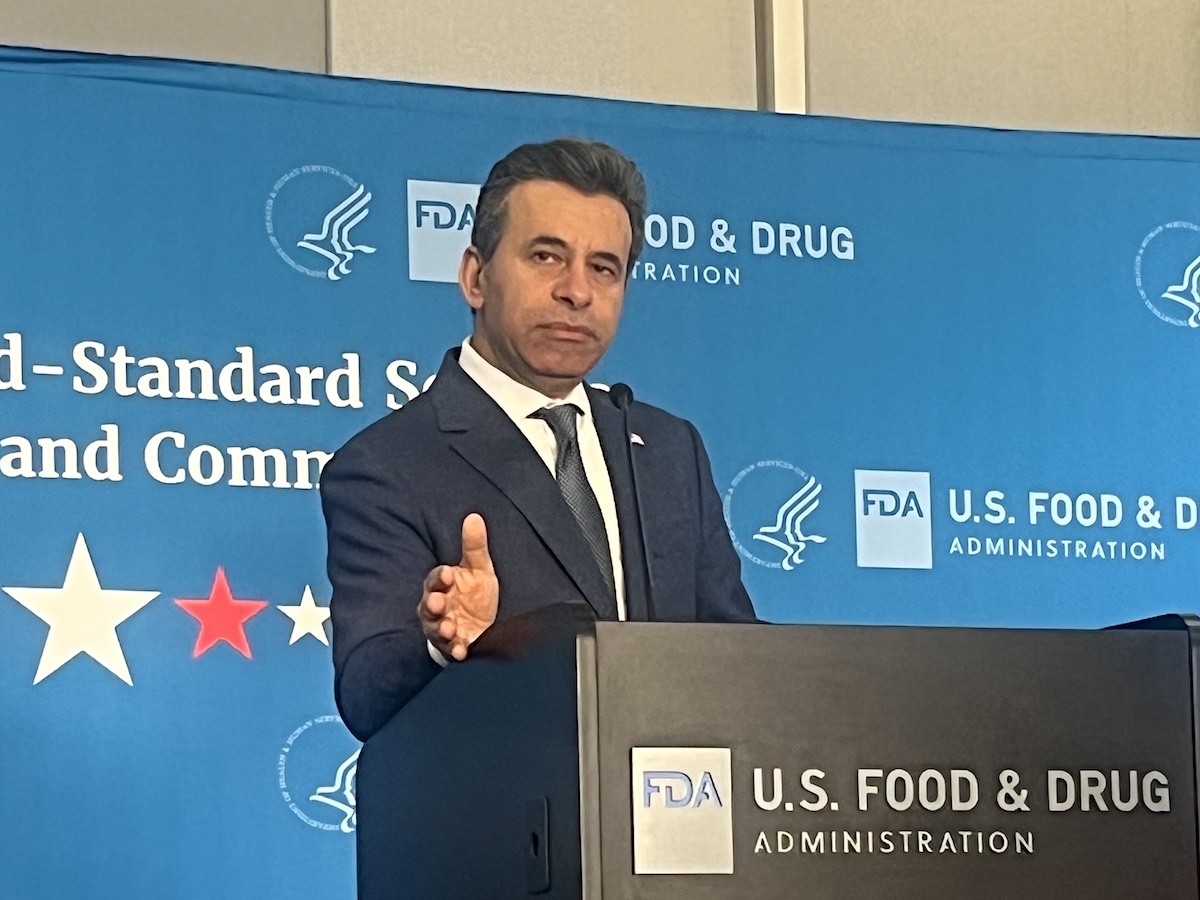
Speaking at FDA’s White Oak campus on Tuesday, FDA Commissioner Marty Makary highlighted the benefits of the pilot and announced the agency's partnership with AstraZeneca and Amgen in two proof-of-concept studies which will report signals to the agency as they occur.
FDA is looking to expand on its proof-of-concept studies by launching a broader pilot program for artificial intelligence-enabled optimization of early-phase clinical trials. In a Federal Register notice, the FDA announced that it is seeking input on a pilot program aimed at evaluating how AI-enabled technologies can enhance the efficiency, speed, and quality of decision-making in early-phase clinical trials. The deadline for submitting comments is 29 May; the agency said it plans to announce selection criteria for the pilot in July and to select participants in August.
Under the proof-of-concept program, reviewers will be able to assess safety signals in real time instead of waiting for sponsors to gather and submit data. The agency said this new approach could help shorten the time required to get new drugs to market.
AstraZeneca is conducting a Phase 2 multi-state trial, called TRAVERSE, which focuses on patients with treatment-naive mantle cell lymphoma. Meanwhile, Amgen is running its STREAM-SCLC Phase Ib trial for patients with small-cell lung carcinoma. The companies will be leveraging Paradigm Health’s platforms for real-time data review, and FDA said it has already received and validated signals from the AstraZeneca trial.
Touting the advantages of real-time clinical trials, Makary said, “If a patient in a clinical trial develops a fever or is hospitalized or a tumor shrinks and the radiologists read the report of the new tumor size, the FDA regulators can see in the cloud in real time exactly what is happening with the pre-agreed-upon end points and safety signals.”
Makary further noted that the current clinical trial data collection system is inefficient. “After a trial is complete, sponsors would collect data, manually enter it in multiple systems, analyze it and package it at the end of the Phase 1 trial, and at the end of Phase 2 trials and then again at the end of the Phase 3 trials. It’s tedious.”
Makary said that in addition to the goal of delivering more medications faster. “Today’s actions are a step towards a broader goal of seeing more continuous trials.
“For the last 50 years, the medical profession has sadly grown to accept a 10-to-12-year timeframe for new drugs to come to market. As a result, patients are getting drugs in a delayed fashion when they could be getting them sooner. Today is a milestone day for us to challenge that deeply held assumption that it must take 10 to 12 years,” Makary said. “We have to ask some big questions, can we do better? Can we use new technology? Can we make our communications with sponsors more efficient?”
Jeremy Walsh, the chief AI officer at FDA, stated that the pilot program aims to reassess the types of data the FDA needs to make decisions on clinical trials. He mentioned that, as a starting point, the pilot will utilize signal data.
“FDA is overloaded with data, and sometimes we do not need all this data … We already have tons of data. We have been getting tons of data for decades. Can we make a decision based on less information? Can we make a decision based on signal information?
“We are reimagining what information we need when we need it in order to make a decision,” Walsh added.