Convergence: Rebuilding public trust in science with empathy, transparency
Editor's note: This article was updated on 16 October 2025 to clarify the intent of a quote from Michael Morton when discussing the limitations of clinical trials.PITTSBURGH — As science continues to advance, it is outpacing the public’s trust in new breakthroughs, and there is a growing need for regulators and sponsors to communicate the value of science to society, experts told attendees at the RAPS Convergence 2025 conference.
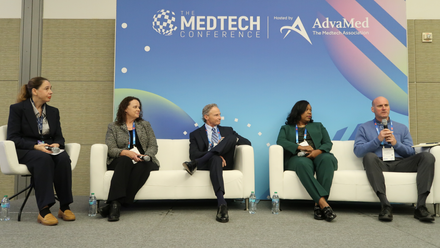
“We have strong belief in the rigor of our regulatory frameworks, but we also know the truth: the work that we all do to advance medical medicine and medical devices is currently happening against a strong headwind,” moderator Megha Iyer, director, global strategic regulatory affairs, Thermo Fisher Scientific, told attendees. “Public trust is eroding, and the very foundation of science is being questioned.”
Regulators and sponsors will not solve this issue in silos. Sharing and listening is the core of the problem and the solution. “We must connect,” she said.
The task is to recognize that scientific advancement has moved faster than public trust and take steps to communicate the rigors of regulatory decision-making to the public, while also noting that there is a delicate balance between speed and safety of products. What’s more, regulators also should find ways to connect with and listen to people who feel left behind or are skeptical of regulatory decision-making of drugs and devices.
“The reality is that our love for science, scientific rigor, discovery, life-saving results is currently not enough. We must do more. And our opening plenary is not a battle. It's a call to purpose,” Iyer said.
Erosion in public trust
Daniel Salmon, director of the institute for vaccine safety at Johns Hopkins Bloomberg School of Public Health, pointed to the results of a recent Kaiser Family Foundation poll that found trust in the Centers for Disease Control and Prevention (CDC) has declined from 85% at the beginning of the COVID-19 pandemic to 57% in July.
“[T]rust in CDC is not the same as trust in science, though CDC does a lot of science, but they’re responsible for translating science to the public, making recommendations and communicating,” Salmon said. “I think we have to look at that really seriously, how so much trust could have been lost in such a short amount of time.”
The intersection of the decline in public trust is where science and the public don’t meet, Salmon said. For instance, it is clear to regulators and sponsors what it means when stating a vaccine is safe and effective, but the public has a different definition of safety.
“When we're using a regulatory definition with the public, we may be very confident in what we’re saying, but we’re also not giving the public what they want, which is they want to understand what the risks and benefits are for somebody like them,” Salmon said.
It is important to communicate with people “in a way that’s meaningful to them, acknowledging both what we know and what we don’t know,” he said.
When scientists communicate with the public, clinicians, and the media, “we need to be empathetic and understanding, not insult people’s intelligence [by] overly simplifying, and give them information that matters to them,” Salmon said.
Transparency in communication
Communicating medical information to patients and their families can be challenging, Prerna Mewawalla, associate professor at Drexel University, told attendees. Conveying a message of hope and empowerment, even during serious diagnoses like multiple myeloma where the disease is not curable, can help patients understand what they are capable of doing with a disease once they undergo treatment.
The message needs to be simple, relatable, and a two-way conversation, Mewawalla said.
“I think for the patient, true transparency truly feels like when they really feel heard and respected and not feel judged in the process,” she said.
This also applies to drug labeling, Mewawalla added. Making a label patient friendly with clear instructions and including visuals could help reduce the number of mistakes, missed doses, improper storage, and situations where a patient is not using a device appropriately.
On the regulator and sponsor side, it is a “constant question” of how much data are enough to bring a device to market, Michael Morton, senior policy advisor at Medical Alley, told attendees. An agency and a sponsor may not always agree on whether the data are enough to prove safety and effectiveness of a product, he noted.
Pivotal studies can address “safety and effectiveness questions but [are] not going to have enough patients or enough duration to answer all those low-frequency questions,” Morton said.
Salmon said that he is hopeful that regulators and sponsors can rebuild trust lost by the public, pointing to the huge advancements in science made over the last 75 years.
“The pendulum may have swung, and I believe it'll swing back. And I think it’s up to everybody in this room—in all of us and scientists around the world—to speak with the passion that brought us to science and the drive for innovation and to make people’s lives better,” he said, “And with that, I think we have a path forward where our best days are ahead.”