
Accelerated approval pathway for oncology: Summary of approvals and withdrawals, 1992-2026
Abstract Cancer remains a leading cause of death, driving demand for therapies through the US Food and Drug Administration (FDA) accelerated approval (AA) pathway, which approves drugs based on surrogate endpoints pending confirmatory trials. This study examined AA indications approved and withdrawn in the context of total approvals. A total of 347 indications were approved under the AA pathway from 1992 through June 2026, of which 243 (70%) were oncology indications; 34 oncology indications were withdrawn, and 124 received full approval based on verified clinical benefits. Withdrawals were based on confirmatory trials failing the primary endpoint (41.18%), adverse events or death (32.35%), or incomplete trials (26.47%). Therapeutic indications were analyzed by withdrawal reasons, average time to indication withdrawal, full approval, and regulatory reform timelines.
Keywords – accelerated approvals, cancer, confirmatory trials, withdrawals
Introduction
Cancer is one of the leading causes of death worldwide. In 2026, the National Cancer Institute estimated that there would be over two million new cancer cases and over 600,000 cancer-related deaths in the US.1 The rate of cancer incidence in men and women was 450.7 per 100,000, and the cancer-related mortality rate was 143.2 per 100,000 in men and women based on the 2019 to 2023 data, with men experiencing a higher mortality rate. Colorectal, lung and bronchus, breast, skin melanoma, and prostate cancer are some of the most common types of cancer. The number of cancer survivors is projected to increase by 30.4% by 2040. Given the fast progression and unmet medical needs in oncology, early detection and treatment are key. Therefore, regulatory pathways that accelerate patient access to novel therapeutics have become central in drug development.1-3
The FDA established the AA pathway in 1992.4 The pathway often utilizes single-arm studies or Phase 1 trials and supports faster approvals of therapeutics based on surrogate endpoints that are reasonably predictive of clinical benefits such as overall response rates, progression-free survival, and tumor shrinkage. Full approval or conversion is contingent on post-marketing confirmatory trials demonstrating verified clinical benefits.4,5
Over the decades, several laws have shaped the AA pathway. The Prescription Drug User Fee Act of 1992 (PDUFA)6 authorized the FDA to levy fees from pharmaceutical sponsors in exchange for expedited/priority review timelines.7 The Food and Drug Administration Safety and Innovation Act (FDASIA)8 of 2012 introduced further reforms by eliminating the necessity to demonstrate comparative therapeutic advantage over existing therapeutics. FDASIA also incentivized innovation in underserved areas, including the breakthrough therapy designation, the rare disease priority review designation,6,7 and the qualified infectious disease product designation aimed at combating antimicrobial resistance.8
This led to a significant reduction in FDA review times, from 26.6 months before PDUFA to 9.9 months after FDASIA came into effect in 2012.9 Over a 10-year period from 2013 to 2023, a third of cancer drug approvals used the AA pathway.10 As of 31 March 2026, the FDA Center for Drug Evaluation and Research had granted 347 AA indications based on surrogate endpoints, of which 243 (70%) were oncology indications. Of 210 AAs that were converted to full approval, 147 were for oncology therapeutic indications, supportive care products, and changes to dosing or formulations.11 Among those, 124 (59.05%) were therapeutic indications that converted to full approvals based on verified clinical benefit.12
While the AA pathway has facilitated early access to promising therapeutics, it has faced increasing scrutiny due to concerns regarding unconfirmed clinical benefits and the growing number of AA oncology drug indication withdrawals in recent years.10 Withdrawals typically occur when postmarket surveillance trials or Phase 3 confirmatory clinical trials fail to demonstrate the anticipated clinical benefits based on the primary endpoints or when adverse events exceed the benefits of the drugs in the intended study population.14 Some primary endpoints include overall survival, progression-free survival, and objective response rates. These withdrawals have raised critical questions about the balance between rapid drug access and ensuring long-term efficacy and safety in oncology trials. Therapeutic withdrawals are not new occurrences, 26.1% of AA drug initiations in oncology within the US were later withdrawn due to lack of benefit.15 A single drug may hold multiple indications; therefore, withdrawals for a specific drug indication do not mean the drug was withdrawn for other indications.
More recently, the Food and Drug Omnibus Reform Act of 2022, which was part of the Consolidated Appropriations Act of 2023, strengthened the AA pathway by requiring that confirmatory clinical trials be ongoing before AA of therapeutics.16 Understanding why these withdrawals occur is essential for identifying trends and opportunities for improvement. Prior studies, such as the systematic review by Onakpoya and colleagues, which investigated 462 withdrawn medicinal products between 1953 and 2013, found that many medicinal products worldwide were withdrawn mainly due to adverse events related to hepatotoxicity, neurotoxicity, cardiotoxicity, immune reactions, and hematological toxicity.13 Differences in withdrawals were also observed, as only 43 of the total drugs were withdrawn worldwide.13 Patel and colleagues also examined drug withdrawal processes across multiple countries, revealing similarities between the US, UK, and EU, but noting Australia’s longer withdrawal process.17
In addition, other studies have investigated and found discrepancies in the number of drugs withdrawn by the European Medicines Agency and the FDA. For example, research by Cramer and colleagues shows that of the 23 cancer therapeutics withdrawn in the US by 2023, 9 were still marketed in Europe.18 Hakariya and colleagues conducted a cross-sectional study of 23 cancer drugs withdrawn from the AA pathway, highlighting the international disparity in regulatory outcomes, noting that while 52% of these cancer drugs sought marketing authorization in the EU, 83% remained approved by the European Medicines Agency, and 100% were still approved by Japan’s Pharmaceuticals and Medical Devices Agency as of 2023.19 This highlighted the need for harmonized global guidelines and reporting of adverse events among countries, as it is critical for the timing and promotion of medicinal product withdrawals. This contrast between the regulatory decisions within the different agencies and countries raises important questions about the consistency and rigor of postapproval monitoring and regulatory decision-making globally.
A study by Issa and colleagues noted that, by 2007, an average of 1.5 drugs were withdrawn per year in the US and Canada.20 The study of drugs withdrawn between 1990 and 2009 had a median time interval of 3.5 years from approval to withdrawal, however, that average has increased since 2020.13 It was reported by Onakpoya and colleagues, that the median time from product launch to withdrawal was found to be 10 years for drugs after 1960 and 18 years for all drugs from 1953.13 The study found that the African continent had significantly lower amounts of withdrawals compared to the other continents. This was largely attributed to limited regulatory and pharmacovigilance capacity across the African continent.13 This suggests differences in regulatory stringency and postmarket requirements among regulatory agencies around the world and raises questions about the robustness of the confirmatory evidence required by regulatory bodies.
Despite the earlier access provided by the AA program, the long-term safety and efficacy of these drugs remain uncertain in some cases. Naci and colleagues found that only 42% of AA indications granted between 2009 and 2013 had their efficacy confirmed in postapproval trials, with many relying on surrogate markers rather than clinical outcomes.14
In examining the regulatory outcomes of AA drugs, Gyawali and colleagues found that the most common outcome for cancer drugs that failed to meet primary endpoints in postmarket clinical trials was voluntary withdrawal.21 The investigators found that the FDA revoked an indication in only one case – bevacizumab, for metastatic breast cancer. The remaining withdrawals were voluntary from the sponsor organizations.22 These findings highlight the evolving landscape of accelerated drug approvals, where some drugs remain available for some indications despite failed confirmatory trials for other indications. This study aims to examine trends in AA drug withdrawals, explore trends by indication class and by withdrawals of fully approved drugs, and examine time differences from accelerated approval to regular approval or withdrawal of the therapeutic product. This provides regulatory professionals with data-driven insights on the historical FDA approval and withdrawal patterns, drug indications, and trial phase trends to support evidence-based regulatory strategies and decision-making.
Materials and methods
Publicly available data on all AA therapeutics,11 AA drug or biologic withdrawals,22 and AA drugs or biologics with verified clinical benefits23 were extracted from the FDA websites. Withdrawal data were current as of 22 June 2026, while the total approvals and verified clinical benefit datasets were current as of 31 March 2026.22,23 These data were supplemented with insights from peer-reviewed literature, including journal articles and FDA reports on the status of therapeutics under the AA program.24 The number of withdrawals was analyzed and grouped across four distinct time periods: 1992-1999, 2000-2009, 2010-2019, and 2020-2026. This grouping allowed for decade-to-decade comparability and alignment with important regulatory milestones such as the PDUFA, FDASIA, and Consolidated Appropriations Act of 2023. The authors examined therapeutic indications approved under the AA program that were later withdrawn, as well as those that received regular approval, and identified the frequency of drug indications. We also evaluated the average time from accelerated approval to therapeutic withdrawal or to full approval by indication.
Results
A total of 34 oncology AA drug indications were withdrawn. Among the withdrawn therapeutic indications, 6 were initially approved for two or more indications, whereas 21 were each approved for one indication, respectively, before withdrawal, as summarized in Table 1.22 Of the 34 withdrawn since the program’s inception, the majority (82%) were withdrawn between 2020 and 2026, more than four times the total number withdrawn in all prior years combined, as shown in Table 2.11
Table 1. Withdrawn drugs, indication, reason for withdrawal, and time between approval and withdrawal, 2010-2026 (n=34)a
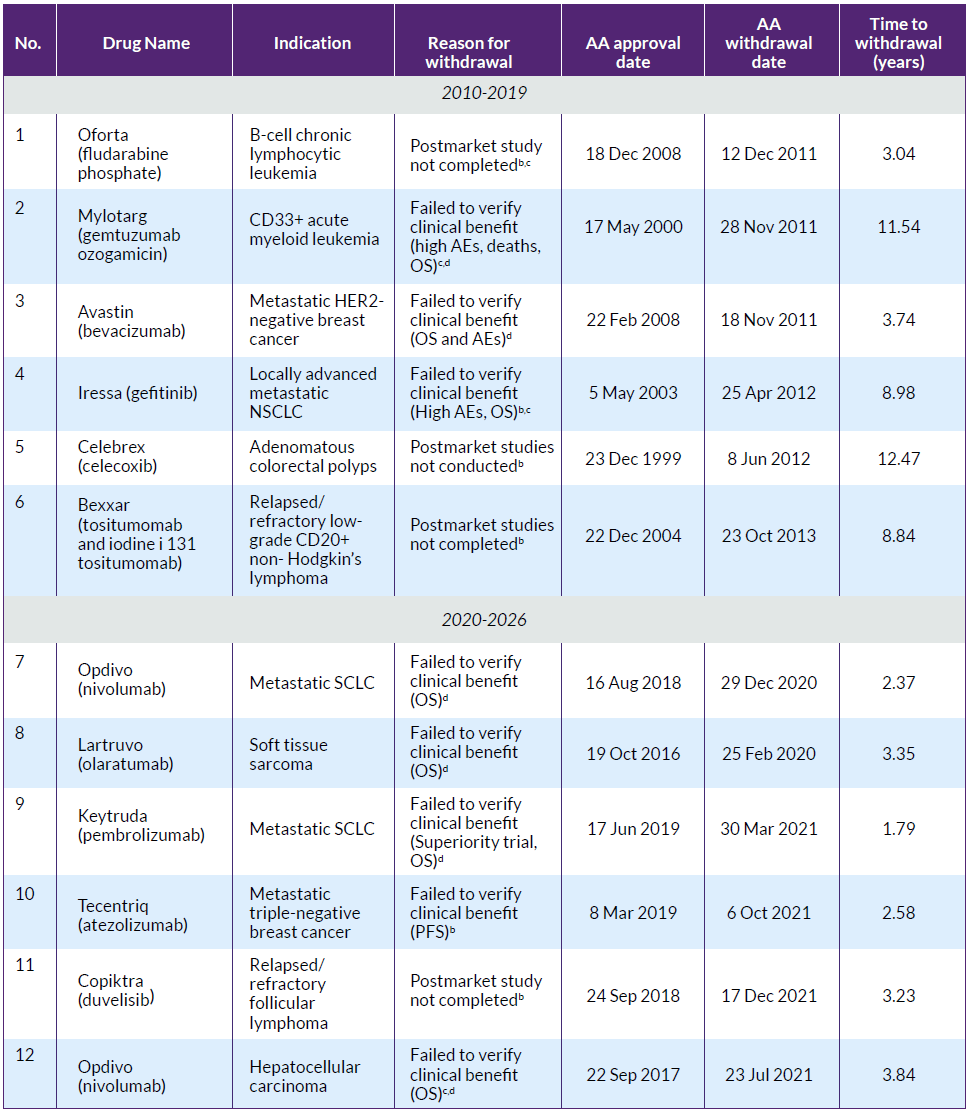
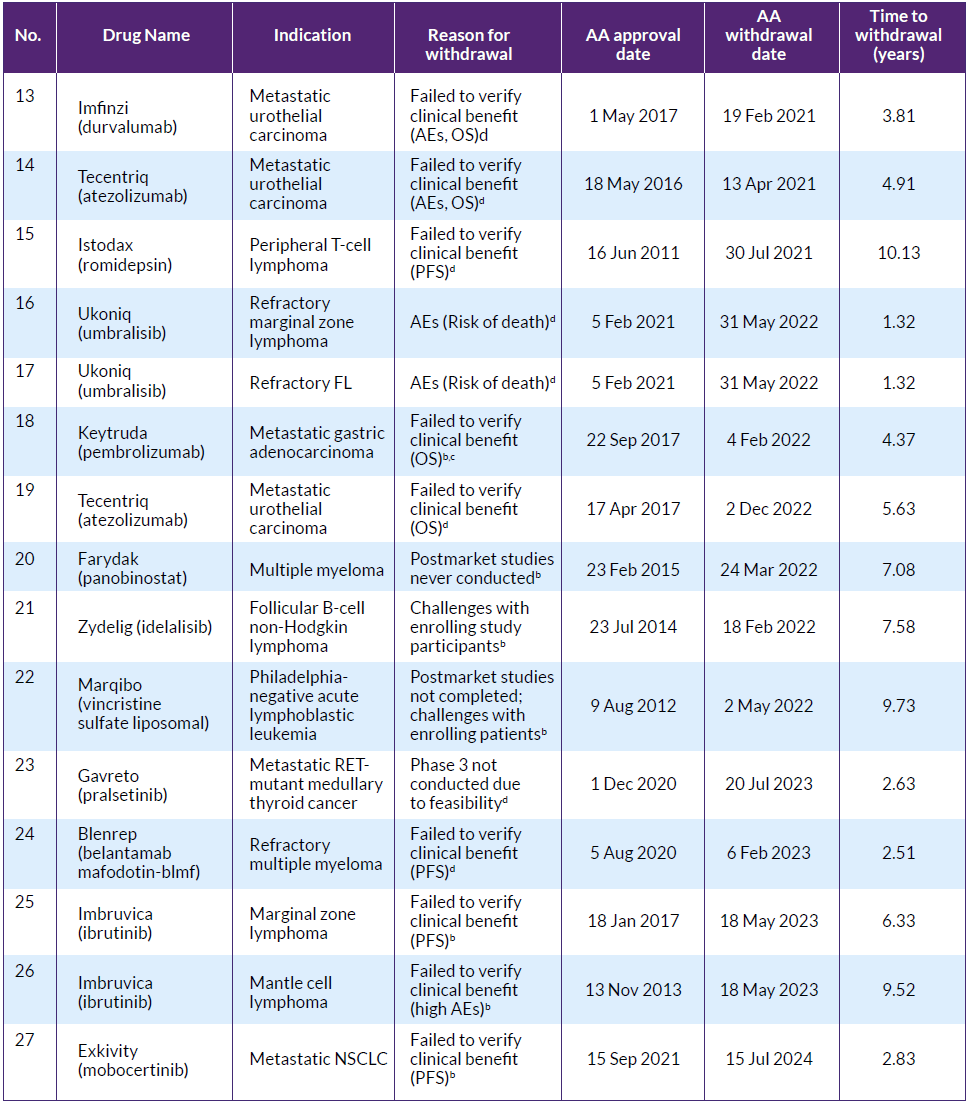
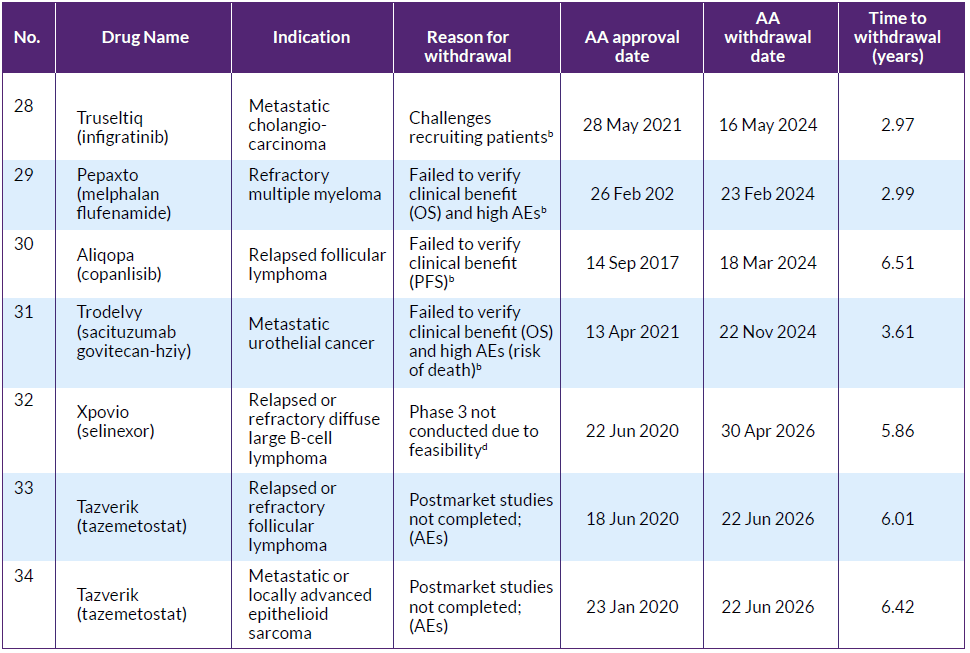
AA, accelerated approval; AE, adverse event; FL, follicular lymphoma; NHL, non-Hodgkin lymphoma; NSCLC, non-small cell lung cancer; OS, overall survival; PFS, progression-free survival; SCLC, small cell lung cancer.
aThere were no drug withdrawals between 1992 and 2009. bClinical trial phase at withdrawal is Phase 4. cRe-approved by FDA. dClinical trial phase at withdrawal is Phase 3.
Table 2. Oncology AAs by time period: AAs, withdrawals, and full approvals or conversions, 1992-2026
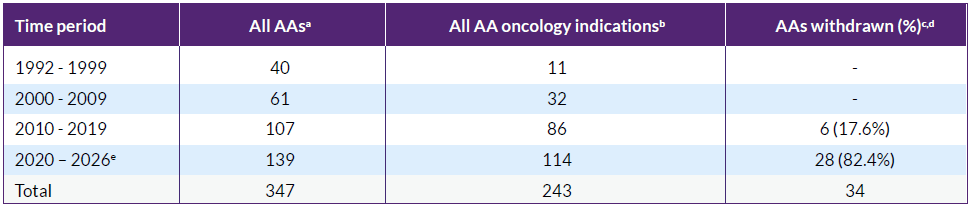
AA, accelerated approval.
aAll oncology and non-oncology accelerated approvals. bConverted or fully approved malignant hematology and oncology indications, supportive care products, and changes to dosing or formulations. cMalignant hematology and oncology indications. dTime period of FDA or sponsor withdrawal. e1 January 2020 through 22 June 2026.
Since the inception of the AA program in 1992, 83 unique therapeutics that received AA for 124 oncology therapeutic indications were granted full approval based on verified clinical benefits (Table 3). Of those therapeutics with verified clinical benefits, 66 were approved for only one indication, respectively, and 17 were approved for two or more therapeutic indications. Keytruda (pembrolizumab) is the most versatile of the multiple-indication drugs, with the highest number of approved therapeutic indications at 14.23
Table 3. Indications for oncology drugs receiving full approval after AA, through 1 May 202623
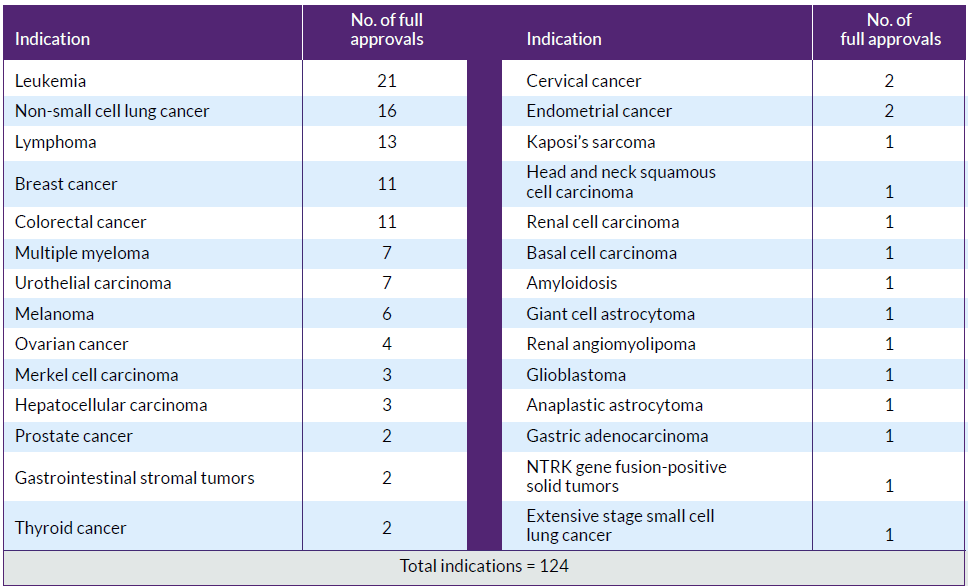
The most common indications for withdrawn drugs were lymphoma, multiple myeloma, leukemia, and urothelial cancer (Table 4). The most common indications for AA therapeutics with verified clinical benefits and full approvals were leukemia, non-small cell lung cancer, breast cancer, and lymphoma (Table 5).
Temporal trends in withdrawals
The average time from AA to withdrawal, across all indications, was 5.29 years (Table 4), while the average time from AA to full approval or verified clinical benefit was 3.95 years (Table 5).
The distribution of these withdrawals reveals interesting temporal differences. Between 1992 and 2009, no therapeutics were withdrawn from AA.22 However, from 2010 to 2019, there were six therapeutic withdrawals (Table 2). This number surged dramatically over the most recent six years, with 28 withdrawals reported between 2020 and June 2026, accounting for 82% of all AA withdrawals to date. A closer look at annual trends reveals the increase in withdrawals during the 2020-2026 period. Notably, there were seven withdrawals in both 2021 and 2022, representing the highest annual figures on record. This was followed by four withdrawals in 2023, five in 2024, and three in 2026, as shown in Table 1. These findings suggest that the AA program is undergoing intense regulatory scrutiny and adjustment, as postmarket studies increasingly failed to confirm clinical benefits or were not completed due to feasibility concerns.22
Table 4. Average time in years from accelerated approval to withdrawal by indication, through 1 May 2026
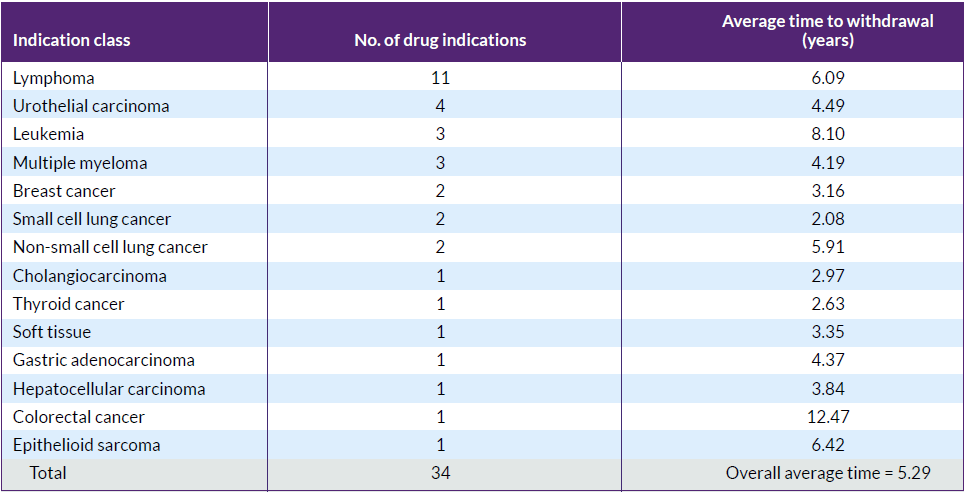
Table 5. Average time from accelerated approval to full approval by indication, through 1 May 2026
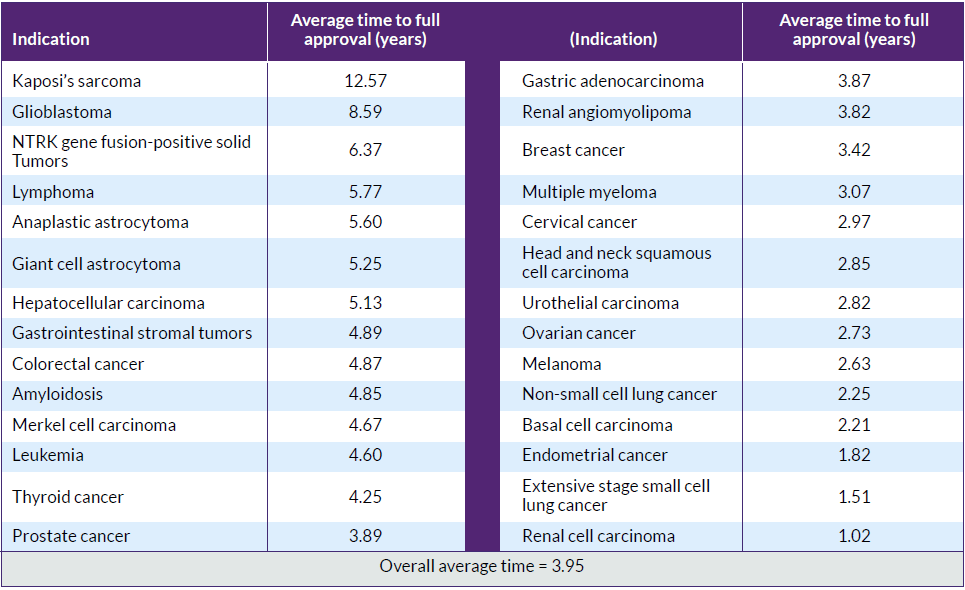
Table 6 shows that the number of therapeutic indications withdrawn after initial AA has increased over time. One drug indication initially approved between 1992 and 1999 was withdrawn, and the remaining 9 were converted to full approvals. This rose to 5 withdrawals and 26 full approvals between 2000-2009, 17 withdrawals and 63 full approvals between 2010 and 2019, and 11 withdrawals and 49 full approvals between 2020 and 22 June 2026 (Table 6). These findings affirm the efforts dedicated to confirmatory trials enforcement by the FDA and further confirm increased regulatory scrutiny and adjustment after the Consolidated Appropriations Act of 2023.
Table 6. Oncology accelerated approvals by time period: Grants, withdrawals, and full approvals, 2020-22 June 2026
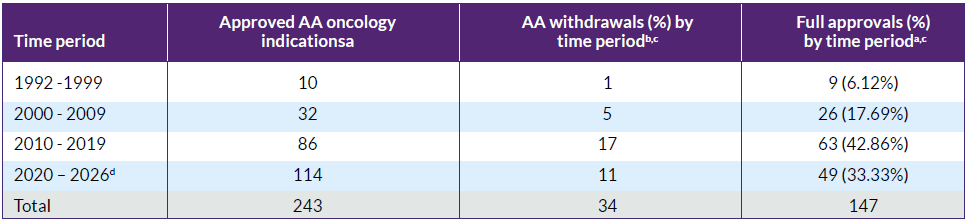
aIncludes converted or fully approved therapeutic indications, supportive care products, and changes to dosing or formulations. bIncludes therapeutic indications only. cRefers to withdrawal or full conversion of therapeutic indications initially approved within that time period. dIncludes only 1 January 2020 to 22 June 2026.
The most common reasons for AA withdrawals are shown in Table 7. Consistent with Gyawali and colleagues, the FDA formally revoked bevacizumab for the metastatic breast cancer indication; the remaining withdrawals were voluntary withdrawals by the sponsors.21
Table 7. Primary reasons for withdrawal of oncology AA indications, through 22 June 2026
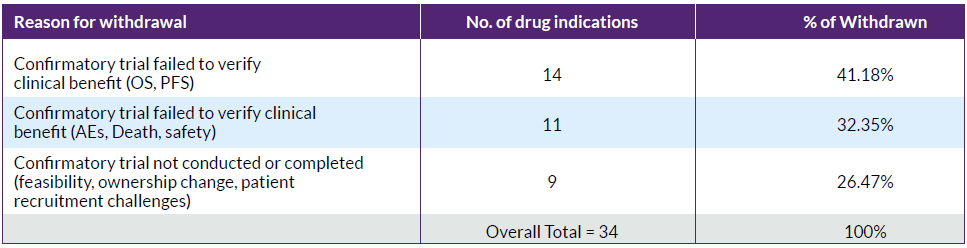
AE, adverse event; OS, overall survival; PFS, progression-free survival.
Therapeutic re-approvals
Further investigations of these withdrawn AAs revealed that five of the previously withdrawn therapeutics were re-approved either for the same indication, in a different population, or with adjuvant therapy. The therapeutics re-approved were Oforta (fludarabine phosphate), also known as Fludara,24 Mylotarg (gemtuzumab ozogamicin) with a revised dosing schedule,25 Iressa (gefitinib),26 Opdivo (nivolumab),27 and Keytruda (pembrolizumab).28 Iressa (gefitinib) was approved for a different subset of patient population from the one originally intended.26 Oforta/Fludara24 was re-approved under the new FDA project renewal initiative, a public health initiative within the FDA Oncology Center for Excellence, with the goal of providing updated, clinically meaningful labeling information on older oncology drugs.29 Some drugs remain on the market for other indications regardless of withdrawal. This shows that the withdrawal of a therapeutic indication does not demonstrate drug ineffectiveness; it may instead reflect limitations in the targeted endpoints or patient population.
Discussion
The central finding of this study is that AA withdrawals are primarily caused by the failure of confirmatory trials to verify benefits, or by a sponsor’s decision to withdraw due to adverse events or feasibility issues. While there are some trends in withdrawals by drug indication or time to approval, these were not found to influence the decision for withdrawals, but instead demonstrate the trends in therapeutic indications that are focused on by sponsor companies, and areas where there are fewer therapies available in oncology.
Oncology remains the most prominent area of focus within the AA program, accounting for the majority of approved drugs or biologics and withdrawals. This reflects the significant unmet medical needs in cancer treatment and the urgency to provide patients with novel therapies. Oncology drugs often target specific molecular pathways, which adds to the complexity of disease progression and patient outcomes. A major challenge is balancing the need for quick access to potentially life-saving therapeutics with the requirement for robust evidence of efficacy and safety.4,6
The approvals through the AA highlight the pathway's success in bringing groundbreaking therapies to the oncology market, where rapid access can significantly impact patient outcomes. The sharp rise in AA withdrawals between 2020 and June 2026 raises some important questions and highlights the increased scrutiny by the FDA.19,23 The AA pathway relies on promising findings from surrogate endpoints, which are good indicators of therapeutic relief in cancer patients. The increasing number of withdrawals, however, highlights a limitation of using surrogate endpoints in oncology clinical trials, where disease complexity, progression, and variability in patient responses may impact predicted outcomes.19
The success of therapeutics such as Keytruda and Gleevec, with 14 and 6 approved indications based on verified clinical benefits, respectively, highlights the benefits of AA for oncology therapeutics, in contrast to the failure of other oncology therapeutics in verifying clinical benefits.22 The FDA has also increasingly emphasized the need to complete confirmatory trials in a timely manner to verify clinical benefits, especially with the enactment of the Food and Drug Omnibus Reform Act of 2022, which required ongoing confirmatory trials after the initial accelerated approval.30 The increase in withdrawals after 2020 reflects the increased regulatory scrutiny, driven by evolving scientific standards, and lessons learned from earlier approvals.21
This shift in regulatory expectations is evident in the growing number of withdrawals, particularly for drugs that fail to meet these stringent regulatory standards. However, the increased withdrawal rate among oncology drugs also underscores the challenges inherent in developing and evaluating cancer therapies. Recent developments in FDA regulatory efforts include the establishment of the Accelerated Approval Coordinating Council, which is comprised of directors of several FDA centers and charged with ensuring consistent use of the AA pathway and with developing policy guidance to support that process.32
The differences in regulatory outcomes remain important, as demonstrated by the fact that 83% of withdrawn cancer indications remained on the market in Europe and 100% remained on the market in Japan as of 2023.17,18 This reflects differences in procedural mechanisms for withdrawals in different geographic regions and highlights the need for harmonized international standards for confirmatory evidence and postmarket monitoring to ensure consistent assessment across jurisdictions. The rising withdrawal rate in the US suggests a mismatch between initial expectations and real-world outcomes, and highlights the need for more stringent pre-approval criteria and greater accountability to ensure verified clinical benefits.
Additional opportunities to improve the successful use of the AA pathway include leveraging advances in biomarker research and using real-world evidence to improve the predictive value of these surrogate endpoints. Regulatory agencies and sponsors must work collaboratively to ensure the timely completion of postapproval trials. This could involve stronger enforcement by the regulatory agencies of timelines for trial completion.
Limitations
This study involves the use of publicly available FDA data and peer-reviewed literature, which ensures transparency, reproducibility, and relevance to real-world regulatory decision-making. However, it is limited by a lack of generalizability to non-oncology therapeutic indications. The withdrawal of some drugs may have been owing to other external factors, such as funding limitations, and not the failure of surrogate endpoints. Some indications occurred only once; therefore, the average time from AA to withdrawal or full approval only reflects these instances. Finally, differences in study designs were not captured, as those are often proprietary information not publicly available.
Conclusion
The AA pathway has been a cornerstone of oncology drug development, providing timely access to innovative therapies to patients with serious and life-threatening diseases. The sharp rise in withdrawals between 2020 and 2026 highlights the need to balance expedited approvals with stringent regulatory enforcement in verifying clinical benefits in Phase 3 and postmarketing trials, which remains a critical priority. The central lesson is that these withdrawals are driven primarily by the failure of confirmatory trials or by sponsors’ decisions not to complete them, rather than by tumor type, which confirms that timely completion of confirmatory trials is the key lever for improvement. As the AA program advances, it is critical to strengthen postapproval monitoring and foster collaboration among regulatory agencies worldwide. This could ensure consistent clinical trial status for approved therapeutics worldwide.
Abbreviations
AA, accelerated approval; FDA, Food and Drug Administration; FDASIA, Food and Drug Administration Safety and Innovation Act; PDUFA, Prescription Drug User Fee Act.
About the authors
Sarah Sejoro, MSc, MPH, is a doctoral student in public health with a concentration in biostatistics at the Department of Biostatistics, Epidemiology, and Environmental Health Sciences at Jiann-Ping Hsu College of Public Health, Georgia Southern University. She earned her MSc in Environmental Toxicology from Texas Southern University and her MPH from Georgia Southern University. She is a RAPS member and can be contacted at [email protected]
Karl E. Peace, PhD, is professor of biostatistics and senior research scientist in the Jiann-Ping Hsu College of Public Health, Georgia Southern University. He earned his PhD in Biostatistics from Medical College of Virginia, now known as Virginia Commonwealth University School of Medicine. He is also a fellow of the American Statistical Association. He can be contacted at [email protected] or at [email protected]
Disclaimer This article is solely attributed to the authors and is not associated with their respective employment with Georgia Southern University. The views expressed in the article are their own and do not represent those of their respective employers.
Citation Sejoro S, Peace KE. Accelerated approval pathway for oncology: Summary of approvals and withdrawals, 1992-2026. RAPS Journal of Regulatory Affairs: 1(6):73-84. Published online 3 November 2026. https://www.raps.org/resource/accelerated-approval-pathway-for-oncology-summary-of-approvals-and-withdrawals-1992-2026.html
References
All references were last checked and verified on 28 October 2026.
- National Cancer Institute. Cancer statistics. Updated 7 May 2025. Accessed 6 August 2025 https://www.cancer.gov/about-cancer/understanding/statistics
- National Cancer Institute. SEER cancer statistics factsheets: Common cancer sites. Not dated. Accessed 22 June 2026. https://seer.cancer.gov/statfacts/html/common.html
- World Health Organization. Cancer. Dated 16 April 2026. Accessed 23 June 2026. https://www.who.int/news-room/fact-sheets/detail/cancer
- Food and Drug Administration. Accelerated approval. Current as of 24 February 2023. Accessed 10 October 2024. https://www.fda.gov/patients/fast-track-breakthrough-therapy-accelerated-approval-priority-review/accelerated-approval
- Ribeiro TB, et al. Comparison of FDA accelerated vs regular pathway approvals for lung cancer treatments between 2006 and 2018. PLoS One. Published 24 July 2020. Accessed 10 October 2024. https://doi.org/10.1371/journal.pone.0236345
- Food and Drug Administration. Prescription Drug User Fee Act (PDUFA). Current as of 4 May 2026. Accessed 14 October 2024. https://www.fda.gov/industry/fda-user-fee-programs/prescription-drug-user-fee-amendments
- Food and Drug Administration. Priority review. Current as of 4 January 2018. Accessed 10 October 2024. https://www.fda.gov/patients/fast-track-breakthrough-therapy-accelerated-approval-priority-review/priority-review
- Food and Drug Administration. Food and Drug Administration Safety and Innovation Act (FDASIA). Current as of 28 March 2018. Accessed 14 October 2024. https://www.fda.gov/regulatory-information/selected-amendments-fdc-act/food-and-drug-administration-safety-and-innovation-act-fdasia
- Seoane-Vázquez E, et al. Analysis of Food and Drug Administration new drug and biologic approvals, regulatory pathways, and review times, 1980-2022. Sci Rep. Published 9 February 2024. Accessed 3 December 2024. https://doi.org/10.1038/s41598-024-53554-7
- Liu ITT, et al. Clinical benefit and regulatory outcomes of cancer drugs receiving accelerated approval. JAMA. Published online 7 April 2024. Accessed 12 August 2026. https://jamanetwork.com/journals/jama/fullarticle/2817337
- US Food and Drug Administration. Accelerated approvals. Current as of 20 August 2026. Accessed 23 June 2026. https://www.fda.gov/drugs/nda-and-bla-approvals/accelerated-approvals
- Food and Drug Administration. Verified clinical benefit: Cancer accelerated approvals. Current as of 31 June 2026. Accessed 5 December 2024. https://www.fda.gov/drugs/resources-information-approved-drugs/verified-clinical-benefit-cancer-accelerated-approvals
- Onakpoya IJ, et al. Correction to: Post-marketing withdrawal of 462 medicinal products because of adverse drug reactions: a systematic review of the world literature. BMC Med. Correction published 2 March 2019. Accessed 3 December 2024. https://doi.org/10.1186/s12916-019-1294-9
- Naci H, et al. Characteristics of preapproval and postapproval studies for drugs granted accelerated approval by the Food and Drug Administration. JAMA. Published online 15 August 2017. Accessed 3 December 2024. https://doi.org/10.1001/jama.2017.9415
- Parikh RB, et al. Exposure to US cancer drugs with lack of confirmed benefit after Food and Drug Administration accelerated approval. JAMA Oncol. Published online 23 February 2023. Accessed 16 January 2025. https://doi.org/10.1001/jamaoncol.2022.7770
- Consolidated Appropriations Act, HR 2617. 117th Congress. Accessed 12 August 2026. https://www.congress.gov/bill/117th-congress/house-bill/2617/text
- Patel H, et al. Comparison of drug withdrawal processes in the US and other nations. Innov Pharm. Published 1 July 2021. Accessed 05 December 2024. https://doi.org/10.24926/iip.v12i3.3939
- Cramer A, et al. Withdrawn accelerated approvals for cancer indications in the USA: What is the marketing authorisation status in the EU? Lancet Oncol. Published September 2023. Accessed 3 December 2024. https://doi.org/10.1016/S1470-2045(23)00357-1
- Hakariya H, et al. Continued cancer drug approvals in Japan and Europe after market withdrawal in the United States: A comparative study of accelerated approvals. Clin Transl Sci. Published July 2024. Accessed 16 January 2025. https://doi.org/10.1111/cts.13879
- Issa AM, et al. Drug withdrawals in the United States: A systematic review of the evidence and analysis of trends. Curr Drug Saf. Published September 2007. Accessed 16 January 2025. https://pubmed.ncbi.nlm.nih.gov/18690965/
- Gyawali B, et al. Regulatory and clinical consequences of negative confirmatory trials of accelerated approval cancer drugs: Retrospective observational study. BMJ. Published 9 September 2021. Accessed 16 January 2025. https://doi.org/10.1136/bmj.n1959
- Food and Drug Administration. Withdrawn cancer accelerated approvals. Current as of 22 June 2026. Accessed 5 December 2024. https://www.fda.gov/drugs/resources-information-approved-drugs/withdrawn-cancer-accelerated-approvals
- Food and Drug Administration. DRUGS@FDA: FDA-approved drugs. Current as of 1 May 2026. Accessed 11 November 2024. https://www.accessdata.fda.gov/scripts/cder/daf/
- Conroy R. FDA updates fludarabine phosphate labeling in chronic lymphocytic leukemia. Cancer Network. Dated 21 November 2024. Accessed 14 April 2025. https://www.cancernetwork.com/view/fda-updates-fludarabine-phosphate-labeling-in-chronic-lymphocytic-leukemia
- Appelbaum FR, Bernstein ID. Gemtuzumab ozogamicin for acute myeloid leukemia. Blood. Published 30 November 2017. Accessed 17 April 2025. https://doi.org/10.1182/blood-2017-09-797712
- National Cancer Institute. With FDA approval, gefitinib returns to US market for some patients with lung cancer. Dated 18 August 2015. Accessed 13 April 2025. https://www.cancer.gov/news-events/cancer-currents-blog/2015/fda-gefitinib
- Food and Drug Administration. FDA approves nivolumab with Ipilimumab for hepatocellular carcinoma. Current as of 11 April 2025. Accessed 14 April 2025. https://www.fda.gov/drugs/resources-information-approved-drugs/fda-approves-nivolumab-ipilimumab-unresectable-or-metastatic-hepatocellular-carcinoma
- Food and Drug Administration. FDA approves pembrolizumab for adenocarcinoma. Current as of 19 March 2025. Accessed 14 April 2025. https://www.fda.gov/drugs/resources-information-approved-drugs/fda-approves-pembrolizumab-her2-positive-gastric-or-gastroesophageal-junction-adenocarcinoma
- Food and Drug Administration. Project Renewal. Current as of 13 March 2025. Accessed 14 April 2025. https://www.fda.gov/about-fda/oncology-center-excellence/project-renewal
- Food and Drug Administration. Accelerated approval and considerations for determining whether a confirmatory trial is underway [draft guidance]. Current as of 6 January 2025. Assessed 8 February 2025. https://www.fda.gov/regulatory-information/search-fda-guidance-documents/accelerated-approval-and-considerations-determining-whether-confirmatory-trial-underway
- Jazowski SA, et al. Time to confirmatory study initiation after accelerated approval of cancer and noncancer drugs in the US. JAMA Intern Med. Published 22 May 2023. Accessed 17 April 2025. https://doi.org/10.1001/jamainternmed.2023.0777
- Food and Drug Administration. Accelerated approval council activities report – CY 2025. Accessed 24 April 2025. https://www.fda.gov/media/174154/download
- Consolidated Appropriations Act, HR 2617. 117th Congress. Accessed 23 March 2025. https://www.congress.gov/bill/117th-congress/house-bill/2617/text
- Food and Drug Administration. FDA briefing document – Oncologic Drugs Advisory Committee meeting; 16 November 2023. Current as of 4 March 2026. Assessed 8 February 2025. https://www.fda.gov/advisory-committees/advisory-committee-calendar/november-16-2023-meeting-oncologic-drugs-advisory-committee-meeting-announcement-11162023