Convergence: Califf says regulations ‘need an update,’ sees AI assistants in regulatory future
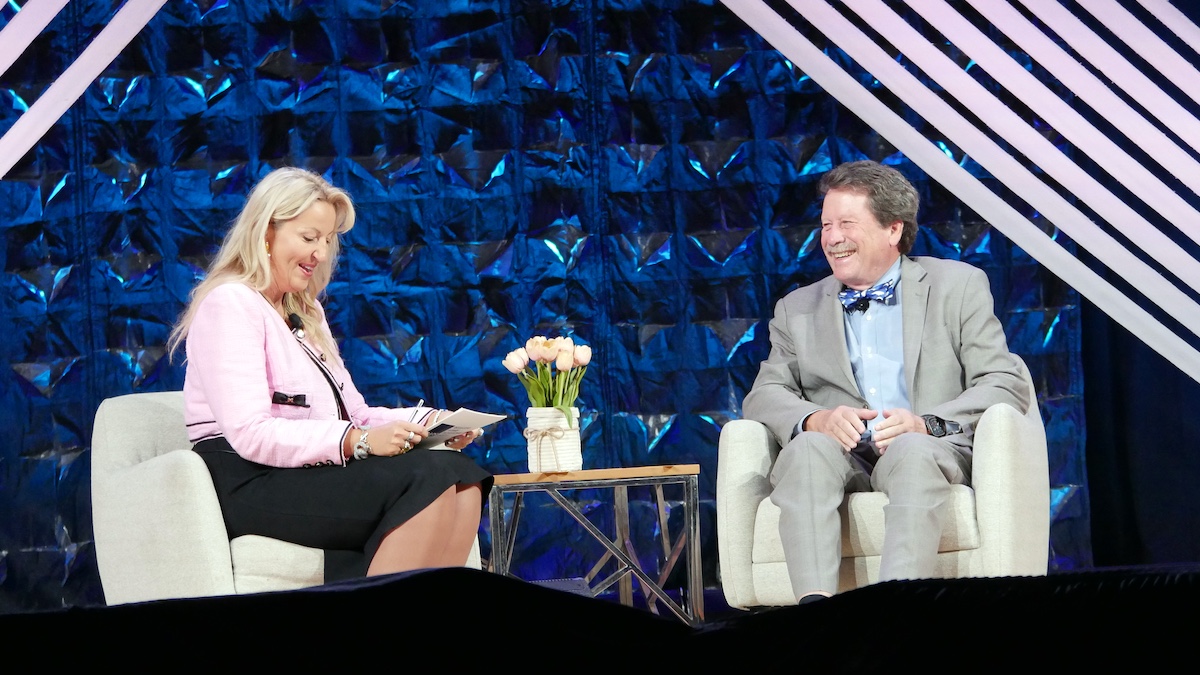
CHARLOTTE, NC — When former US Food and Drug Administration (FDA) Commissioner Robert Califf was a medical student in the mid-1970s, he had an opportunity to work with his mentor on one of the first patient databases. Patients undergoing cardiovascular procedures would have their data captured as a part of clinical care and were followed for life.
The problem at the time was that doctors at the time were largely working from memory and what they could reference from textbooks and didn’t trust computers. Still, Califf said the experience “sort of addicted” him to the concept that human brains are not computers, and that there was a need to collect information in this way, he told attendees at RAPS Convergence 2026.
While the fundamentals of the Kefauver-Harris Amendment of 1962 and the Medical Device Amendments of 1976 to the Federal Food, Drug, and Cosmetic Act still hold, Califf said, “the world’s gotten more complicated and we need an update.”
“I actually think we’re in an era where we need some significant updates—yesterday—and that’s becoming abundantly obvious,” Califf said.
A set of laws created around static systems now have to content with multidimensional inputs, which brings with it a “different understanding and a different way of deploying things that just a static system is not prepared to deal with,” he added.
The answers to this issue aren’t immediately clear. “I think we’re going to have to work those out as a community,” Califf said.
One direction he wouldn’t go in is to follow the “radical innovation” seen in consumer software, particularly with the rise of artificial intelligence (AI) and associated potential risks of bioterrorism, bioterrorism, and cybersecurity concerns around AI agents. “Unchecked, no guardrails in this environment can be extraordinarily dangerous,” he said.
Califf said he sees a future in regulating devices similar to current food regulation, rather than traditional drug and device regulation.
“For original products, I think the system is pretty sound the way it is,” he said. “But as things "evolve, it’s going to have to be a shared responsibility of a lot of different people under a set of rules that we all agree to, which is the way the food system works.”
Period of stability at FDA
Califf said that while he’s “not a fan of what DOGE did to the US medical products health care system,” things have since stabilized at the FDA, and it is still important for developers of medical products in the pre-market phase to do a good job regardless of changes at the agency.
In the current moment, “you have to be prepared that things could change, and it’s not your fault,” he said.
“There’s a lot of political influence on the system right now that’s very different than the way it used to be, and people will have opinions about it. I obviously think it’s not good, but there’s no way around it. If you try to take shortcuts, at some point, things are going to go bad,” Califf said.
Regulatory friction
Cleaning up electronic health record data was an “impossible problem” two decades ago, but the advancement of AI has made that problem much more manageable. What is more important now from a research perspective is obtaining that longitudinal record of patients.
“Doctors all around the country can see the records, but aggregating the information in a way that’s useful for research needs to happen,” Califf said.
FDA reviewers “have a lot of comfort” when making decisions around large databases with data that fit well together, but there needs to be a cultural adjustment on deciding when data is “good enough to make a good decision,” he noted.
“There’s no shortage of new targets and new drugs. The limiting factor is: how much money do you have to do the trials?” Califf said. “We’ve got to reduce the cost and more intelligently use the data, and I think we’re getting close to being able to do that.”
A more competitive US trial ecosystem
The US needs to look at both China and Australia, as recent clinical trial innovations in both countries could have implications for global research. Califf acknowledged China’s recent decision to create a “national, purposeful system” for Phase 1 trials.
While China recently had to contend with several patient deaths in gene therapy that initially went unreported, Califf said he believes China will adapt to these setbacks.
Califf also noted that Australia is seeing a large share of Phase 1 trials in the country, in part because they found subsidizing Phase 1 trials would be overall beneficial economically to Australia.
“I think for the US to compete, we’re going to have to come up with a set of incentives for early phase research,” he said.
Califf proposed one improvement to the clinical trial system in the US, namely that it could be a standardization in how contacts, institutional review boards, liability, and other elements of clinical trial design are created across companies, institutions, and health systems.
“[T]here’s a lot of discussion in Congress about trying to come up with a framework that creates a competitive environment in the US but not competing to see who can write the most favorable contract, competing to see who can do the best clinical trial and develop the best products,” he said.
The US also has an opportunity to learn from other parts of the world that leverage home-based care, such as Singapore and in Scandinavian countries.
“I’m really glad that FDA is continuing its effort to get companies interested and make it possible to do the work at home,” he said. “But I also have to mention that this is occurring in an environment which is rife with misinformation and misleading information for people, and we all need to work together on this problem. It’s a very serious problem, particularly in this country right now.”
‘Don’t stop being the gatekeeper’
The role of the regulatory professional over the next 15 years will be one of both a continuous manager as well as an established gatekeeper. It is important to consider both parts of the role, Califf said.
“My advice is don’t stop being the gatekeeper,” he said. It is an “intrinsic part of the human condition” to want to change things if they don’t go as expected, especially for products people have spent 5-10 years working on, he added.
He noted that he’s seen doctors using large language retrieval-augmented generation models like OpenEvidence as consultants and sees a future where regulatory affairs professionals query a large language model for answers rather than looking up information.
However, being a continuous evaluator will also be important, especially in an era where data are more prevalent than ever and there is a need for judgment in deciding where, when, or whether to acknowledge signals in medical products, Califf said.
“I think that decision-making and advice in a continuous nature is really where the field needs to go,” he said.