
Convergence: Regulators offer tips for successful meetings
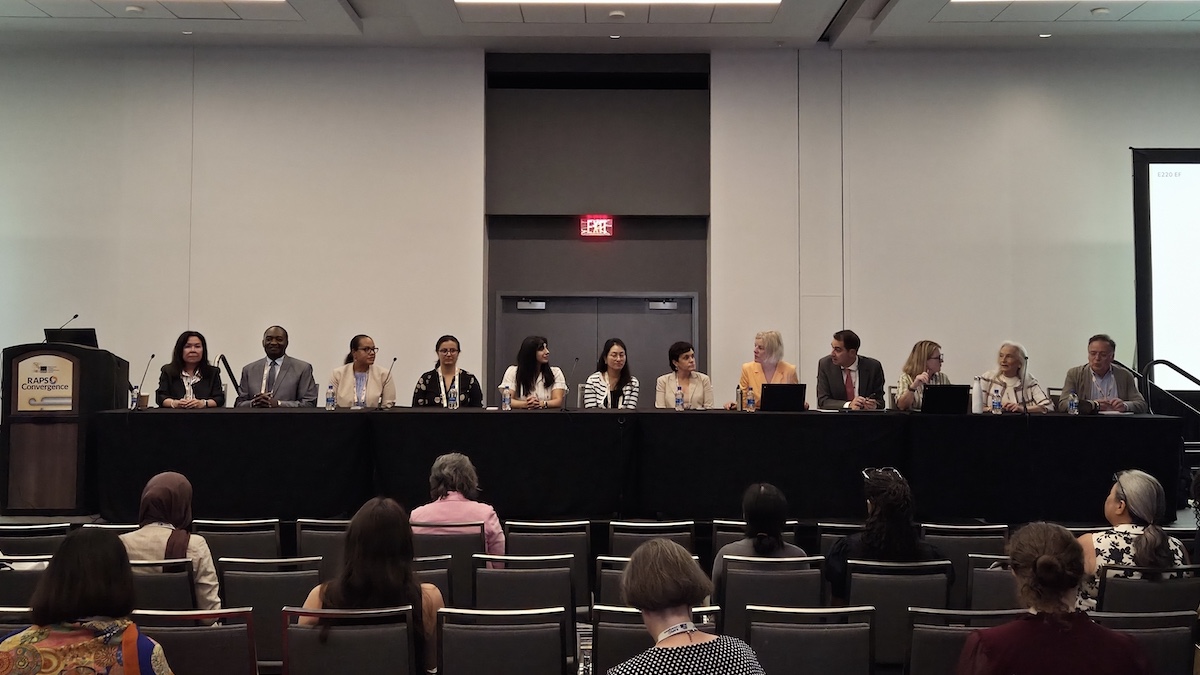
Left to right: Susan Stewart, Jethro Ekuta, Sonday Kelly, Zehra Tosun, Tasneem Keshavji, Jennifer Albert, Iliana Valencia, Sabine Haubenreisser, Alberto Gañan Jimenez, Corinne de Vries, Andrea Laslop, and Karl-Heinz Huemer. (Credit: Jeff Craven)
CHARLOTTE, NC — Officials from the US Food and Drug Administration (FDA), UK Medicines and Healthcare products Regulatory Agency (MHRA), and other European regulators said that successful meetings with sponsor involved transparency, open collaboration, listening, early communication, and having sufficient data to answer questions.
Tasneem Keshavji, head of international recognition at MHRA, told attendees at RAPS Convergence 2026 that her agency has been holding hybrid meetings for the last 2 years, and said that sponsors who do well tend to be open and transparent in their interactions.
“At the end of the day, we’re all working together to get the product to be approved so that they can be used by the patients,” she said. “[C]ollaboration and transparency is really key.”
Andrea Laslop, regulatory expert with the Malta Medicines Authority, said that her time with the European Medicines Agency (EMA) Scientific Advice Working Party also taught her that transparency was “extremely important,” but sponsors also needed to use proper justification for their proposal. If EMA comes up with a counter proposal, the sponsor should be open to that as well.
“[I]f there is a willingness from the sponsor side to also reflect upon what they hear from us, I think the conversation goes to a level which is very respectful and very measured and can give you more success,” Laslop said.
Success in meetings
In FDA’s Office of Therapeutic Products (OTP), sponsors should leave out elements like introductions, product history, and company name during product meetings.
“Just go straight into your responses, what your position is,” Jennifer Albert, regulatory project manager and regulatory scientific reviewer at FDA, told attendees.
“[W]e only have 55 minutes, and we really want to make sure that we cover most of the questions,” she added.
Albert also requested sponsors send any kind of response within 48 hours of a meeting to give the agency time to review it.
Iliana Valencia, regulatory review specialist at FDA, said that sponsors should ensure any data and information they send to the agency supports the question the sponsor is asking.
“[P]lease try to be as open as possible for the mandated timelines and provide information as needed so that we can actually do our work,” Corinne de Vries, EMA liaison official to FDA, told attendees.
In general, sponsors should contact a regulator as early as possible, de Vries explained. de Vries also pointed to pipeline meetings and Innovation Task Force briefing meetings as examples of opportunities to engage with EMA.
“Whatever topic it is, it makes sense to come early, make sure that you’re on track, whether you’re using patient user experience data, or good evidence data, make sure that you have a rationale and just do a fact check before,” she said.
Zehra Tosun, chief of the tissue engineering branch at FDA, said being specific about a product’s scope and milestones will help sponsors be successful.
“While preparing the package, highly consider what is your goal in mind,” she said.
Pitfalls to avoid
Keshavji said it is important for sponsors to avoid making a sales pitch during the meeting. “You don’t need to send us a product. We want the same as you, we want patients to have access to medicines that can help them,” she said.
Laslop noted that sponsors that came in with a pre-determined reason why a proposal needed to be a certain way—citing key opinion leaders or interactions with other regulators as justification—were less successful. “That is really not convincing to us,” she said.
Sponsors should also be aware that regulators communicate with one another, not just within an individual agency like FDA or EMA, Karl-Heinz Huemer, director at khhconsult, told attendees. “We talk to each other all the time, confidentially,” he said.
One area that trips up sponsors in meetings is in chemistry, manufacturing, and controls (CMC) product change, such as a change in facility or a reagent.
“[I]f you know that there will be certain changes happening … we highly encourage you to start those discussions early on with the agency to ensure if you want an aligned approach in terms of CMC perspective,” Tosun explained. “That’s usually done with a proactive approach, because those studies are very costly [and] time consuming.”