
Drugmakers urge FDA take more flexible approach to container closure testing
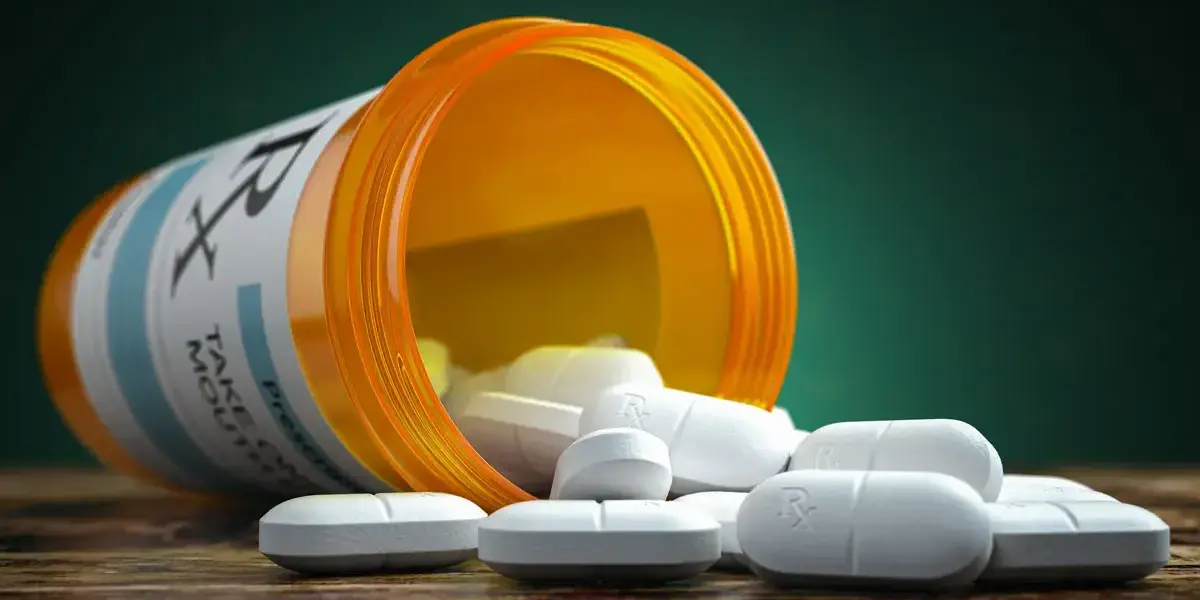
Major pharmaceutical companies are urging the US Food and Drug Administration (FDA) to adopt a more flexible, risk-based approach in its guidance on testing container-closure systems (CCS) for drugs and biological products, especially when established materials and technologies are used.
Several organizations also recommended that the guidance be better aligned with the International Council for Harmonisation’s (ICH) Q3E guideline on extractables and leachables, as well as the M4Q(R1) guideline on the quality overall summary (QOS) in the Common Technical Document (CTD). Additionally, some groups and companies have proposed that the FDA remove its restrictions on using recycled plastics as a primary packaging component.
The comments were made in response to a draft guidance issued in August; when finalized, the guidance will replace a May 1999 document on the same topic. (RELATED: FDA issues draft guidance on assessing container and closure systems for drugs and biologics, Regulatory Focus 7 August 2026)
Overall, respondents expressed their support for the guideline. The Association for Accessible Medicines (AAM) said that it “appreciates FDA’s efforts to update its guidance on container closure systems (“CCS”) for human drugs and biological products to reflect advancements in the design, construction and evaluation of CCS since it issued initial guidance on this topic over two decades ago.”
AbbVie similarly said that it “appreciates FDA's efforts to modernize and clarify recommendations for container closure systems (CCSs). This draft guidance provides valuable updates that incorporate a risk-based framework for evaluating the quality of CCSs used to package drug and biological products, including guiding principles to enhance consistency and predictability in regulatory submissions.”
More flexibility for established materials
While praising the overall guidance, both AAM and Abbvie stated that the FDA should adopt a more flexible approach for established materials and technologies used in packaging.
AAM states that “the Draft Guidance places significant emphasis on full characterization of packaging components and complete chemical characterization of materials. Although such characterization is scientifically appropriate for novel systems, these expectations could create unnecessary burdens for long-established packaging systems, compendial materials, materials with extensive safety history, and generic products using established CCS platforms.”
The group states that for abbreviated new drug applications (ANDAs), “duplicative characterization that does not add meaningful information beyond comparative assessment to the reference listed drug (“RLD”) could increase development costs and delay generic competition without a corresponding benefit to product quality or patient safety.”
The group recommended that new text be added to the guidance noting that well-characterized packaging materials which have an “established regulatory history,” and “extensive commercial experience” may be subject to reduced testing requirements.
Abbvie agreed, stating that “FDA explicitly recognize the use of prior knowledge, historical data, commercial experience, and risk-based scientific assessments when establishing the suitability of container closure systems (CCS). As platform-based manufacturing and packaging approaches become increasingly common, sponsors frequently rely on CCS materials and components with well-characterized compositions and a demonstrated history of safe use.”
International standards
A number of groups, including the Pharmaceutical Research and Manufacturers of America (PhRMA), the International Pharmaceutical Aerosol Consortium on Regulation and Science (IPAC-RS), and Boehringer Ingelheim requested that the guideline be better aligned with ICH Q3E and ICH M4Q(R1).
PhRMA stated that “in particular, we ask that the Agency consider the risk-based approach to testing reflected in Q3E and adjust the Draft Guidance to reflect the same. For example, the draft Q3E guideline allows for accelerated simulation studies that mimic the outcome of a leachable study over the shelf life of a drug product. The Draft Guidance is less clear on this point; to avoid any confusion, the Draft Guidance should clarify that accelerated or intermediate E&L testing should be commensurate with risk.”
IPPAC-RS concurred that FDA align the guidance with ICH Q3E. The group suggested that the agency add text in the guidance stating that “FDA intends to ensure alignment between this guidance and ICH Q3E, Impurity: Assessment and Control of Extractables and Leachables for Pharmaceuticals and Biologics.”
Boehringer Ingelheim said that the guidelines should be aligned with the Analytical evaluation threshold (AET), the qualification threshold (QT), and the safety threshold in the ICH Q3E guideline.
The Q3E guideline is slated for final release in June 2027.
PhRMA stated that the guideline should also be consistent with M4Q(R1) regarding the quality OOS module of the CTD. The organization highlighted that Table 4 of the guidance, which summarizes the information required for a container closure system (CCS) in a marketing application and for supplements to approved applications, does not align with the ICH guideline.
Recycled materials
PhRMA and the Parenteral Drug Association (PDA) both opposed the ban on using recycled plastics in container and closure systems. The guidance specifies that “postconsumer recycled plastic should not be used in the manufacture of a primary packaging component.”
PhRMA said that “FDA should revise its position on the use of recycled plastics in primary packaging components. PhRMA notes FDA’s reservations regarding the use of recycled materials in primary pharmaceutical packaging but cautions the Agency against the unqualified expectation that such material not be used in primary packaging.... The use of post-consumer recycled (PCR) plastic is increasingly encouraged as part of sustainability initiatives and, where scientifically justified, FDA should acknowledge the acceptability of PCR materials in primary packaging.”
“If PCR [Postconsumer Recycled Plastics] plastics meet the FDA food contact regulations (Indirect Food Additive regulations in 21 CFR 174–186), they would be suitable primary packaging for solid oral dosage form. Supports sustainability initiatives,” PDA concurred.
Combination products
Both PhRMA and AAM stated that the guidance should better clarify the agency's expectations for CCS systems for combination products.
“FDA should ensure the guidance is appropriately tailored to combination products. PhRMA appreciates FDA’s recognition that, in addition to containing and protecting the drug, a CCS may play a direct role in drug delivery. However, the draft guidance does not clearly distinguish the CCS’s contribution to delivery from the contributions of other device constituents or equipment supplied by end users,” PhRMA wrote.
AAM similarly said that, “For generic combination products, the guidance should further explain how applicants may leverage comparison to the RLD, applicable product-specific guidance, prior device knowledge, and focused comparative performance testing, with additional studies reserved for identified differences that could affect safe and effective use.”
Oral products
Boehringer Ingelheim recommended that the FDA exclude oral drug products from extractable and leachable testing.
The company said that “extractables and leachables is usually not necessary for oral drug products, but only if products containing cosolvents or organic compounds that are expected to extract greater amounts of substances from plastic packaging components than the food products using the same packaging materials per 21 CFR parts 174–186.”
The company recommended such testing only for solid oral products containing cosolvents or organic compounds that are expected to extract greater amounts of substances from plastic packaging components than the food products using the same packaging materials.
Postapproval supplier changes
AAM recommended that FDA provide greater clarity on its expectations on how generic companies can conduct testing for postapproval supplier changes.
“The Draft Guidance appropriately notes that changes in CCS materials, suppliers or components may affect leachable profiles. However, the document provides limited practical clarity regarding supplier changes, equivalent material substitutions, and procurement-driven continuity actions. Clarity in these areas is particularly important given recurring supply chain disruptions and the economic constraints of generic drug markets in which redundant sourcing and timely qualification of equivalent components can be essential to maintaining patient access,” AAM wrote.
AAM was opposed to 100% container closure integrity testing for blow-fill-seal products using high-voltage or vacuum leak detection, to ensure container integrity.
The group said that “we disagree that 100% deterministic CCIT [container-closure integrity testing] is required for blow-fill-seal (BFS) products.” The group stated that FDA’s guidance for industry on sterile drug products issued in September 2004, requires inspecting each unit using a “reliable and sensitive examination capable of identifying defective units,” but does not mandate 100% in-line leak testing.