FDA cites companies for CGMP violations, informed consent failure
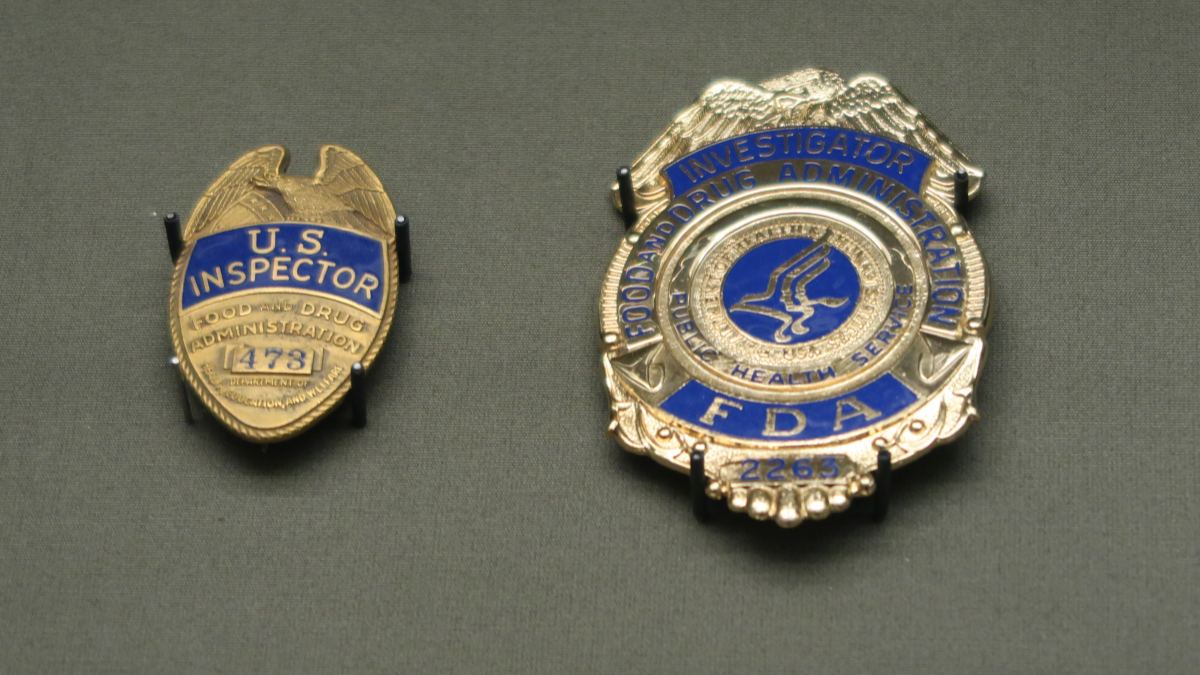
The US Food and Drug Administration has issued warning letters to several drug makers for failing to meet its current good manufacturing practices (CGMP) requirements and a company for failing to sufficiently inform subjects about the clinical trial they were participating in.
CGMP violations
On 21 July, FDA published several warning letters, including four for CGMP violations to Indian manufacturers Shimoga Chemicals, Almon Healthcare, and Alembic Pharmaceuticals, as well as to American drugmaker Island Kinetics. Several manufacturers were cited for failing to ensure that specifications, sampling plans, and test procedures were scientifically sound, thereby ensuring that their active pharmaceutical ingredients (API) met quality and purity standards.
"Your firm failed to validate or adequately verify multiple test methods used for testing key starting materials and finished APIs," said FDA in its letter Almon. "Specifically, you did not validate the in-house analytical methods, including the stability-indicating methods, used to support the [redacted] retest dates for your products shipped to the United States.
"Furthermore, your firm failed to adequately implement and verify an analytical method transferred from your contract testing laboratory (CTL) used for routine testing and stability studies of [redacted]," the agency added. "Your implemented method was unable to detect multiple unknown impurities that your CTL’s validated method identified."
Shimoga was cited for similar issues, and FDA more specifically raised concerns about its analytical testing data, which it said lacked adequate controls. The agency said that, in multiple instances, the company failed to document unreported sample injections of related substances and assay testing, leading to potentially non-conforming products being distributed in the US.
FDA said Shimoga failed to have adequate sampling procedures and record-keeping for its clomiphene citrate USP and failed to perform verification studies for its test methods. It was also cited for failing to have adequate process validation for clomiphene citrate USP and its key starting materials.
Similarly, BioMylz was cited for failing to adequately validate its manufacturing process.
"You were unable to demonstrate that your [redacted] processes assure [redacted] after commercial scale-up of your process," said FDA. "For example, critical control process parameters such as [redacted] were not adequately documented in batch records.
"Furthermore, you did not conduct adequate in-process hold time studies and stability studies to support shelf life," the agency added.
Several of the manufacturers were also cited for failing to ensure their products were manufactured in a sterile environment. For instance, FDA told BioMylz it failed to show its cleaning procedures were effective enough to remove API residue and its manufacturing equipment was free of microbial contamination. The agency raised similar concerns with Island Kinetics, an Arizona-based company.
"Your firm did not have adequate cleaning validation studies for the equipment used to manufacture OTC drug products," said FDA. "For example, you lacked a documented rationale for the products selected for cleaning validation studies.
"Additionally, you lacked an analytical method to identify and measure specific drug residues to ensure that the cleaning process is effective in preventing cross-contamination between drug products manufactured on the same equipment," the agency added.
Island Kinetics was also cited for lacking process validation data to demonstrate that its manufacturing process is reproducible and controlled to produce over-the-counter drugs with uniform character and quality, and for inadequate system validation.
"The lack of adequate [redacted] system validation provides no assurance the system performs as intended," said FDA. "Your use of [redacted] from an unvalidated system in pharmaceutical manufacturing can adversely affect drug product quality and patient safety.
"Biofilm formation is also a significant concern in [redacted] systems operating at [redacted] as biofilms can lead to undesirable levels of microorganisms and endotoxins," the agency added. "Your [redacted] system material selection and operating [redacted] may present challenges for maintaining adequate sanitization and microbiological control necessary to ensure that your [redacted] meets established pharmaceutical specifications."
FDA said Island Kinetics also failed to thoroughly investigate unexplained batch discrepancies and failures that did not meet specifications. More specifically, investigators said the company did not adequately investigate viscosity failures identified during stability testing of distributed OTC drugs.
The agency raised other serious issues with Island Kinetics, including marketing its TreeActiv Cystic Acne Spot Treatment and Ayadara Warrior Two Acne Spot Treatment without marketing authorization, and noted it was also selling products in the US that may be regulated as cosmetics. They also said this wasn't the first time the company was cited for CGMP violations.
"In previous inspections, conducted in 2016 and 2020, FDA cited similar CGMP violations," said FDA. "You proposed specific remediation for these violations in your responses.
"Repeated failures demonstrate that executive management oversight and control over the manufacture of drugs is inadequate," the agency added.
FDA recommended that all companies with CGMP violations consider engaging a qualified consultant to help them meet regulatory requirements. It also reminded the companies that if they do engage a consultant, they are ultimately responsible for resolving all deficiencies listed in their warning letters and ensuring CGMP compliance
Informed consent
Indian drugmaker Alembic Pharmaceuticals was also cited for failing to follow good clinical practices at its Alembic Research Centre in Gujarat. Under the FDA's Bioresearch Monitoring Program, investigators said they discovered that the research center had failed to obtain proper informed consent.
"Specifically, the ‘Nature and Purpose of this Study’ section of the informed consent form (ICF) stated, 'This study is a clinical research project, but no part of it is of an experimental nature," noted FDA investigators. "Stating that no part of the study is experimental may lead individuals to mistaken conclusions about whether the study is a 'clinical investigation' as defined in 21 CFR 50.33 and 21 CFR 312.34.
"The lack of clarity on this point may lead individuals to mistaken conclusions about whether any such procedures are experimental – information that is required to be provided to subjects in accordance with the basic elements of informed consent found at 21 CFR 50.25(a)(1)," they added. "Statements that do not clearly describe the experimental nature of a study may unduly influence individuals to agree to participate when they might not do so otherwise."
According to FDA, Alembic Pharmaceuticals told investigators they initially did not consider bioequivalence studies to be experiments. The company also said that the informed consent forms (ICF) included all pertinent information regarding the study conduct and the investigational products, which were approved by the ethics committee and considered sufficient to avoid the possibility of coercion or undue influence on the subjects. Investigators, however, disagreed and said the information in the ICF was not enough.
"While we acknowledge that other information pertaining to the conduct of the study and the investigational product were described in the ICF, stating that 'no part of it is of an experimental nature' created inconsistencies within the ICF, and these inconsistencies may lead individuals to mistaken conclusions about the type of study and its purpose," said FDA. "As a result, these inconsistences resulted in subjects’ not having sufficient opportunity to decide whether to participate in the study and may have unduly influenced the subjects’ decision to participate.
"As a result, you failed to obtain informed consent," the agency added.
While the company has taken corrective and preventive actions to update its standard operating procedure and the ICF, and trained staff, FDA said its response was insufficient because it lacked details. The agency reminded the company that it is ultimately responsible for complying with all FDA regulations governing clinical investigations and the protection of human subjects.