FDA updates TDS guidances on adhesive performance, skin irritation and sensitization studies
The US Food and Drug Administration (FDA) has published two guidances on transdermal or topical delivery systems (TDS) for generic drugs, including a final guidance on assessing adhesives for TDS products and a draft guidance on assessing skin irritation using in vivo studies in TDS products.
The guidances have been updated to consider stakeholder feedback on issues such as when certain evidence is acceptable, when certain studies are not needed, and how to work with regulators to consider alternative approaches.
Adhesive performance
The final guidance lays out FDA’s expectations for designing and conducting studies to evaluate the adhesive performance TDS products. The guidance is intended for sponsors of abbreviated new drug applications (ANDA) that use TDS technology to deliver treatment.
In 2023, FDA issued a revised draft of the guidance, which regulators said took into account stakeholder comments requesting further regulatory clarifications. The agency said the updates included clarification that sponsors may use methods such as trained visual assessments or dot-matrix templates when recording TDS adhesion measurements and are encouraged to consider alternative scales to the five-point adhesion scale to evaluate the portion of the TDS surface that adheres to skin. (RELATED: FDA updates generic transdermal and topical delivery systems guidances, Regulatory Focus 12 April 2023)
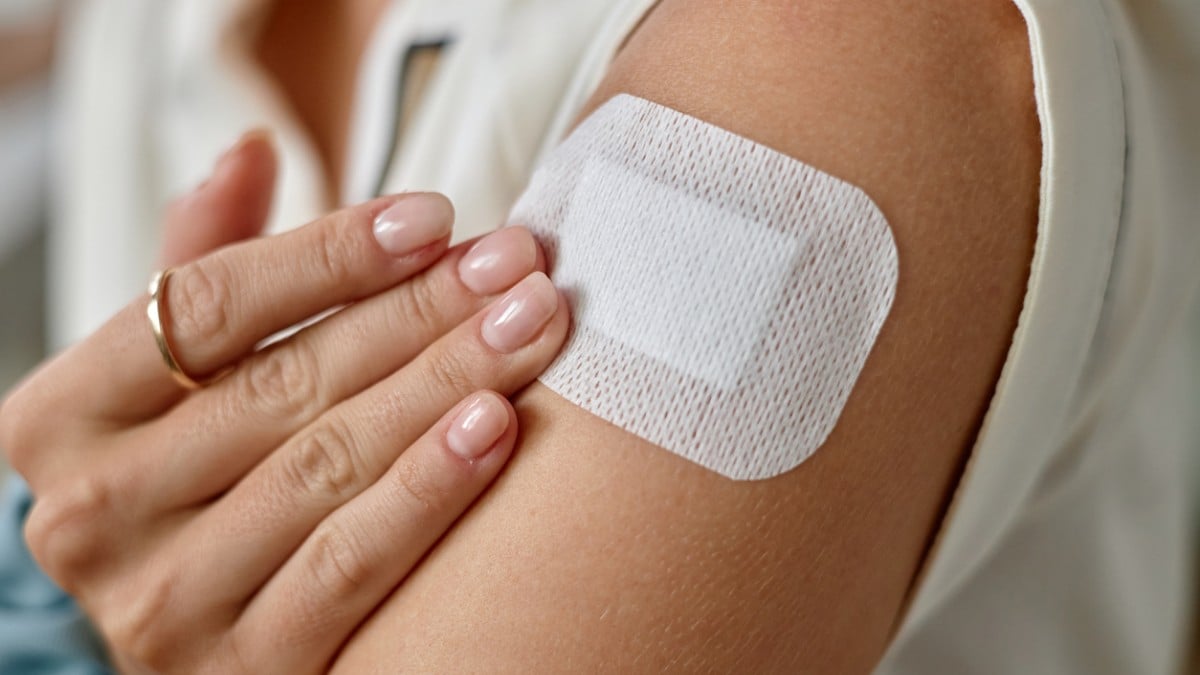
"The amount of drug delivered by a TDS into and through the patient’s skin is dependent, in part, on the surface area dosed. The entire contact surface area of a TDS should remain consistently and uniformly adhered to the patient’s skin throughout the duration of wear under the conditions of use included in the [reference listed drug (RLD)] labeling," said FDA in explaining the importance of evaluating adhesive performance. "When a TDS loses its adhesion during wear, the amount of drug delivered to the patient may be reduced.
"During the RLD’s labeled wear period, a TDS is reasonably expected to encounter torsional strains arising from body movements; changes in environmental temperature or humidity such as the daily exposure to water (e.g., during routine showering); and contact with clothing, bedding, or other surfaces," the agency added. "TDS products that do not maintain consistent and uniform adhesion with the skin during the RLD’s labeled wear period can experience varying degrees of TDS detachment, including complete detachment, at different times during the product wear."
FDA noted that sponsors should maintain photographic records of the extent of the TDS adhesion to the skin at each adhesion assessment time point. However, the agency clarified that the use of photographic evidence from studies is not currently intended for automated or photometric analysis.
"Because percent adhesion can span a range and yet be classified as a single score, the photographic evidence can be used to support the visual observation of the percent adhesion reported at each time point and is not intended to be used for automated or photometric analysis at this time," said the agency.
FDA clarified its expectations for statistical analysis methods and asked sponsors who want to use alternative approaches to FDA's recommended study designs to contact them to discuss such approaches.
In addition to the final guidance, FDA recommended that sponsors consult other related guidances, including any product-specific guidances, that may be appropriate. The agency also said they should keep an eye on the agency's website for additional guidances that may be updated or published that may be related to the development of the sponsor's generic TDS product.
Skin irritation, sensitization studies
FDA also published a draft guidance detailing the agency's recommendations for designing and conducting studies intended to evaluate potential skin irritation and sensitization of TDS systems used to deliver generic drugs.
"The components and composition of a TDS formulation, including the nature of the drug substance and/or the occlusivity of the TDS materials, in conjunction with other factors such as the environmental humidity or the condition of the skin, may have the potential to irritate the skin or lead to a sensitization reaction," said FDA. Such reactions can be unpleasant to the patient and may affect patient compliance, skin permeability, and/or adhesion of the TDS to the skin.
"The collective consequence of these potential effects could create uncertainty about the resulting drug delivery profile and the rate and extent of drug absorption from the TDS," the agency added. "Therefore, when appropriate, applicants should perform a comparative assessment of the test (T) and reference (R) TDS products using an appropriately designed skin irritation (or combined irritation and sensitization) study with human subjects to demonstrate that the potential for a skin irritation or sensitization reaction with the T TDS is no worse than the reaction observed with the R TDS."
The draft guidance is also a second revision of a draft guidance that was published at the same time in 2023. FDA said it is intended to clarify several issues based on stakeholder feedback, including how to design and conduct in vivo skin irritation and sensitization studies, and when such studies may not be needed. The agency said it wants feedback on the revised draft guidance, especially on issues such as the scoring scales and alternative approaches, including those used or recommended by other international regulatory agencies, for comparing the irritation and sensitization of proposed generic TDS products. It also seeks input on whether there are clinical scenarios in which a comparative sensitization assessment may be less useful when conducted alongside a comparative irritation assessment.
TDS workshop
On a related note, FDA also announced it will be hosting a half-day virtual workshop on 10 September to discuss the agency's bioequivalence recommendations, alternative approaches that use modeling and simulation, characterization-based submissions, and how to determine when in vivo studies are needed for TDS products. The agency will also provide case examples of how its research has been used to update the guidances, reduce submission deficiencies, and inform ANDA assessments.