

IGBA Calls for Further Regulatory Convergence on Biosimilars
While noting that full regulatory harmonization may be out of reach, Suzette Kox, secretary general of the International Generic and Biosimilar medicines Association (IGBA) on Monday called for further convergence among stringent regulators in the biosimilar space, particularly on the acceptance of foreign-sourced reference products.Kox, speaking at the Association for Accessible Medicines’ GRx+Biosim conference in Bethesda, MD, explained how a global framework for “truly global biosimilar development” is necessary to avoid repetitive, and therefore unethical, clinical studies.
Although there is a collaboration between the US Food and Drug Administration (FDA) and European Medicines Agency (EMA), under what’s known as a cluster, Kox explained that, “We don’t know what’s happening there, there’s no transparency. Do they talk about applications? I don’t know. We tried to suggest topics to bring to the table, but it never took off.”
She also called for more regulators to share unredacted biosimilar assessment reports, although not publicly, especially as FDA often shares such reports with the WHO.
On the topic of foreign-sourced reference products, Kox explained how there are four categories of countries: those that do accept such reference products, another category of countries that don’t object to foreign-sourced reference products, another group of countries that conditionally accept reference product sourced outside their jurisdiction and then countries that do not accept such foreign-sourced reference products without a bridging study (US and EU).
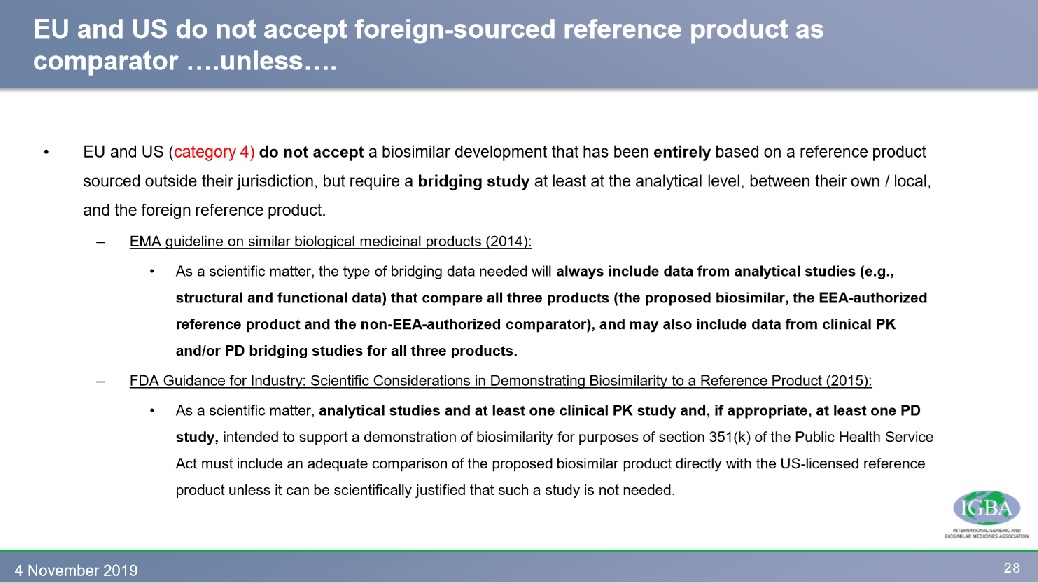
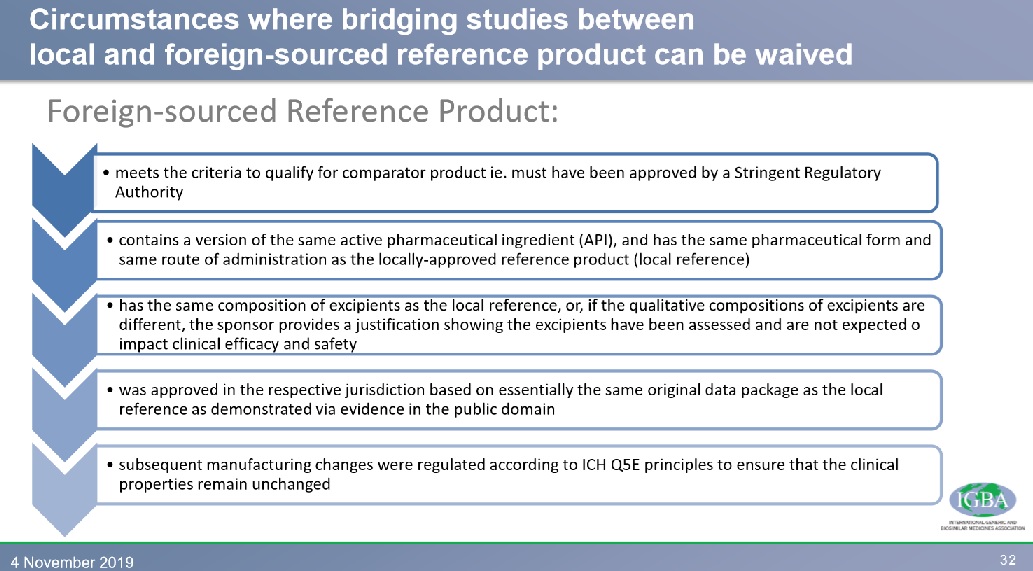
She also discussed certain circumstances in which bridging studies can be waived.
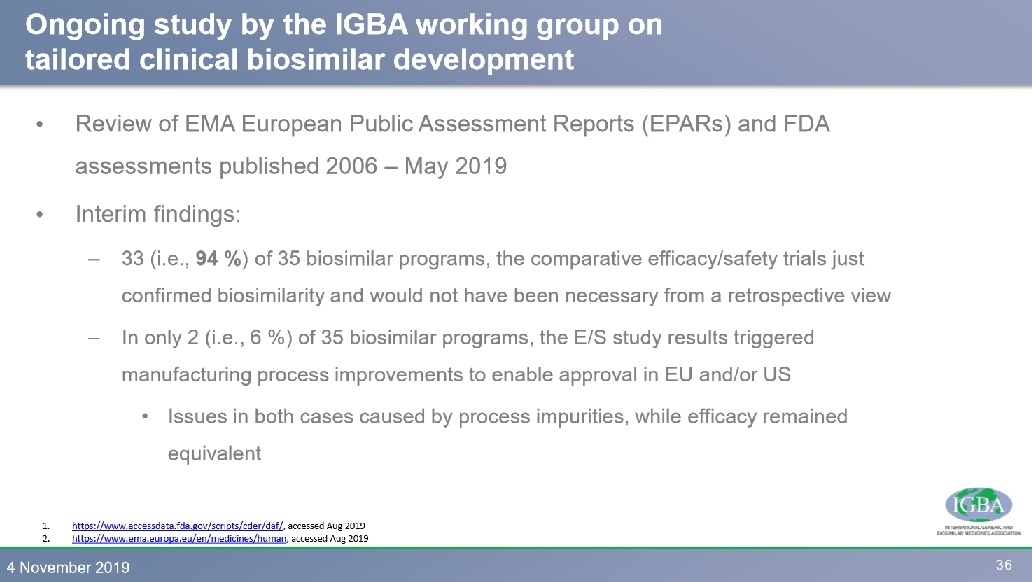
And she offered the latest on an ongoing study on biosimilar clinical development:
Meanwhile, IGBA recently signed a memorandum of understanding with WHO, noting that national regulatory guidance aligned with WHO guidance has led to the approval of many biosimilars with regulators.
Kox said the MOU has a biosimilar workstream and there is more to share with WHO on biosimilar switching, traceability, identification and experience.
“Interestingly, in the meeting and afterwards, they mentioned they want to look into the streamlining of the development of biosimilars and clinical trials and that’s very important that WHO gets into this debate,” she added.
“The convergence of requirements is very much needed,” she noted, stressing the need for information sharing and further collaborations between countries.