Industry pushes FDA for tailored complex generics post-approval changes guidance
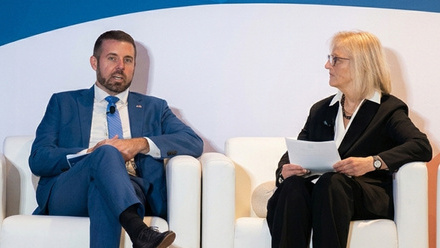
The US Food and Drug Administration (FDA) needs to develop guidance on post-approval changes for complex generics, and to update its guidance on post-approval changes for non-complex generics as current versions are outdated, according to representatives of the generics industry.The remarks were made during a panel on post-approval changes for complex generics on 9 November at the Association for Accessible Medicines’ (AAM) GRx+Biosim held a conference in Bethesda, MD.
“The current regulatory guidelines do not provide complete details as to the data requirements and regulatory filing categories for post-approval changes for complex generics,” said Michael Balon, global director for regulatory affairs at Apotex.
For example, FDA’s existing suite of post-approval guidances do not address the transfer and scale-up of metered dose inhalers (MDIs), dry powder inhalers (DPIs), nor do they address component changes for such products.
FDA also needs to update their guidances on post-approval changes for non-complex products, asserted Janet Vaughn, the vice president for North American generic regulatory affairs for Teva Pharmaceuticals.
She noted the Scale-Up Post-Approval Changes (SUPAC) guidance, which came out in 1995, is “almost 30 years old” while a subsequent guidance addressing changes to approved new drug applications (NDAs) and abbreviated new drug applications (ANDAs), was issued in 2004.
Vaughn added that while the International Council on Harmonization’s (ICH) Q12 guidance on post-approval changes is “helpful,” it’s application is limited as it has not been reconciled with the FDA’s guidances on post-approval changes.
Using controlled correspondence
FDA officials told attendees that industry can request a post-approval change through the controlled correspondence (CC) pathway outlined in the Generic Drug User Fee (GDUFA) III commitment letter.
“The premise of GDUFA III is on controlled correspondence,” said Paul Schwartz, director of the division of post-marketing activities in the FDA’s Center for Drug Evaluation and Research (CDER). He added that the user fee deal states that sponsors can submit post-approval questions via the controlled correspondence pathway for complex generics.
In response Vaughn argued that “submitting a controlled correspondence is not always advantageous to us.”
Instead, Vaughn argued that industry would prefer having a guidance that addresses specific changes for complex generics. For example, even though transdermal products have been available for “quite some time” a specific guidance addressing post-approval changes for these products is missing, Vaughn said.
Darby Kozak, the deputy division director for the division of therapeutic performance in FDA’s Office of Generic Drugs, said industry can also request these changes through the agency’s issuance of new product-specific guidance (PSGs).
Although PSGs are typically focused on the development and approval of abbreviated new drug applications (ANDAs), these recommendations “may also serve as a starting point on the type of information to support a post-approval change,” he added.
AAM GRx+Biosims meeting