Latin America Roundup: Mexico, El Salvador join IMDRF as affiliates
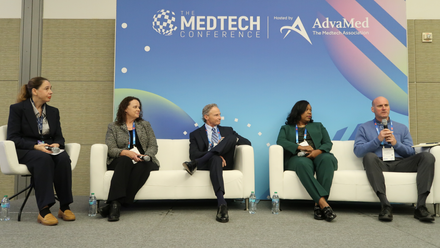
At its annual meeting March 11-15, the International Medical Device Regulators Forum (IMDRF) accepted submissions from Mexico and El Salvador’s national regulatory authorities to join the forum as affiliate members. The two countries join Chile and Cuba, which were admitted as affiliates in 2023. Brazil is a full member of the forum, and Argentina is an official observer.The harmonization objectives of the IMDRF, a group of regulators who work on promoting convergence, align neatly with regional convergence efforts in Latin America, which have progressed faster for devices than for medicines.
In a statement about the IMDRF meeting, the Pan American Health Organization lauded the new memberships, saying it has long encouraged Latin American and Caribbean agencies to become active in the forum. PAHO representatives also presented at the Washington, DC conference. In its summary of the meeting, IMDRF said that the PAHO officials “described specific premarket reliance models,” while industry representatives from the region “highlighted their experiences using these models.” The four-day conference drew about 400 in-person attendees and twice that many online, according to IMDRF.
IMDRF, PAHO (Spanish)
Paraguay, Brazil forge information-sharing agreement
Paraguay’s National Directorate of Health Surveillance (DINAVISA) announced on 22 March that it has signed an accord with Brazilian regulators to facilitate information sharing on regulatory reviews related to medical products. According to a news release by the agency, this includes “policies, guidelines, standards, laboratory testing, pre-market evaluation, post-market surveillance, regulatory compliance, good manufacturing practices, [and] evaluation of clinical trials.”
The agreement, DINAVISA said, comes at a time when the agency is “learning new regulatory dynamics and facing new challenges.” Embarking on a path of “cooperation, strategic alliances, collective construction of relevant decisions, convergence, trust, reliance and regulatory intelligence will bring us closer to the objective.”
The Brazil Health Regulatory Agency, ANVISA, issued a parallel statement, with its director, Antônio Barra Torres, saying that the agreement would help “establish regulatory environments that favor economic development and the availability of safer and quality products for the populations of the countries involved,” adding that such bilateral agreements
have “the potential to promote regional integration as a concrete initiative.”
While a previous, Mexico-led push for a large multinational Latin American regulatory agency appears to have stalled for the time being, various countries have taken steps to increase regulatory reliance – or at least pave the way for such – through bilateral pacts, often with their neighbors. In November 2023, for example, Brazil and Argentina signed an accord to recognize each other’s decisions on certain classes of medical devices. In June 2023, regulators in Guatemala and El Salvador announced an information-sharing agreement that the countries said was aimed at facilitating reliance in the future.
DINAVISA (Spanish), ANVISA (Portuguese)
Peru signs accord with USP
Peru’s General Directorate of Medicines, Supplies and Drugs (DIGEMID) said it has signed a memorandum of understanding with the United States Pharmacopeia (USP). The agreement resulted in a work plan to establish “close collaboration between both parties, emphasizing, among other activities, the exchange of experiences in working groups on cannabis and reference standards, training courses, conferences, internship programs, technical visits and on-site training,” DIGEMID said in a news release. USP has aimed to strengthen ties with regulators and manufactures’ associations in the region through its Latin America arm, by way of in-person meetings and Spanish-language workshops and courses.
DIGEMID (Spanish)
COFEPRIS inaugurates tracking program with Mexican navy
Officials with Mexico’s navy and the Federal Commission for the Protection against Health Risks (COFEPRIS) have formally rolled out a tracking platform, called SISUS, to trace activities related to chemical precursors and controlled substances, including narcotic and psychotropic drugs.
Entities carrying out regulated activities with these substances can log them on the new platform. Activities may include notifying authorities about movements or the diversion of regulated substances, COFEPRIS said in a March 27 news release. The agency noted in the same release that the digital platform also serves as an anti-corruption measure, allowing entities to engage with authorities without intermediaries. The platform, which has already handled about 1,000 procedures, “is expected to be fully operational by the end of this month, in order to facilitate compliance with the law by the regulated industry,” the agency said, noting that in the coming days the platform will be presented to authorities in the United States.
COFEPRIS (Spanish)
New El Salvador agency delayed
El Salvador’s planned Superintendency of Health Regulation (SRS), a body that will centralize regulatory activities currently handled by four separate agencies including its National Directorate of Medicines (DNM), will not come into force until 9 August, according to a Salvadoran press report from 21 March. The new agency was approved by Salvadoran lawmakers in November and was originally scheduled to open on 1 April. Lawmakers approved the delay, which they attributed to difficulties in establishing mechanisms for the transition and integration of the different agencies’ functions.
Elsalvador.com (Spanish)
ANVISA extends GMP certifications on devices
Brazil’s ANVISA agency announced on 22 March that it would double the current time limit on Good Manufacturing Practices certifications for medical devices from two years to four. To be eligible for the extension, manufacturers must remain in the Medical Device Single Audit Program during the full certificate period, the agency said.
ANVISA (Portuguese)