MHRA to launch consultation on device international reliance plan by year’s end
Editor's note: This article was updated on 17 October 2024 to clarify the proposed international reliance procedure.
TORONTO – The UK Medicines and Healthcare products Regulatory Agency (MHRA) plans to publish a public consultation on a proposal to enable medical devices to gain access to the UK market more quickly if they are authorized in a comparable regulator country (CRC) by the end of the year. Depending on the outcome of the consultation, the international reliance (IR) policy could be introduced as legislation in the British Parliament next year.
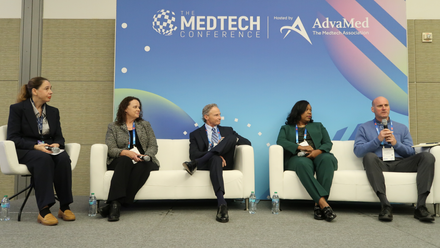
During a panel on international harmonization and reliance at the 2024 MedTech Conference hosted by AdvaMed, Rob Reid, deputy director for innovative devices at MHRA, updated attendees on a statement of policy intent published in May that proposed a high-level approach to allow devices in the UK market that have been authorized by CRCs, beginning with regulators in Australia, Canada, the EU, and US, following an assessment and issuance of a certificate of international reliance. (RELATED: MHRA proposes recognition path for devices cleared by trusted regulators, Regulatory Focus 21 May 2024)
"From the four comparable regulatory countries, that is [Therapeutic Goods Administration (TGA)], Health Canada, FDA and the EU, we would take a different approach in terms of the route to market in the UK depending on the risk classification of the device," Reid told Focus.
He noted that when parliamentary elections were recently called in the UK, it gave MHRA time to step back, test the proposed framework with device makers, and see if it worked with all the different classes of devices coming from the individual markets.
"That has led us to evolving the approach that we're taking," said Reid. "For example, the original statement of policy intent had exempted certain 510(k) products from the reliance route. I think some of the work that we've done over the summer has meant that we can look at that in a slightly different way perhaps and that has led us now to the point where we need to consult."
Reid emphasized that their policy position has remained unchanged, but after working with companies over the summer, MHRA has reconsidered whether it needs to exclude certain 510(k) products from the IR or whether there are alternative routes that could allow those products on the UK market but with additional requirements.
“The purpose of the public consultation is to test that thinking and to make sure that we’re not excluding things that we could include with different checks and balances,” he said.
Reid noted that part of the reason to initially exclude certain 510(k)s was due to concerns about their risks and also whether MHRA would have access to the data that is needed to ensure the products are safe and effective for the UK market. He declined to comment on what checks and balances could allow such 510(k)s on the market but said they will be part of the consultation when it is made public.
The proposal still needs cross-government approval, but once that is done, Reid said MHRA intends to publish the consultation before the end of the year.
"We will then look to lay the Statutory Instrument that will introduce the legislation for IR in 2025," he added. "Exact dates will depend on parliamentary and government processes, so it's difficult to be more precise at this stage."
After Parliament has picked up the proposed legislation, it will be subject to debate and must be approved by both Houses of Parliament in order to become law.