This Week at FDA: New guidance, debt ceiling ramifications, and more
Welcome to another installment of This Week at FDA, your weekly source for updates – big and small – on FDA, drug and medical device regulation, and what we’re reading from around the web. This week, FDA published several guidance documents relating to drug-drug interaction studies, nonclinical evaluation of immunotoxicity, interstitial cystitis and its Q-submission program, and the agency announced it will allow another type of in-person, face-to-face meeting with drugmakers.On Wednesday, FDA announced that it will expand its in-person, face-to-face industry meetings for drugs and biologics to include requests for Type B End-of-Phase 2 (OEP2) meetings as of 12 June 2023, adding to the previously announced Type A, Biological Product Development Type 1 and Type X meetings.
The House and Senate have passed legislation to raise the debt ceiling, which President Joe Biden is expected to sign. The legislation establishes a debt limit until January 2025 and the bill would cap non-defense spending at $704 billion in FY 2024. According to the Alliance for a Stronger FDA, after some adjustments to appropriations, non-defense, non-Veterans Affairs medical spending is capped at around $637 billion, or “roughly flat” compared to the current fiscal year. While the exact amounts available for various programs are difficult to estimate, the Alliance notes that “all non-defense, non-veteran programs will be under increased funding pressures.”
On Thursday, FDA revoked the emergency use authorization (EUA) for Janssen's COVID-19 vaccine at the manufacturer's request. The agency said the company said there was "no demand" for the vaccine and that it did not plan to update the strain composition to address emerging variants.
Drugs & biologics
On Friday, FDA announced final guidances on Nonclinical Evaluation of the Immunotoxic Potential of Pharmaceuticals and Drug-Drug Interaction Assessment for Therapeutic Proteins, as well as draft guidance on Interstitial Cystitis/Bladder Pain Syndrome: Establishing Drug Development Programs for Treatment.
FDA cautioned patients and healthcare providers against using unauthorized compounded semaglutide salts in place of approved versions of the drug, such as Ozempic, Rybelsus and Wegovy, and noted that compounded versions of the drug should not be used if an approved version is available. The warning follows a letter FDA sent to the National Association of Boards of Pharmacy in April raising concerns about the use of semaglutide salts, including semaglutide sodium and semaglutide acetate, that have not been shown to be safe and effective.
The agency also released a warning letter sent to MA-based outsourcing facility New England Life Care, Inc. for several issues, including inadequate labeling, insanitary conditions, and good manufacturing practice (GMP) violations.
We’re also reading this interview with Richard Pazdur, director of FDA’s Oncology Center of Excellence, in The Cancer Letter, in which he discusses shortages of two key chemotherapy drugs, cisplatin and carboplatin. Pazdur attributed the immediate cause of the shortages to one company shutting down production of cisplatin, which in turn caused a spike in demand for carboplatin. Pazdur also blamed a lack of investment in newer manufacturing technology and processes as a contributing factor to the shortages.
Earlier this week, the Center for Drug Evaluation and Research’s (CDER) Office of Surveillance and Epidemiology released its 2022 annual report, detailing the office’s response to multiple public health emergencies, as well as its efforts to detect, prevent and manage risks to public health.
As observed by AgencyIQ, FDA’s Oncology Center of Excellence has created a new webpage listing its ongoing programs and projects. The center has frequently added new pilots and projects since its inception, and finding detailed information on some of them has been challenging.
Medtech
The Center for Science in the Public Interest this week wrote a letter to FDA Commissioner Robert Califf asking him to develop regulations if Congress fails to pass legislation giving the agency explicit authority to regulate laboratory developed tests (LDTs). While Califf has already called for congressional action, FDA has also said it is preparing rulemaking process in case lawmakers fail to pass legislation.
Rep. Jay Obernolte (R-CA) is sponsoring a bill that would amend the Federal Food, Drug, and Cosmetic (FD&C) Act to expand the types of devices that may only require digital labeling from FDA instead of requiring physical labels. The text of the bill has not yet been published or introduced in committee.
The Center for Device and Radiological Health (CDRH) has published a list of questions for public feedback on how it patient access to at-home medical technologies can be increased. The issue is a priority for CDRH Director Jeff Shuren, who recently said the agency is trying to do its part to help get at-home medical technologies on the market to improve the US healthcare system.
FDA has also published a final guidance on its Q-submission program that allows sponsors to request early written feedback in writing from regulators on Investigational Device Exemption (IDE), Premarket Approval (PMA), Humanitarian Device Exemption (HDE) applications, Evaluation of Automatic Class III Designations (De Novo requests), Premarket Notification (510(k)) submissions, and Clinical Laboratory Improvement Amendments (CLIA) Waiver by Applications, Dual 510(k) and CLIA Waiver by Application submissions.
FDA has sent iRhythm Technologies a warning letter after its inspectors found the device maker's manufacturing facilities failed to conform to a number of regulations including reporting and quality system requirements. FDA has not published the warning letter yet but iRhythm said it will respond to the agency but continue to manufacture devices in the meantime and doesn’t have to recall any products.
SD Biosensor is recalling 2.7 million at-home COVID-19 tests which are distributed by Roche Diagnostics in a class I recall. FDA says it has serious concerns about bacterial contamination in the tests that could pose safety risks to patients as well as output faulty results.
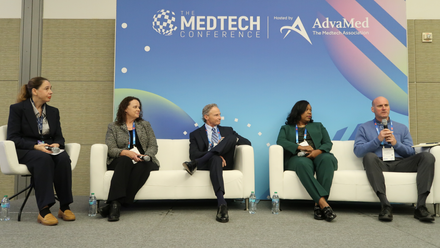
The medtech lobby group AdvaMed published a white paper this week outlining ways to strengthen supply chain resiliency. During the pandemic, the US faced a number of critical medtech supply chain shortages and FDA has been pushing for additional authority from Congress to require companies to notify it of supply chain problems beyond the scope of a public health emergency. The white paper makes a number of recommendations such as increasing public-private partnerships and government coordination but stops short of calling for additional FDA authorities.
AdvaMed also praised the Environmental Protection Agency (EPA) for extending a comment period deadline on a couple of rules it has proposed to curb the use of ethylene oxide (EtO) which is used to sterilize about half of all medical devices in the US. The lobby group and FDA have raised concerns that curbing the use of the sterilizing agent could significantly reduce access to certain products.
EPA also published a notice proposing a consent decree that would require it to publish a final EtO rule updating its National Emission Standards for Hazardous Air Pollutants by March 2024. After years of waiting for the ETO rule, the consent decree would mandate EPA to publish the rule early next year.