Convergence: Experts discuss the past, present, and future of regulatory
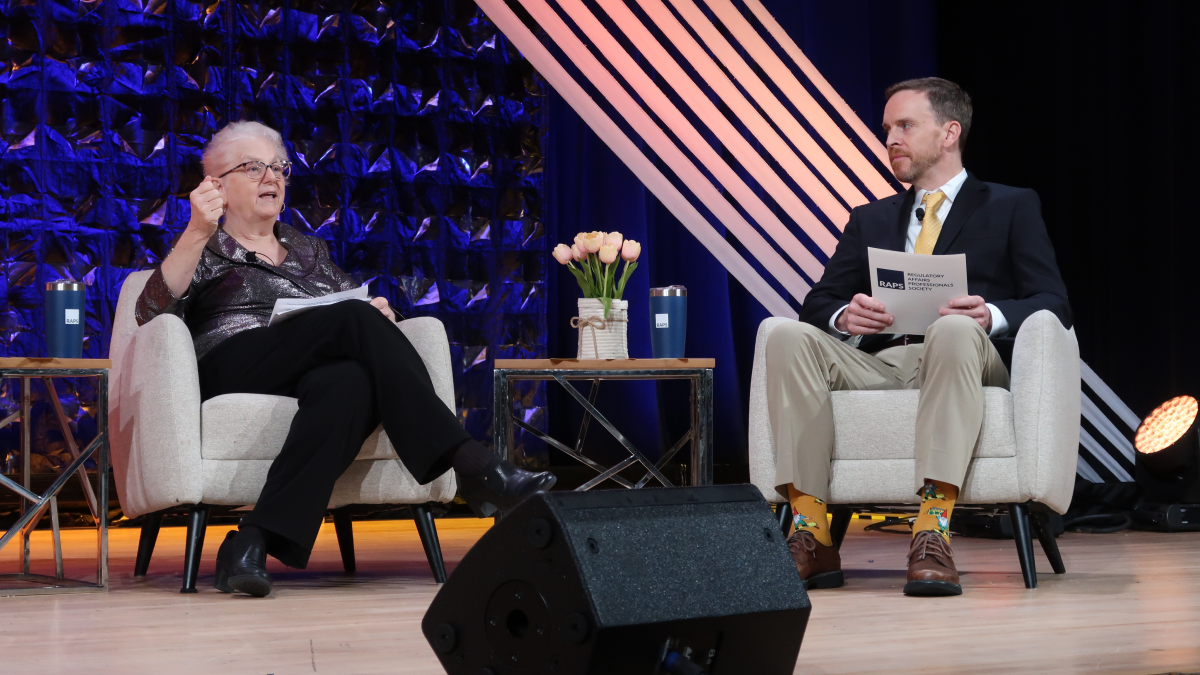
Linda Bowen (left) and Chris Whalley (credit: Ferdous Al-Faruque)
CHARLOTTE, NC — Experts in medical device and pharmaceutical regulatory affairs discussed how the field has evolved over the last five decades and how professionals can continue to face the challenges that come their way during the opening plenary session of RAPS Convergence 2026.
The experts who spoke at the plenary—which also marked RAPS 50th anniversary—reflected not only on the myriad changes they’ve witnessed throughout their careers, but also on what has remained the same.
Past meets present
Linda Bowen, an adjunct professor at the Temple University School of Pharmacy who spent much of her career working in regulatory affairs at drugmakers including Seagen, Sanofi, and GSK, noted that when she began working, everything was still done on paper and the 1992 Prescription Drug User Fee Act (PDUFA) was still years away from being enacted.
Back then, Bowen said, new drug applications (NDA) took 30 to 35 months to review and that most drugs were first approved outside the US. She also noted that there were no international bodies, such as the International Council for Harmonization (ICH), which was founded in 1990, working to harmonize regulatory requirements across different regions. She added that regulatory professionals in those days tended to be generalists rather than specialists.
"You learned a lot because you had no choice," said Bowen. "It was a very different world because most of us were doing everything, but it also helped us, I think, become very strategic further on.
"We were gatekeepers, we were there to follow the letter of the law," she added. "It was about getting the product to market as fast as you could, and with a review time of three years, that meant getting a submission in as quickly as possible."
Bowen remarked that many of the concerns she’s hearing about artificial intelligence (AI) today echo those that were raised when the internet was in its infancy. While she appreciated the internet for enabling easier communication, file transfers, and the ability to download US Food and Drug Administration (FDA) guidances, others were concerned that it would take their jobs and that guardrails would be needed.
"We talked a lot about human in the loop, we didn't call it that at the time, but there was worry about guardrails and Skynet taking over the world," said Bowen.
Around the mid-2000s, regulatory professionals, at least in the biopharma space, began to shift to being more strategic and less generalist, she said, noting that technological advances have necessitated that regulatory professionals take on more specialized roles.
One thing that hasn’t changed, however, is the need for regulatory professionals to be critical thinkers, Bowen said.
"It's the critical thinkers out there that are going to do well in regulatory," said Bowen. "I don't even know how you train somebody to be a critical thinker.
"I think it's a skill that not everybody has, but I think regulatory professionals in general are really good at it," she added.
Here and now
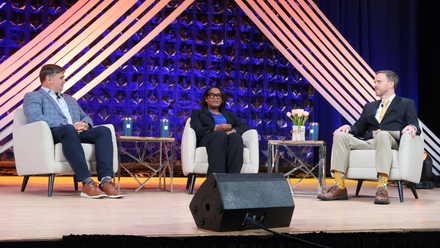
Andrew Emmett, vice president for global regulatory policy and intelligence at Pfizer, noted that there is a lot of noise in the regulatory field today—whether it’s shifting policies, geopolitical influences, new technologies, or differing regional expectations. Early in his career, he said he learned to deal with the noise by prioritizing ruthlessly. If everything is treated as a priority, then nothing can be treated as a priority, he added.
Emmett advised that regulatory professionals need to understand their company's pipeline priorities and figure out what they need to do to support them. He also said it's important for regulatory professionals to understand macro trends in science, public policy, legislation, and other key areas and anticipate how they may affect their work.
"I usually like to think of that as a matrix," said Emmett. "Where are we going to have the most impact on a particular issue, and where do we have the most likelihood of being successful?"
Hortense Allison, vice president and head of regulatory at Bayer Radiology, noted that there many changes occurring in the medical device space. Two areas she is focusing on are FDA's Home as a Healthcare Hub initiative, which aims to encourage the development of medical devices that allow patients to be monitored and treated at home to reduce healthcare costs, and how real-world evidence (RWE) can be used to bring new products to market.
“FDA has been looking at [RWE] for a number of years now, but what's new is that they have broadened the scope,” said Allison. “We're looking now at a wider number of devices and thinking about how does that play within our companies and what the impact will be, could we potentially tap into real-world evidence as we look to do new submissions?”
Allison said she is also excited about initiatives by FDA and the Centers for Medicare and Medicaid Services (CMS) to better align the regulatory review and reimbursement processes.
Emmett pointed out that the FDA lost about a fifth of its workforce in 2025 as a result of government’s reduction-in-force effort led by the Department of Government Efficiency, which he said resulted in a significant loss of institutional knowledge.
"I'll give FDA staff a lot of credit," Emmett said. "They have weathered it incredibly well, and they're keeping things moving well, but that's a trend to continue to watch as they kind of backfill from those positions."
He said he is also closely following trends in digital modernization and trade policy, and how they intersect with regulatory issues.
"I think that in the current environment we're really seeing what you could call a bit of regulatory nationalism, where over a long period of time, decades, through ICH and others, we've been driving towards greater and greater international harmonization," said Emmett. "I think today, as each region, each nation kind of pushes its own trade policies, economic policies, regulatory policies, and in how they implement those, as well as ICH standards, we're seeing a certain level of fragmentation and a certain level of divergence of international standards.
"For regulatory affairs professionals, it makes it incredibly complex and very difficult to predict things like launch sequences and launch schedules across different regions," he added. "It really drives an imperative to have early conversations and early dialog with your commercial colleagues to make sure that you're connecting all of those dots."
Allison added that another key area to watch is AI.
"What will it do to our profession, both from a product development perspective as well as an operational perspective?" said Allison. "I think we're still in the beginning phases in regulatory, and we have not seen it all as yet, but it is moving very rapidly, and the question for us: Can we keep up with the pace?"
To keep pace with the evolving regulatory landscape, Allison said she focuses on becoming more digitally savvy and prepared for an AI-regulated world. She said it's also important to be an agile regulatory professional as the field evolves, while also being good communicators who can translate AI regulatory language for the rest of their companies.
Emmett added that regulatory professionals also need to be data storytellers who can weave data into a narrative that explains the therapeutic context, the patient journey, and the product's benefit-risk for health authorities.
Future
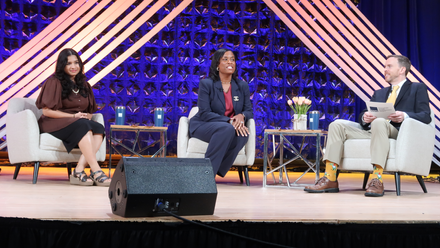
Jasmine Muse, senior manager for global regulatory affairs CMC at UCB Pharma, and Nivedha Subramanian, a regulatory affairs associate at SCIEX, said they have come to regulatory affairs more recently than the previous speakers. They discussed their journey into the field, which came through different opportunities and with the help of mentors—both formal and informal.
They noted that, unlike some of the other speakers, they entered the regulatory field at a time when AI was already a reality.
"I didn't have an option to choose if I should use or not, I just had to learn how to use AI in the workspace," said Subramanian. Discussing whether the use of AI is an expectation in the field, she said, “Maybe not explicitly as of now, but it's definitely a tool that we have to use along with our work every day," she added.
As a non-native English speaker, Subramanian noted that AI has helped her communicate her ideas more effectively to company leaders and decision-makers. She said it has also helped her fine-tune her ideas and express herself confidently.
Muse said that AI is a tool like any other tool in a regulatory professional's toolbox. She said it has helped her collaborate more effectively with her colleagues and has helped her think outside the box.
"My prediction into the future is that AI will allow regulatory professionals to come back to the table together to talk more, converse more, focus on our strategy, our plans, focus more on professional development, and be able to invest in ourselves so that we can pour into our team," said Muse. "AI is really great at making calendar invites and doing some of those administrative tasks that take away from our day-to-day, but it is my vision that it will allow us to actually get back to sharing the wisdom and the knowledge acquired and move us further into the future."