Convergence: Experts review the state of play for MDR/IVDR amid proposed reforms

Left to right: Erik Vollebregt, Sabina Hoekstra-van den Bosch, Bassil Akra, and Gert Bos (Credit: Ferdous Al-Faruque)
CHARLOTTE, NC — A panel of experts representing the European Commission, industry, and notified bodies reviewed the state discussed the current state of play amid proposed reforms to the EU Medical Device Regulation (MDR) and In Vitro Diagnostics Regulation (IVDR) at RAPS Convergence 2026.
Last year, in response to concerns raised by industry and other stakeholders about the availability of medical devices in the EU, the Commission proposed a series of targeted reforms to MDR and IVDR. The proposed reforms are still being evaluated by EU legislators and must be adopted by the European Parliament and Council before the reforms can take effect. (RELATED: EU officials optimistic about proposed MDR/IVDR reforms, Regulatory Focus 23 March 2026; EU Commission proposes major reforms to MDR, Regulatory Focus 18 December 2025)
Peter Bischoff-Everding, a senior expert at the Commission’s Directorate-General Health and Food Safety (DG SANTE), said the proposed revisions to the MDR and IVDR in December after receiving significant feedback from industry and other stakeholders. The reforms, he said, are aimed at simplifying rules to reduce administrative burdens, increase predictability, shorten the regulatory processes, improve cost efficiency and effectiveness, and all while maintaining a high level of patient safety and product availability.
He noted that some of the guiding principles going into the revisions were to transition from fixed procedures to risk-based oversight, optimize regulatory resources, and provide flexibility to respond to special needs and situations.
The proposed changes include providing a legal basis for structured dialogs with notified bodies, similar to pre-submission meetings that manufacturers can request from the US Food and Drug Administration (FDA), reducing the level of sampling or technical documentation necessary when evaluating medium-risk devices, and removing the need for recertification every five years.
"These are really some important points in the proposal to enhance the cost-efficiency and also to make requirements more (risk) proportional," said Bischoff-Everding.
The proposed reforms, however, have raised some concerns with notified bodies.
During the discussion, Sabina Hoekstra-van den Bosch, global director for regulatory strategy at TÜV SÜD, said that notified bodies have identified eight specific areas of interest for amending MDR and IVDR. Of those, she said the most important were risk-adaptive surveillance, notified body access to relevant data in the European Database on Medical Devices (EUDAMED), adding notified body experts to expert panels with strict conditions, and notified body sustainability.
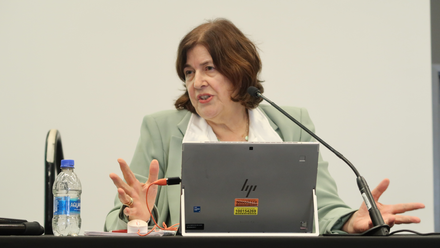
While the proposed MDR language requires a cause to allow notified bodies to conduct surveillance, Hoekstra-van den Bosch said they are concerned about how this affects patient safety. Instead, they want a risk-adaptive surveillance that allows them to conduct quality management system (QMS) audits, unannounced audits, and technical documentation sampling. Furthermore, they want to establish clear criteria for changing surveillance intensity and review decisions periodically as new evidence emerges.
Hoekstra-van den Bosch said that under such a proposal, surveillance intensity would decrease as confidence in the manufacturer increases. She said it would allow manufacturers to move between risk levels based on evidence, enable high-quality manufacturers to stand out from low-cost competitors, and allow early MDR/IVDR adopters to benefit from their existing track record.
If the notified bodies’ proposal were adopted, it would change the regulatory surveillance system from one based on reactive intervention to one based on preventive oversight, which she said could mean earlier intervention for risky products and help keep patients safer.
Allowing notified bodies to use EUDAMED data, she said, would further enable them to implement a risk-proportionate surveillance by allowing them timely access to registration, certificate, and vigilance data. It would also create a more complete risk picture of each product they evaluate, help identify safety signals sooner, allow for better-targeted audits, and lead to less duplication for manufacturers and notified bodies.
Hoekstra-van den Bosch also argued that the participation of notified bodies on expert panels can strengthen those panels without compromising their impartiality.
“If the expert panels expand their scope, they need expertise, we have expertise,” said Hoekstra-van den Bosch. “Our experts are already assessed because that's a requirement by the authorities.
“You could write some things in the legislation to guarantee the independence and the impartiality, and then you get extra expertise without compromising the regulatory resource,” she added. We think that is possible, and we are willing to cooperate to give more or less the system our expertise.”
Hoekstra-van den Bosch said there would be guardrails in place, including ensuring that notified body experts were assessed and authorized by health authorities and that their participation would be subject to clear independence and impartiality safeguards. She added that full disclosure and assessments of potential conflicts of interest would be necessary, and that transparency in appointments, roles, and decision-making would be required.
Finally, Hoekstra-van den Bosch highlighted the importance of ensuring the sustainability of notified bodies. She noted that it takes years for notified bodies to recruit, qualify, and train their multidisciplinary experts.
Hoekstra-van den Bosch highlighted that notified bodies are facing significant financial pressures. She noted that at least one notified body has announced it has gone bankrupt, and another has said it will cease operations.
“If we want to maintain this important expertise and function that is necessary for patient safety, we need regulatory stability that we can plan, that we can keep our staff,” said Hoekstra-van den Bosch.
Erik Vollebregt, an attorney with Axon Lawyers, cautioned that while there's been a lot of optimism from manufacturers regarding the proposed changes, they should not confuse simplification for deregulation. He said that while the proposal aims to simplify the regulatory regimes for devices and diagnostics, it isn't lowering the evidentiary and safety requirements.
"We will still have the same regulatory philosophy, we will still have the same regulatory system, and we also will still have a good level of patient safety," said Vollebregt. "I don't think it's suddenly going to be completely radically different."
From his perspective, Vollebregt doesn't think the proposed changes have made a significant difference for health institutions and noted that member states seem wary that the changes will lead to greater centralization of the regulatory regime. He added that member states are also concerned that simplification will lead to a lowering of patient safety in specific areas.