
Diamantas touts new rare disease framework, greater emphasis on patient voice
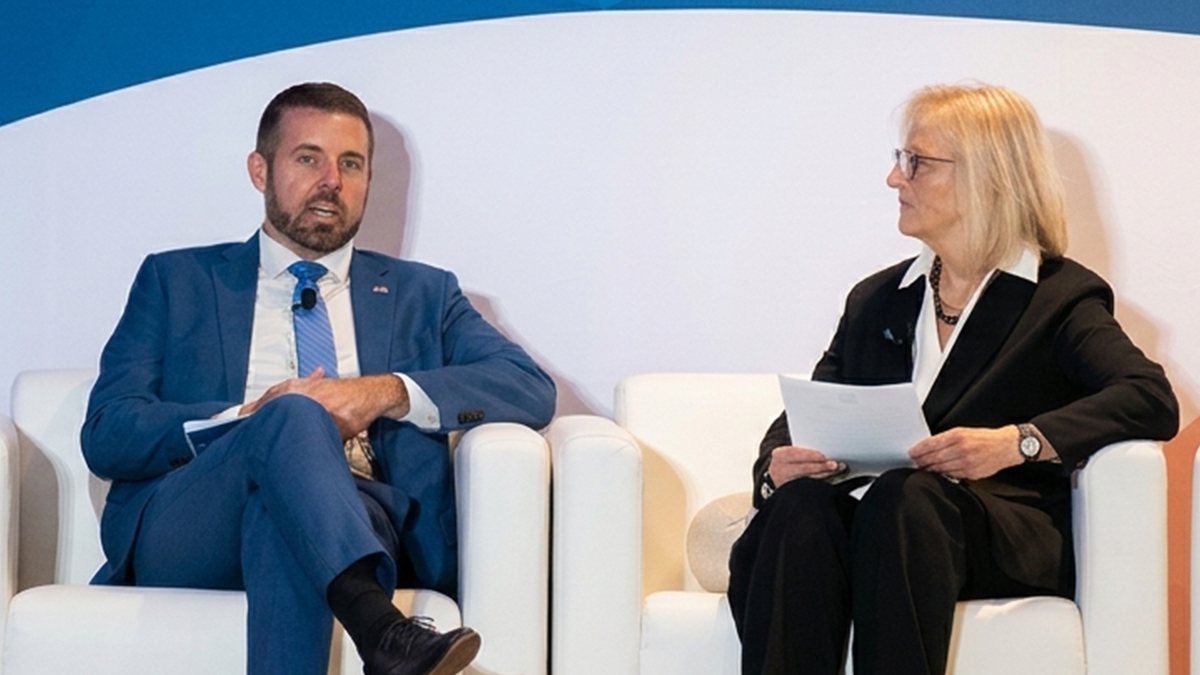
Acting US Food and Drug Administration (FDA) Commissioner Kyle Diamantas touted the agency’s new rare disease framework as the best mechanism for modernizing rare disease development and incorporating the patient voice into scientific reviews for orphan therapies during a fireside chat at the NORD Breakthrough Summit on Monday.
FDA announced the new framework earlier this month as a fit-for-purpose approach to orphan drug development with a more tailored regulatory review process. The framework is focused on building shared resources and integrating the patient voice in the drug review process for small patient populations. (RELATED: FDA launches rare disease framework initiative, Regulatory Focus 15 October 2026)
“We have to do a better job at FDA,” of incorporating patient involvement in developing treatments for rare diseases, Diamantas said.
He added that “the science has never been more promising. I think that this is absolutely true with genomics characterizations, gene editing, [and] precision medicine. All these things are becoming more modernized when you think back to a couple of years ago. The science is changing tremendously. That gives us the opportunity to change our regulatory approaches to account for the evolution in science.”
Despite this evolution, he noted that only 5% of rare diseases have a cure. “Tremendous work” needs to be done in this space to get treatments out to patients, he added.
According to Diamantas, FDA’s new rare disease framework would ensure that reviews are more predictable across the different review divisions and that those reviews will better accommodate patient feedback.
Diamantas acknowledged recent criticism that the agency has been inconsistent in its review of rare disease drugs. “You may go to one review division, and you may get a totally different outcome when you go to different review division,” he said.
Diamantas also mentioned that the patient perspective isn’t always explicitly considered. He said he recently spoke with a review team about an orphan product that was subject to an advisory committee meeting.
“I asked them how often have you been talking to patients about their perspective? And they said this is the first time they have ever heard of a patient advocate. Yet by this time, it is too late in the game. […] The decisions have been made. We’ve got to do a much better job of using our processes to account for things like the patient voice,” Diamantas said.
When asked about the changes needed in the regulatory framework to accommodate the new system, he stated that his goal is to establish a framework that is fit-for-use. To achieve this, the FDA will issue rulemaking and guidance. Additionally, Diamantas mentioned that the FDA will routinely engage with the reviewers.
Diamantas acknowledged that implementing new processes will take time. “Our ultimate goal is to end up in a situation where we account for the nuances and the realities of the rare disease or condition” in drug reviews.
When asked what approach the framework will take with respect to clinical trial designs for rare diseases, he emphasized the importance of maintaining an open mind. He said that efforts are now underway to standardize the criteria for clinical trial design and mentioned that FDA is looking to expand its guidance on this topic.
Diamantas also urged the public to attend a workshop the agency is hosting on Wednesday at its White Oak campus to solicit feedback on the rare disease framework.