EMA officials discuss avenues for ATMP development at Convergence 2022
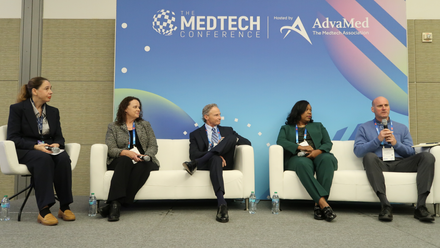
PHOENIX, AZ – Sponsors should be aware of the multiple scientific committees that are available to help them submit review-ready applications for innovative products, including advanced therapy medicinal products (ATMPs), asserted regulators who explained some of these different platforms and committees at RAPS Convergence 2022.The panel featured the European Medicine Agency’s (EMA) Sabine Haubenreisser, Anabela Marcal, Ana Hidalgo-Simon and Falk Ehman. It also included Karl-Heinz Huemer of the Austrian Agency for Health and Food Safety (AGES).
Falk Ehmann, chair of EMA’s Innovation Task Force said, “European regulators offer multiple tailored platforms for discussions on early drug development in emerging new area of science and technology.”
Hidalgo-Simon noted that some of the factors challenging ATMP development include low patient enrollment in clinical trials and limited safety data.
Ehmann said that the Innovation Task Force aims to support innovative drug development by providing scientific, legal and regulatory advice with sponsors early during the development process, and such advice is free of charge. To get advice, sponsors must submit a three-page request for information form. Ehrman said it was these kinds of ITF discussions that helped facilitate the development an experimental mRNA cancer immunotherapy.
Another committee that is available to help sponsors is the small and medium size enterprises (SME) office which provides advice to commercial companies, as well as academic institutions who may not have extensive regulatory experience.
Likewise, the Committee for Advanced Therapies (CAT) provides advice on cell therapies, tissue engineered product and drug-device combination products, explained Karl -Heinz Huemer of the Austrian Medicine Agency (AGES). The committee can also provide advice on the classification of a medicinal products as an ATMP.
The Scientific Advice Working Party (SAWP) is also available to provide advice; the committee is comprised of 70 members from difference national competent authorities with a broad range of expertise. Such scientific advice can be requested during any point of the development of an ATMP.
Besides getting this input, the panel also stressed the importance of engaging with sponsors early on to ease possible review hiccups.
Ehmann said, “Early interaction on drug development with the EU regulators enables higher chances of market entry and faster patient access.”