Euro Convergence: Stakeholders seek more product-specific, technical dossier-related guidance
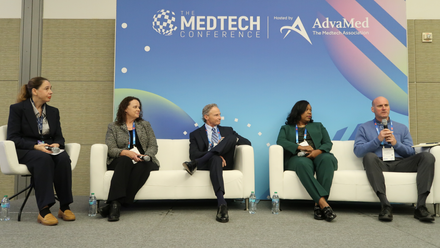
BERLIN – A panel of experts said stakeholders should focus on ensuring innovative and orphan devices get to market and keep digitalization in mind as they transition to the EU Medical Device Regulation (MDR). As stakeholders have gained experience with MDR, they said they need more clarity on product- and technical dossier-related guidance than on how the regulatory framework should work.During 7 May panel on the state of MDR at the 2024 RAPS Euro Convergence conference, Royth von Hahn, senior vice president for medical and health services at TÜV SÜD, said developing special but clearly defined conformity assessment pathways for innovative and orphan devices under MDR would be quick wins for the healthcare sector in Europe. He noted that the main issue in getting such products to market is ensuring sufficient clinical data to support their authorization.
“We need to define what is enough data for having the benefits of these devices versus treating everything the same and expecting the same level for every kind of device,” said von Hahn. He noted that evaluating such data is not easy for the notified body because it’s hard to justify having two different devices on the market with different levels of evidentiary requirements.
“That can be addressed and it’s not too difficult to do that as a kind of quick fix to get these [innovative devices] off the table,” said Hahn. “And then we can look at the vast majority of these devices and talk about the longer-term changes to the structure [of the regulatory pathways].”
Thierry Sirdey, chair of the Competent Authorities for Medical Devices (CAMD), agreed that new pathways for innovative and orphan devices could be a quick win to get products to market. He added that assessing devices intended for smaller populations is difficult, which requires addressing the gap between premarket and postmarket clinical data. However, he noted that under MDR, certain tools, such as expert panels, can provide pragmatic recommendations that could allow such products on the market.
Sirdey said while stakeholders may consider additional changes and amendments to the regulations in the coming months and years, more can be done now.
“I think we need to find quick wins more quickly every day,” he said. “I hear the same complaints from manufacturers that it's unpredictable and too costly, and if you ask the same question of five notified bodies, you can get seven answers.
He further noted that, under Medical Device Coordination Group (MDCG) guidelines, they can develop solutions that change the current regulatory framework without making legal changes.
Since MDR was adopted seven years ago, von Hahn said European medtech stakeholders have gained valuable experience that they are now ready to act on. He noted that the regulation was initially written to focus on patient safety, but patient safety is now also seen in the context of product availability and supply chain management. He also noted that over the years, the main concern was the number of notified bodies and their capacity to review products for the European market. However, he said that is no longer as big a concern as the number of notified bodies has significantly increased.
“Looking at the experience throughout the designation process, we know based on the first couple of certification processes there are different types of devices, different technologies that use different ways through the conformity assessment process,” said von Hahn. “We know what works well and what doesn't work as well, and where we need to have improvements.”
“We need to have really clear set of requirements and a consistent way of implementing those,” he added.
Von Hahn noted one of the main issues that has haunted notified bodies over the years has been the regulatory changes that have made it difficult for them to give consistent opinions. While he didn’t argue that such changes were necessary, he said they were challenging not only for manufacturers looking for consistency but also for the notified bodies who must constantly change their processes and how to conduct conformity assessments.
Von Hahn said stakeholders should consider three things when trying to improve the current regulatory system under MDR: developing a clear structure; improving the regulatory requirements of marketing application content, which currently are a mix of technical requirements and regulatory framework; and, most importantly, in terms of efficiency, keeping digitalization in mind.
“That's not done by just implementing EUDAMED, but we need to write the requirements in a way that they can be digitalized,” said von Hahn. “It has to be very clear what the structure of the data is that we need.”
During the Q&A portion of the panel, an attendee asked whether regulators should consider manufacturers that haven’t gotten their products re-certified under MDR despite having at least five years to come into compliance as simply victims of regulatory Darwinism.
Von Hahn noted that in a purely free-market situation, that may be right, but when patient safety is seen within the context of availability and supply, taking such a position would go against the intent of MDR.
Von Hahn said taking a hardline position against companies who have been dragging their feet would ultimately hurt the regulatory system and society in general and isn't a viable solution. He also acknowledged that there have been growing pains over the years for manufacturers who have had to educate themselves about the new regulatory system and change the way they operate to accommodate that, and there's been a wave building up of manufacturers getting ready to submit their applications.
"As much as I can see your point... We need to as much as possible try to accommodate that without risking patient safety because of lack of supply,” he said.