Expert: FDA, industry still wary of enrolling patients in early cell and gene therapy trials
US Food and Drug Administration (FDA) officials credited recent advancements in regulatory science and flexibilities with enabling growth in the cell and gene therapy sector during a meeting on Thursday; however, a cell therapy expert said there is still reluctance from FDA and industry to enroll pediatric patients in clinical trials for such treatments.
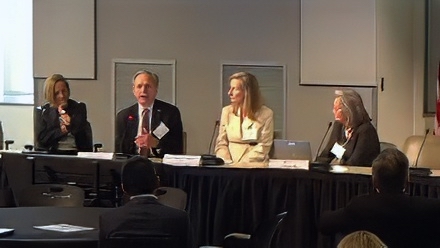
The meeting was sponsored by the FDA and the Alliance for Regenerative Medicine (ARM). Its purpose was to discuss the challenges involved in developing cell and gene therapies for pediatric patients, and possible solutions.
Najat Bouchkouj, associate director of pediatrics at the Office of Therapeutic Products (OTP) in FDA’s Center for Biologics Evaluation and Research (CBER) noted that there has bene “tremendous growth” in the number of cell and gene therapies approved by FDA. The agency has approved 33 cell and gene therapies, with more than half approved for use in children. Of those approvals, 28 are gene therapies and five are cell therapies.
Developing cell and gene therapies, particularly those aimed at rare diseases, is challenging, according to OPT Acting Director Vijay Kumar. Some of these challenges include a lack of well-characterized natural history data, limited patient populations, and difficulties in establishing clinical endpoints and biomarkers. Additional obstacles consist of geographically dispersed patient populations, protocol violations, and missing or incomplete data. In terms of chemistry, manufacturing, and controls (CMC), there can also be a misalignment between CMC and the timelines for clinical development.
Yet he added that new technologies enable scientists “to bridge the gaps in traditional clinical evidence” to demonstrate safety and effectiveness. Some of these technologies include electronic health records and registries with the ability to provide greater access to real-world evidence and real-world data; the use of wearables and digital health technology, and the use of artificial intelligence which allows sponsors to better analyze and streamline data.
Kumar noted that FDA has come a long way in embracing these new technologies and testing approaches. “Look at how far we have come on the regulatory front in every single discipline,” he said.
Some examples he cited include FDA’s Rare Disease Endpoint Advancement (RDEA) pilot program that explore the use of novel efficacy endpoints for rate diseases, the new plausible mechanism designation, and the acceptance of Bayesian statistics, which combines prior knowledge with new data to calculate probability.
“We are building a modern regulatory framework that is both rigorous and responsive,” Kumar said.
Pediatric challenges
Crystal Mackall, founding director of the Stanford Center for Cancer Cell Therapy, said that old views are hampering the adoption of new therapies for children. She said that there is still a historical bias against testing these products in children, particularly in Phase 1 testing.
“In the past, you would never do a Phase 1 trials for children and the outcome of these trials for children was very, very poor. That is the historical context.”
Mackall mentioned that Stanford is developing a B7-H3-targeted CAR-T therapy for pediatric solid tumors. While the initial treatment exhibited some toxicities, these issues have since been addressed and modified. Despite these adjustments, there is still hesitation among the FDA and the industry to test this treatment in children.
“We are in a very strong position. But the institutions and the industry in particular are uncomfortable with going into children first. We make the case that we have done this several times with success” in treatments for multiple myeloma in children, Mackall said. She added that “we are burdened by the history that Phase I trials don’t work and they are very toxic.”
Mackall said that FDA wants to see adults enrolled in these trials first and argued that the agency sets an arbitrary number for how many adults to enroll in these trials.
“I hear what you're saying and this is exactly why we are here today,” FDA’s Bouchkouj responded.
Lynne Yao, the director of pediatric and maternal health center at CDER, said that the cell and gene therapy community must be bold in getting the message out not to be afraid of testing some of these treatments in children.
“This room is a very small subpopulation of the whole drug development community. The people in this room, the drug developers, the pharmaceutical groups and even the regulators are a select group of people who I would say are the brave ones. You have to be brave to be in this space.”
She added that “this group has to try to convince those that are maybe less brave. That is the calling of this group and that is what we have to do today. We have to help those in FDA and regulators and industry and academia and IRBs, to help them understand that we are not being necessarily being foolish … what we are trying to do is to convince people that what we’re doing is important.”
“Having this discussion and conversation is a start for sure. I would just say that within our office, you can see the track record over the past several years. Several of the cell and gene therapies that we approved started with pediatric patients,” said Bouchkouj.
The discussion then shifted to the minimum data requirements. Bouchkouj asked Mackall to outline what the minimum data prerequisites should be for enrolling pediatric patients in clinical trials.
“It is in the eye of the beholder to an extent, and we have to all agree on some minimum set of requirements that have to be met to allow these vulnerable populations to receive the investigational therapy,” Mackall said. “Number one is a target—you have to know what your drug is going after and that the disease in question expresses that target. There also has to be a plausible mechanism. This plausible mechanism would improve the outcome, whether it is killing the cancer or dealing with the genetic anomaly. The other piece is that there has to be adequate safety data. That is where many of our preclinical models fall short.”