FDA official offers examples of RWE being used to secure drug approval
An official from the US Food and Drug Administration (FDA) on Monday presented three case studies demonstrating how sponsors effectively utilized real-world evidence (RWE) and real-world data (RWD) to secure approval for their products.
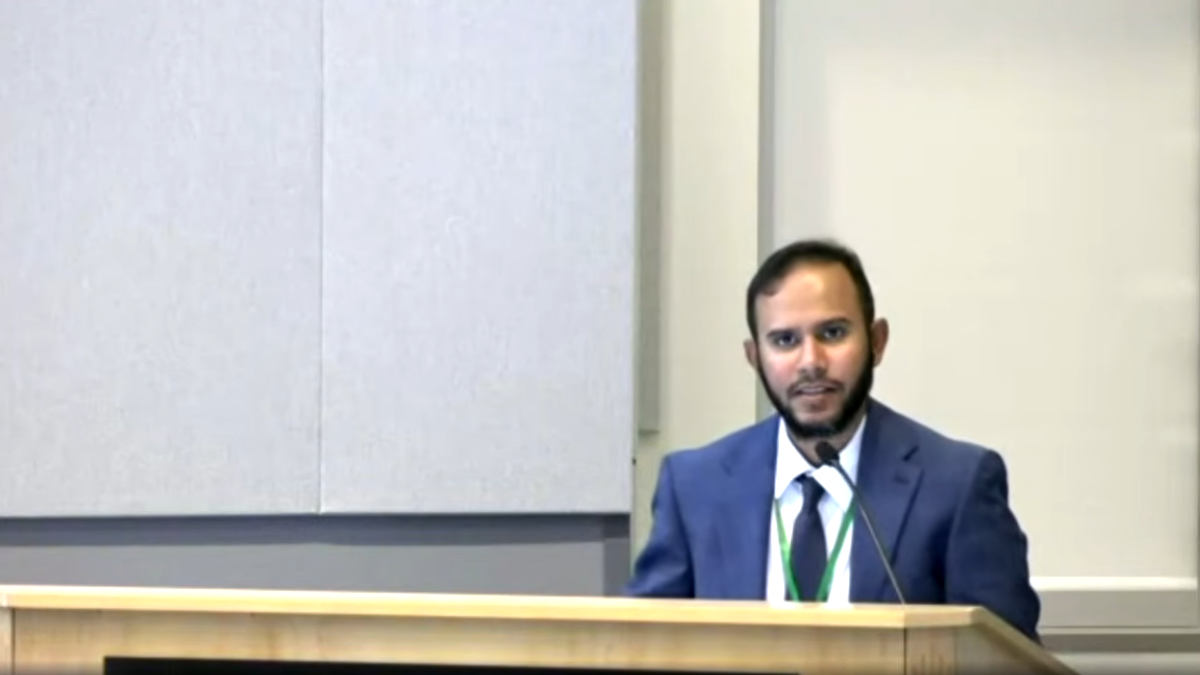
Motiur Rahman, a senior epidemiologist and policy advisor in the Office of Medical Policy at the Center for Drug Evaluation and Research (CDER), spoke at the Regulatory Education for Industry (REdI) meeting on 19 May. Rahman discussed common characteristics of applications that have incorporated RWD and RWE and have gone on to receive approval.
Rahman said that interest in RWE has grown with improved access to big data and tools for analyzing this data. In addition, he said that research shows that observational studies can generate results similar to those of randomized controlled trials. FDA has been increasingly involved in the RWD/RWE space since the passage of the 21st Century Cures Act in 2016, which mandated that FDA establish a program for evaluating this data in regulatory decision-making.
Rahman said that FDA uses these key factors when evaluating submissions that incorporate RWD/RWE, such as whether the RWD is appropriate for its intended use, whether the study design used to generate RWE can provide adequate scientific evidence to address regulatory questions, and whether the study was conducted in compliance with FDA regulatory requirements.
Rahman provided three examples to show how companies successfully used these criteria in getting their products approved.
One example is the approval of a new indication for Prograf (tacrolimus), which was initially approved in 1994 for the prevention of organ rejection in patients receiving liver transplants. The drug was widely used in clinical practice, including for off label use for lung transplants. The sponsor, Astellas Pharma, submitted to FDA for a lung transplant indication based on findings from a non-interventional study. It was approved for a new lung transplant indication in July 2021.
The RWD came from the US Scientific Registry of Transplant Recipients data on all lung transplant in the US from 1999 to 2017. This data was supplemented with mortality information from the Social Security Administration’s Death Master File.
The study design was a non-interventional, or observational, study of the one-year death or graft failure from the time of discharge in adults and pediatric patients receiving tacrolimus with mycophenolate mofetil or azathioprine, and the outcomes were compared with historical controls.
The results showed improved outcomes for lung transplant patients receiving tacrolimus compared to well-established natural history data. Additionally, existing clinical trial evidence supported the role of tacrolimus within a multidrug regimen.
Several key factors contributed to the approval of the drug. Firstly, there was clinical experience with the use of tacrolimus in transplant patients in the US Additionally, the applicant and the regulatory agency engaged in multiple discussions regarding the study design and analytical plans. The applicants also provided patient-level data and analysis codes, which allowed the FDA to assess the quality of the data and conduct a replicate analysis.
The second example is the approval of Zolgensma (onasemnogene abeparvovec) for treating pediatric patients under the age of two who have spinal muscular atrophy (SMA). The sponsor, Novartis, submitted a biologics license application (BLA) to FDA that included a RWE study focusing on the efficacy endpoints of survival and seating support. Approval was granted on 24 May 2019.
The data for this study was obtained from the Pediatric Neuromuscular Clinical Research (PNCR) database and the National Network for Excellence in Neuroscience Clinical Trials (NeuronEXT). The sponsor conducted Phase 3 single-arm clinical trials, comparing the results to historical controls from both the PNCR and NeuronEXT databases. The findings revealed that patients receiving Zolgensma showed improvements in outcomes compared to those documented in a well-established natural history study.
The third case example was FDA’s approval of a new indication for Orencia (abatacept) which used RWD and RWE to show the drug’s effectiveness in preventing acute graft-versus-host disease. The drug was originally approved in 2005 for treating adult patients with moderately to severely active rheumatoid arthritis. This condition is a significant cause of morbidity and mortality following hematopoietic stem cell transplantation, particularly in patients receiving grafts from mismatched donors. The approval for this new indication was granted on 15 December 2021 to the sponsor, Bristol Myers Squibb.
The data source for this study was the Center for International Blood and Marrow Transplant Research registry, which contains information on every allogenic transplant conducted in the US.