Experts: Potential EU ban on titanium dioxide would threaten access to drugs
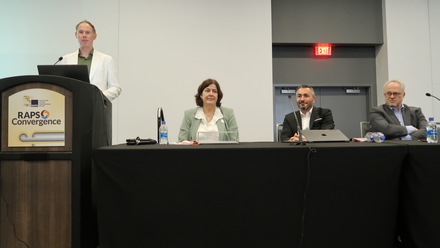
National Harbor, MD – An EU proposal that, if enacted, would require manufacturers to replace titanium dioxide (TiO2) in medicines would affect millions of patients and more than 90,000 authorized pharmaceuticals. “European patients will lose access to many lifesaving medicines,” asserted a panelist at the recent Excipient World conference.
The panelists also agreed that finding alternative materials to replace TiO2, or E 171, would be difficult. The ingredient is often commonly as a color additive or opacifier in pharmaceuticals.
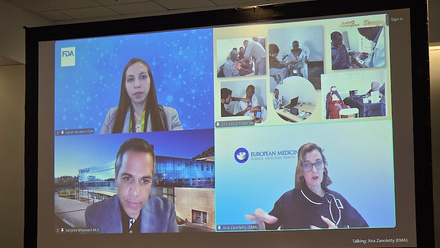
The panelists were addressing the implications of a recent regulation that followed a scientific opinion from the European Food Safety Authority (EFSA) in 2021 that stated TiO2 is no longer considered safe when used as a food additive. Shortly after, in January 2022, the European Commission published a regulation removing the authorization for titanium dioxide as a food additive and opening up the possibility of extending the ban to pharmaceuticals. The Commission said it would “review the necessity to maintain titanium dioxide (E 171) or otherwise delete it from the Union list of food additives for exclusive use as a colour in medicinal products within three years.” The review will be informed by an assessment by the European Medicines Agency (EMA) that’s expected to be completed by 1 April 2024.
In the meantime, the Commission said “it is of critical importance that the pharmaceutical industry makes any possible efforts to accelerate the research and development of alternatives that would be used as a replacement for titanium dioxide (E 171) in medicinal products, and to submit the necessary variations to the terms of the marketing authrorisations concerned,” or otherwise submit “objective and verifiable reasons explaining the non-feasibility of the replacement.”
For its part, EMA has said that requiring manufacturers to replace TiO2 in medicines “will almost certainly cause significant medicines shortages and discontinuations/withdrawals ... with major implications for patients and animals.” (RELATED: Euro Roundup: EMA warns action against titanium dioxide will cause significant drug shortages, Regulatory Focus 14 October 2021)
According to EMA, this material “is present in many essential medicines for humans including antidiabetics, antibiotics and others and several veterinary medicinal products.
Significant impact on patients
The panelists at the meeting agreed that extending the ban to pharmaceuticals would have a tremendous impact on industry and patients.
“If this is banned, this will impact millions of patients … In Europe alone, over 91,000 drug products contain TiO2 … Think of reformulating 91,000 drug products with alternatives that don’t even come close to being even similar in many cases,” asserted Dave Schoneker, president and owner of Black Diamond Regulatory Consulting.
Many of the materials found in alternative products would result in tablets being much thicker than those formulated with TiO2. Substituting these materials will also necessitate revalidating assays and EMA having to hire more reviewers to handle the tremendous volume of Type II variations seeking to make these changes in formulations.
If this ban goes into effect, many companies would have to withdraw their products and “European patients will lose access to many lifesaving medicines,” he added.
Schoneker said that the International Pharmaceutical Excipients Council (IPEC) is working with the IQ Consortium and other global industry groups to share information and provide information to EMA and other global regulatory agencies on the challenges of reformulating TiO2-free products.
Other panelists at the meeting reiterated the difficulty of finding alternatives to TiO2. Allison Labriola, senior technical sales representative for JRS Pharma, said that “you can’t just sub out titanium.”
In response to a question on how the pharmaceutical industry is addressing the situation, Joanne Reiland Wakeman, of AbbVie, said some companies are actively seeking ways to reformulate their products that use TiO2, while others are taking a wait and see approach.
“It is a mix, yet there is definitely more of a wait and see [approach] on the commercial side. It’s a big undertaking to match color and to match dissolutions, people are not making the change if they don’t need to. On the development side some companies are starting to test out alternatives on some products, and some companies are starting to implement alternatives on the development program. But it is hard in this situation where we don’t know if it is going to be banned or not.”
Yet Labriola said it would be wise for firms to start preparing and not take a wait and see approach just in case the proposed ban becomes a reality. “With big pharma and branded pharma, I do think you have to be ready for these changes. You can’t just sit around and say let’s see what happens. No one wants to be the first person to want to make that change, once you do it, the amount of money you spend will be crazy.”
Excipient World