Stakeholders offer suggestions for improving FDA’s CNPV program
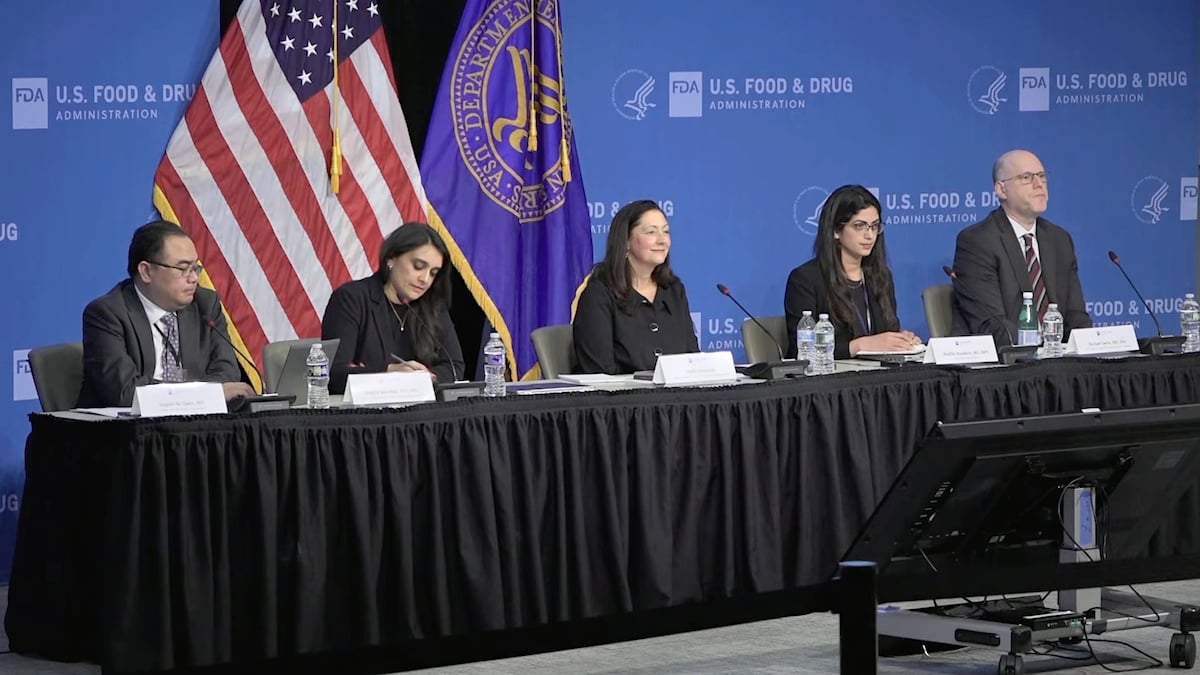
Left to right: FDA’s Angelo de Claro, Megha Kaushal, Dayle Cristinzio, Mallika Mundkur, and Michael Davis (source: YouTube)
During a public hearing on Thursday, the US Food and Drug Administration (FDA) received several suggestions from industry stakeholders on how to improve its Commissioner’s National Priority Voucher (CNPV) pilot program, though several observers were critical of the initiative.
As part of the CNPV pilot program, recipients gain more frequent access to FDA officials, experience shorten review times for the voucher drug from 10-12 months to just 1-2 months, and their drug may be eligible for accelerated approval. The program would sit alongside, but not replace, other expedited review programs at FDA. (RELATED: FDA announces new voucher program for drugs tied to national priorities, Regulatory Focus 17 June 2025)
The agency said it was convening the hearing because it wanted feedback on aspects of the program such as eligibility and selection, review timelines, requirements for submission, responsibilities and expectations of applicants as well as future directions of the CNPV pilot.
While most speakers were supportive of the intent and goals of the program, other organizations raised concerns over the CNPV pilot, citing issues with the voucher selection process, the review timelines, transparency, and politicization of the program. (RELATED: This Week: Reports of tension between RFK and Makary, concerns about CNPV, and more, Regulatory Focus 21 November 2025; RELATED: This Week at FDA: FDA seeks input on CNPV, new approvals, and more, Regulatory Focus 20 March 2026)
Encouraging early interactions
Ginny Beakes-Read, head of the global regulatory policy and intelligence group at Johnson and Johnson, said her company received a CNPV voucher for teclistamab plus daratumumab (Tec-Dara), their treatment candidate for relapsed/refractory multiple myeloma. (RELATED: FDA proactively reached out to Janssen to offer a CNPV voucher for Tec-Dara, Regulatory Focus 15 December 2025)
Beakes-Read said the review process with FDA was “highly collaborative,” and the agency provided ad hoc discussions with J&J that helped “resolve questions efficiently, reducing the risk of timeline delay.”
The accelerated timeline meant that the company needed to dedicate resources internally at an early stage. “FDA maintains its rigorous scientific review standard during the accelerated timeline. As the sponsor, the pilot required us to respond rapidly, clearly, and comprehensively to FDA questions,” she said.
Ashley Wivel, vice president of global regulatory affairs at Merck, agreed with that characterization of the program.
“In our experience, success in the pilot has come through earlier structured scientific engagement with the review team that aids with early alignment on strategy and data requirements, particularly in CMC, while ensuring regulatory rigor,” she said.
The continued interactions with the agency created efficiencies during the review process while reducing the potential for surprises, Wivel noted.
“Early pre-submission engagement, especially for CMC topics including manufacturing processes, site strategy, and inspection readiness, particularly for complex modalities and multi-site programs where early input from CMC reviewers has been critical,” she said.
CNPV pilot improvements
Beakes-Read said FDA could improve the program by specifying who to contact in the agency for questions about the pilot, improving clarity on timelines and decision points, being more specific about when a company is nominated for compared to being awarded a voucher, and more structured engagement opportunities as seen during a regular review process.
Lisa Flood, senior director of clinical and regulatory at DiscGenics, recommended FDA expand the program to include chronic progressive diseases.
“Specifically, I'm proposing that you expand to include chronic progressive diseases that have a serious impact on quality of life, carry a heavy economic burden, and lack disease-modifying treatments that signify an unmet need,” she said.
She noted the agency could potentially add a track in the program examining population prevalence, significant disability, substantial economic burden, and lack of effective disease modifying therapies.
“Expedited pathways such as this program for high burden chronic diseases represents the next logical evolution of patient centered regulatory science, ensuring innovative treatments reach millions and prevent disabling progressive chronic conditions,” Flood said.
Kelly Falconer Goldberg, vice president of law and senior counsel at the Pharmaceutical Research and Manufacturers of America (PhRMA), said long-term success of the CNPV pilot program “will depend on transparency, predictability and regulatory clarity.”
Goldberg said FDA should consider providing notice and comment rulemaking “that establishes clear eligibility criteria, selection processes, operational expectations, as well as timelines.”
She also questioned the need for calling the pilot a voucher program since the vouchers are not transferrable and noted that the program is more of an expedited review mechanism considering it uses expedited review tools. “Clarifying the nature of the program as an expedited review mechanism rather than a voucher could help better align stakeholder understanding with the program's structure and operation,” she said.
PhRMA wants more information on how eligibility criteria for the program are used in practice and whether they differ from other expedited review programs. “FDA should further confirm that participation in the program complements rather than replaces existing expedited pathways,” Goldberg said.
Improvements in transparency and predictability for voucher selection would also improve confidence in the program, she added. “Sponsors would benefit from predictable selection timelines, clear submission procedures, and visibility into outcomes, including whether and why specific requests are accepted, declined, or deferred,” she said.
Pilot criticism
Janet Krommes, chair of the FDA Task Force for Doctors for America, said her organization has “deep concerns” about the CNPV pilot program. She noted the introduction of the CPNV in a medical journal, rather than through FDA’s usual processes, raises questions about whether the program will be a fair and open process.
The national priority criteria as stated in the CNPV program should be more specific, she said, and the process for awarding vouchers should be public.
“Transparency in which attributes result in selection for the program and why they are felt to be worthy would do a great deal for physicians who must inform their patients and educate them on why a particular drug might be worthwhile to try,” Krommes explained.
“The ambiguity of the criteria in this context, and lack of transparency, has given life to rumors about political influences determining winners and losers,” she added. “This is extremely corrosive to patient care. Conversations must revolve around the fitness of a drug for an individual without the perception of bias. We cannot let politics into the exam room.”
Krommes also told FDA that the program should be developed together with Congress with a “statutory foundation that cannot be so easily changed or challenged.”
Peter Lurie, president of the Center for Science in the Public Interest and a former associate commissioner here with FDA, said his organization opposes the CNPV pilot program due to concerns with the politicization of the voucher process, use of political appointees in review decisions, the expedited review timeline, and lack of transparency in implementation of the program.
Lurie argued that FDA already has a “bevy of existing agency programs” to handle expedited review to address unmet medical needs.
“The real problem is with the political goals like drug pricing and domestic manufacturing, which are two things that have nothing to do with FDA's remit whatsoever, and that would now become part of the decision of whether or not to grant a so-called voucher,” he said.
The CNPV review board would also likely consist of appointees that report directly to the FDA Commissioner, which means the Commissioner “is likely to exert heavy influence over the council's recommendations,” Lurie said.
This is in “marked contrast to FDA's historical practices, which went to great lengths to insulate drug review from inappropriate political intervention,” he added.
“We urge the agency to set up career scientists and subject matter experts in the approval process to ensure the drug approvals are guided by science and not by politics,” he said.
Lurie also said the pilot program will “divert agency resources” away from drugs with greater health impact as has been seen with pediatric priority review vouchers, and the accelerated timeline has the potential to adversely impact patient safety.
Finally, he noted that his organization was unable to determine the agency’s justification for issuing vouchers for 13 of 22 drugs that have been included in the program so far.
“[G]iven our concerns about politicization in voucher selection and review, strained agency resources and lack of transparency, we encourage the agency to wind down this pilot and ensure sufficient funding and staffing to expand the agency's ability to handle the large workload by using the existing processes to speed important products to patients,” Lurie said.