
FDA Commissioner touts strong interest in early-stage trial pilot
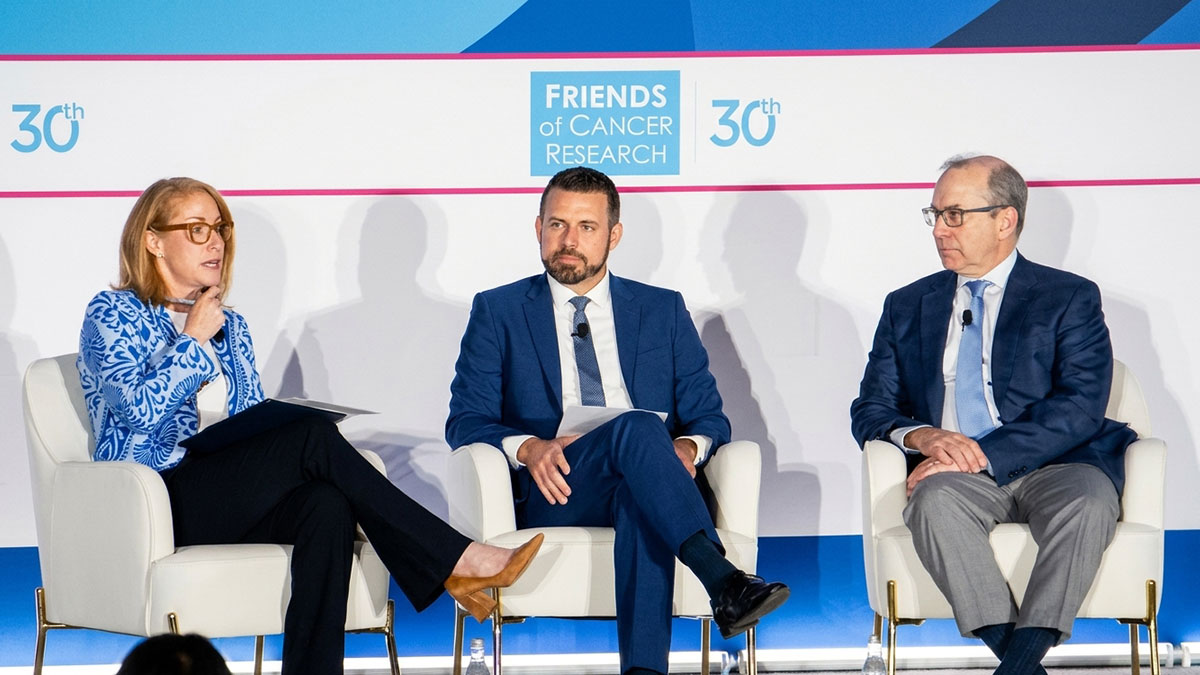
Acting US Food and Drug Administration (FDA) Commissioner Kyle Diamantas said there is significant public interest in its recently announced Expedited Investigational New Drug (IND) pilot at the Friends of Cancer Research (FOCR) annual meeting on Tuesday.
Diamantas said the agency has received more than 100 applications and will select six to eight sponsors to participate in the pilot. The participants will be chosen next month, he said.
Both Diamantas and National Cancer Institute (NCI) Director Anthony Letai discussed some of the efforts being made to make early-stage US trials more competitive with countries such as China and Australia and said they are looking forward to working together as partners in Operation TrialBlazer.
The expedited IND pilot is part of Operation TrialBlazer, which was launched in mid-June and features a series of measures designed to speed up drug development from the IND stage to late-stage clinical trials. In the Expedited IND pilot, qualified external institutions will collaborate with sponsors to develop and review protocols for first-in-human (FIH) clinical trials intended for IND submissions to the FDA. (RELATED: HHS and FDA propose clinical trial reforms to expedite drug development, Regulatory Focus 23 June 2026)
Through these programs, FDA and NCI will be working together to streamline clinical research. FDA’s part in the effort is to accelerate early-stage, first-in-human clinical trials and to streamline IND applications while NCI’s role is to collaborate with cancer centers and researchers to streamline clinical trial activation timelines and improve patient enrollment in cancer studies.
When asked by session moderator Kate Rawson of Prevision Policy why the program is so popular, Diamantas responded that the program “makes sense.” He said that both FDA and HHs “are excited” about the program.
Diamantas emphasized that a central question that needs to be addressed with this pilot is how the US can improve its competitive edge in clinical trials.
At FDA, he said that the agency can issue guidance documents or streamline chemistry, manufacturing, and controls (CMC) processes to expedite IND development. He said the Expedited IND pilot spans all the medical product centers and is “product agnostic.”
Rawson referenced recent research that indicates that China has been approving more cancer drugs than the US each year since 2023. However, the FDA has been faster in approving first-in-class products, making it the leader in the rapid approval of the most innovative drugs. She asked both Diamantas and Letai to address what lessons can be learned from China and Australia.
Letai noted that this "arms race" in clinical trials is not entirely negative, as it reflects a competition among the world's largest and most prosperous nations to increase the volume and speed of new cancer cures. He noted that such competition can be beneficial.
He highlighted that there is much to learn from Australia. He pointed out that Australia has a population roughly one-eleventh the size of the US and a healthcare system that is more comparable to that of the US than to China's. In Australia, INDs do not require approval from the Therapeutic Goods Administration (TGA); instead they can be approved by the local institutional review boards.
Additionally, contracting is much simpler in Australia, where there are standard contracts and standardized payment structures. Economic incentives, such as tax breaks for participants, further facilitate the process.
However, Letai cautioned that “there are things that China does that we cannot and perhaps should not try to match,” he said. The quality of their safety data is lower. The oversight by physicians can also be influenced by economic interest in trials. He said that “they can move fast but moving fast is not always better.”
He added that “companies want to come to the US, but we have to meet them halfway and make it faster.”
Letai said he is already seeing some changes occur, and relayed an experience from the Association of American Cancer Institutes (AACI) in Chicago last month. “It was a great meeting of the minds. There were some very, very aggressive timelines proposed for contract negotiations and for starting clinical trials.” These timelines were aligned with those of Australia and China, Letai said. “If we can get together and do that, it would be amazing,” he added.
Letai also expressed his support for collaboration between the FDA and NCI stating that “I think it is a great idea for FDA and NCI to get together. We have expertise we can offer to the community, we can also be a channel of communication for the cancer centers. We are working with an FDA that is willing to change. If we want to make clinical trials faster, we are all going to have to change how we do things.”
Diamantas echoed Letai’s sentiments saying “we are looking forward and not backward at the FDA.… There is a lot of potential over the next two years to get things done.”
Letai also highlighted the achievements in incology over the last few decades. “Let’s look at what investment in cancer research has brought over the past several decades,” noting that there has been a 30% decrease in cancer mortality over this timeframe. “This is exceptional and will only improve,” he added.