HHS and FDA propose clinical trial reforms to expedite drug development
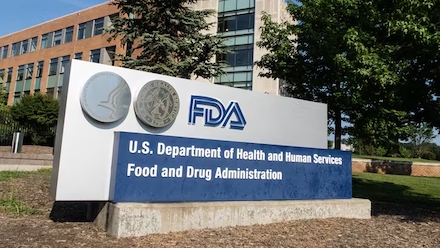
The US Food and Drug Administration (FDA) is seeking comments on a pilot program where qualified external institutions will collaborate with sponsors to develop and review protocols for first-in-human (FIH) clinical trials intended for investigational new drug (IND) submissions to FDA.
The agency has also issued a draft guidance to clarify the circumstances under which developers can rely on one rigorous, adequate, and well-controlled clinical trial, along with confirmatory evidence, to support drug approvals.
The two key initiatives were announced on Monday as part of a broader program by the Department of Health and Human Services (HHS) called "Operation TrialBlazer." The program includes a series of measures designed to speed up drug development from the IND stage to late-stage clinical trials.
FDA said it was opening a public docket to solicit input and comments on a proposal to the Expedited Investigational New Drug pilot program, to shorten the time it takes from drug identification to FIH study.
HHS Secretary Robert Kennedy Jr. announced that the pilot program aims to buck the increasing trend of clinical trials moving overseas to China.
“America should be the best place in the world to develop new medicines, yet we have built a system that drives too much clinical research overseas,” said Kennedy. “Under President Trump's leadership, HHS is launching a coordinated department-wide effort to restore America’s leadership in clinical research, remove unnecessary barriers, and bring more clinical research and investment back to the United States.
“America led the world in medical innovation before,” he added. “We will lead again.”
Under the pilot, pharmaceutical companies would partner with qualified research institutions, such as academic medical centers or contract research organizations, to develop Phase 1 IND submissions for FIH clinical trials, using a rolling IND submission platform, with the goal of minimizing the need for clinical holds. The deadline for submitting public comments is 22 July.
Draft guidance
FDA also announced a revised draft guidance entitled, “Demonstrating Substantial Evidence of Effectiveness for Human Drug and Biological Products.” The guidance aims to “clarify circumstances in which drug developers may be able to rely on one rigorous, adequate and well-controlled pivotal clinical investigation, plus confirmatory evidence, to demonstrate substantial evidence of effectiveness for drug approval.”
Last year, former FDA Commissioner Marty Makary announced plans to change the agency’s traditional policy of requiring two well-controlled and adequate clinical trials to just one. However, draft guidance to implement the policy had not been published until now. (RELATED: This Week at FDA: Makary teases plan for single-trial approvals, Hoeg name acting CDER chief, and more, Regulatory Focus 5 December 2025)
The deadline for submitting comments on the draft guidance is 24 August.
FDA announces new QSP approach for clinical trials
As part of this Operation TrialBlazer initiative, FDA also announced a draft guidance that offers recommendations on the appropriate use of a quantitative systems pharmacology (QSP)-based approach. The approach is intended to help determine the minimum anticipated biological effect level (MABEL) dose in FIH phase 1 trials.
FDA announced that “selecting an appropriate initial dose for first-in-human trials is a critical step. In an effort to continue moving away from historical methods of using animal toxicology studies to select the FIH dose, this draft guidance is intended to help facilitate appropriate dose selection for newer therapies with more complex mechanisms.”
According to a Federal Register announcement, “QSP has emerged as a tool to model disease progression and complex drug–biological system interactions. QSP merges an understanding of biological systems and a drug’s exposure response, enabling modeling and simulation of how a drug engages its target and triggers downstream biological responses in a mechanistic, quantitative manner.”
The deadline for submitting public comment on the draft guidance is 24 July.
Another aspect of the initiative is FDA's draft guidance on master protocols. The agency has updated a draft guidance to include information on basket trials, which are a type of master protocol that evaluates a drug across multiple diseases, conditions, or disease subtypes. The guidance also covers umbrella and platform trials, which are other types of master protocols that assess multiple drugs. (RELATED: FDA revises master protocol guidance with new section on basket trials, Regulatory Focus 22 June 2026).
New webpages
Other FDA actions as part of Operation TrialBlazer include the launch of a new webpage called “The Phase 1 IND Navigator.” The page provides tools and guidance needed to prepare and submit an IND to FDA's Center for Drug Evaluation and Research (CDER) and Center for Biologics Evaluation and Research (CBER).
The agency also launched a new webpage on IND Applications for Clinical Investigations: Chemistry, Manufacturing, and Control (CMC) Information. It announced that some companies have previously submitted more data than necessary at certain stages of the drug development process. The update clarifies key phase-specific CMC requirements for FIH Phase 1 INDs, ensuring that companies only generate and submit the essential data.
FDA announced a new call center for Phase 1 trials, reachable at 240-276-9358 or [email protected]. Contact Center specialists will provide real-time answers to questions about clinical protocols and other regulatory requirements. The call center can also facilitate engagement with appropriate subject matter experts within the agency.
FDA Announcement, NIH announcement