
FDA nominee Overton faces grilling in Senate confirmation hearing
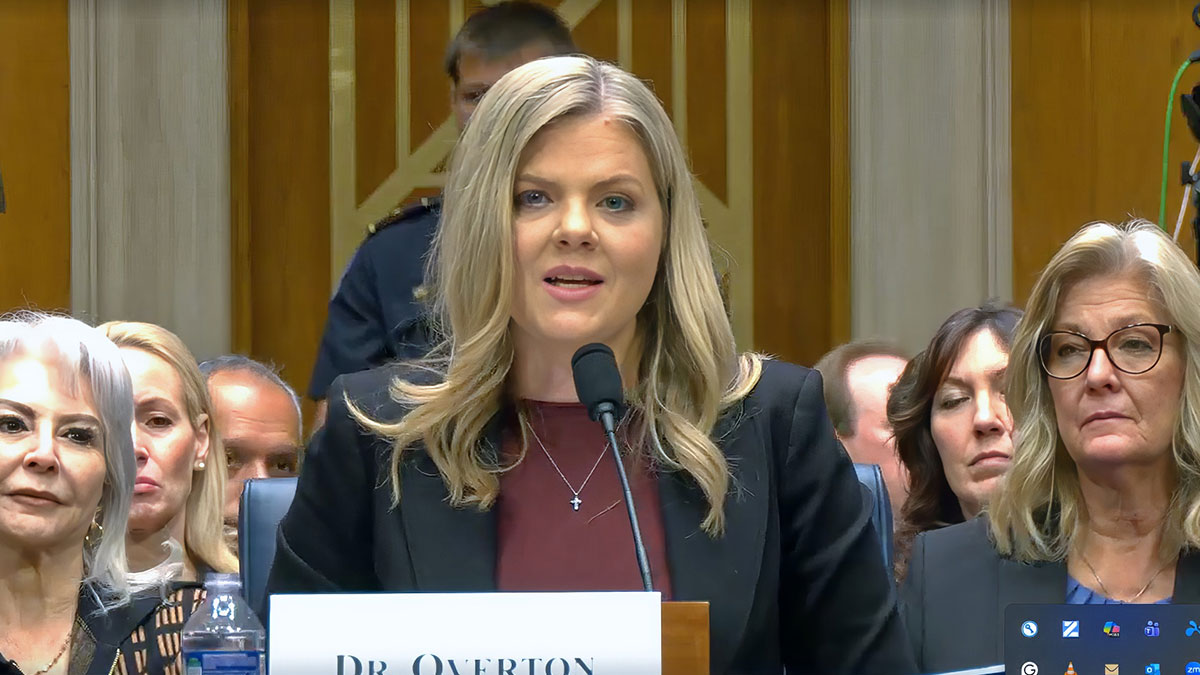
Heidi Overton, President Donald Trump’s nominee to lead the US Food and Drug Administration (FDA), faced questions from both sides of the political aisle about her views on hot-button issues facing the agency during a Senate confirmation hearing on Thursday.
During the hearing, senators on the Health, Education, Labor, and Pensions (HELP) committee asked the commissioner nominee how she would handle a broad range issues from across the agency’s purview, including clinical trial oversight, orphan drugs, flavored vapes, processed foods, food facility inspections, and vaccines.
Multiple senators from both parties grilled Overton over her role as a health advisor to Trump in light of the president’s recent executive order and statements related to the safety of the measles, mumps, and rubella (MMR) vaccine. Overton appeared alongside Trump as he asserted that the combined MMR vaccine could be “quite lethal” while signing an order calling to split the vaccine into separate doses.
She was also asked by senators multiple times whether she would stand up to Trump if he made a decision she did not support or asked her to do something illegal.
In her opening statement, Overton said her mission would be to ensure US leadership in healthcare product development. She stated that “If confirmed as commissioner of food and drugs, I will immediately set my focus to restoring the primacy of American innovation while furthering the core missions of advancing national security, increasing access to affordable treatments, and promoting public health.”
“President Trump’s direction for me in this role … is to go fast. Slow and prohibitive requirements for cutting-edge therapies at the FDA means investment is increasingly flowing to China, who has found ways to do things faster and cheaper,” she added.
Overton further noted that China has surpassed the US as the top venue for clinical trials. “This should give pause to every American … when we lose this advantage, we lose our health security, and when we lose our health security, we lose everything. This problem is not partisan; we must reverse this trend,” she said.
In his opening remarks, HELP Chair Bill Cassidy (R-LA) said that the new FDA commissioner should “eliminate unnecessary barriers in the FDA approval process for different products, while ensuring that the gold standard of review is maintained. This should be a top priority of any future commissioner, in close coordination with Congress.”
He added that “our next FDA Commissioner should must have the vision and drive to ensure continued American biomedical leadership. This will be a commissioner with a vision for reform, who knows how to get by and across the agency to embrace change, and whom the American people can trust to make product approval decisions based on unbiased, sound science. Unfortunately, politicization and misinformation severely damage the credibility of FDA and HHS.”
Cassidy asked Overton about political interference in FDA decisions, asking what role the White House or HHS should play in product approval decisions.
“My role, my commitment, would be to follow exactly the statutory standards for safety and efficacy review of every individual product,” Overton responded. “Policy priorities can be set by the president—and are set by the president—individual product reviews and determination should be, according to statute, under the purview of the FDA. I would take the recommendations of the career experts who are reviewing that.”
Cassidy told Overton that he had concerns on the updated decision to split the MMR vaccine into separate doses.
“You were behind the president in the Oval Office when he signed an executive order to break up the vaccine schedule into more doses,” Cassidy said. He pointed out that this action could inconvenience families and increase costs associated with getting their children vaccinated. “The order is based on zero scientific evidence. At the same time, the President called the MMR vaccine ‘quite lethal.’ Dang, no scientific evidence for that.”
Cassidy further pressed Overton on whether she will “stand up for sound science” and to clarify her stance on the MMR vaccine. In response, Overton said, “The MMR vaccine is not lethal … the MMR vaccine is safe and effective … and it is our best tool right now in the public health response to the measles outbreak.”
Cassidy also called out Department of Health and Human Services (HHS) Secretary Robert Kennedy Jr. for not keeping his promises made during his own confirmation hearing before the same committee.
“Kennedy gave me guarantees. Later he did not keep those [guarantees],” Cassidy said. He asked Overton what she would do “if the president asks you to do something that goes against those guarantees you give us today?”
“I would give him my best advice, and I would follow the statutory requirements for the role of FDA commissioner regarding individual product determinations for safety and efficacy and that would be what would guide every decision if confirmed to this role,” she replied.
Similarly, Ranking Member Bernie Sanders (I-VT) asked Overton later in the hearing whether she will “have the courage to stand up to President Trump?”
Sen. Maggie Hassan (D-NH) also criticized the president’s remarks about the MMR vaccine. “It was the wrong thing when he said it was not safe. The FDA leader must have the courage to say when the president is wrong.”
Later in the hearing, Sen. Ed Markey (D-Mass) also questioned Overton’s decision to stand by the president when he signed the executive order combining the vaccines.
“You were there for the president’s decision to alter children’s vaccines. You called it a historical day. At the signing, the president said that together they are lethal and should be separated. For more than 50 years FDA has found them to be safe and effective. Why didn’t you correct the president?” he asked.
Overton deflected the question. She said that “the MMR vaccine is safe and effective. The president wants to provide additional options” and added that the position “is responding to people who do not take any vaccines.”
Sen. Susan Collins (R-Maine) asked Overton what she would do to “expedite the approval of promising drugs that have been shown to be safe but where it’s very difficult to do large clinical trials because there are so few people who have these rare diseases.”
Overton responded that “this is a key priority and something that under the new leadership of the center directors at FDA they have started to make progress. There are good policies underway, for example, the plausible mechanisms pathway, but not just N-of-1, we should think of N-of-5, N-of-20, and those cases where having the flexibility and the risk-based review determinations for those situations … where people are willing to take more risk in these scenarios should be formalized into policy.”
Overton was also asked by Sen. Chris Murray (D-CT) about whether she would restore advisory committee meetings if she were confirmed. Murphy noted that “Since President Trump came into office, 27% of all advisory boards have been eliminated and of those that remain, there have been 72% fewer meetings … will you commit to restarting the advisory boards that have been disbanded under this president.”
Overton responded that “if I’m confirmed as FDA commissioner, advisory committees will be a critical part.” She added that “my goal would not be to shut down any advisory committees but to look at all of them to make sure they are fulfilling their highest purpose, getting the best experts on, providing recommendations—they are a key part of the administrative record of the FDA and the FDA does rely on that.”
Overton was also questioned on the abortion pill mifepristone from both Republicans and Democrats. Before her nomination, Overton co-authored a February 2023 article critical of the abortion drug.
Sen. Lisa Murkowski (R-AK) expressed her concerns about the political pressure to limit the dispensing of mifepristone. She said that “mifepristone has been approved for over two decades. There is political pressure to revisit its status. We are in a very challenging position in a state of Alaska which requires in-person dispensing, so this presents an access issue.”
Overton has the support of two former FDA Commissioners, Scot Gottlieb and Mark McClellan, who wrote an opinion piece favoring her nomination in STAT.
According to her profile on the America First Policy Institute (AFPI), Overton currently serves as deputy director of the White House Domestic Policy Council. Previously, she held the positions of chief policy officer and vice chair of the Center for a Healthy America at AFPI.
Before joining AFPI, Overton completed a general surgery residency at Johns Hopkins University, where she also earned a PhD in clinical investigation. She graduated from medical school at the University of New Mexico.
If confirmed, Overton would succeed Marty Makary, who resigned in May.