

FDA official: Data quality is key to plausible mechanism framework
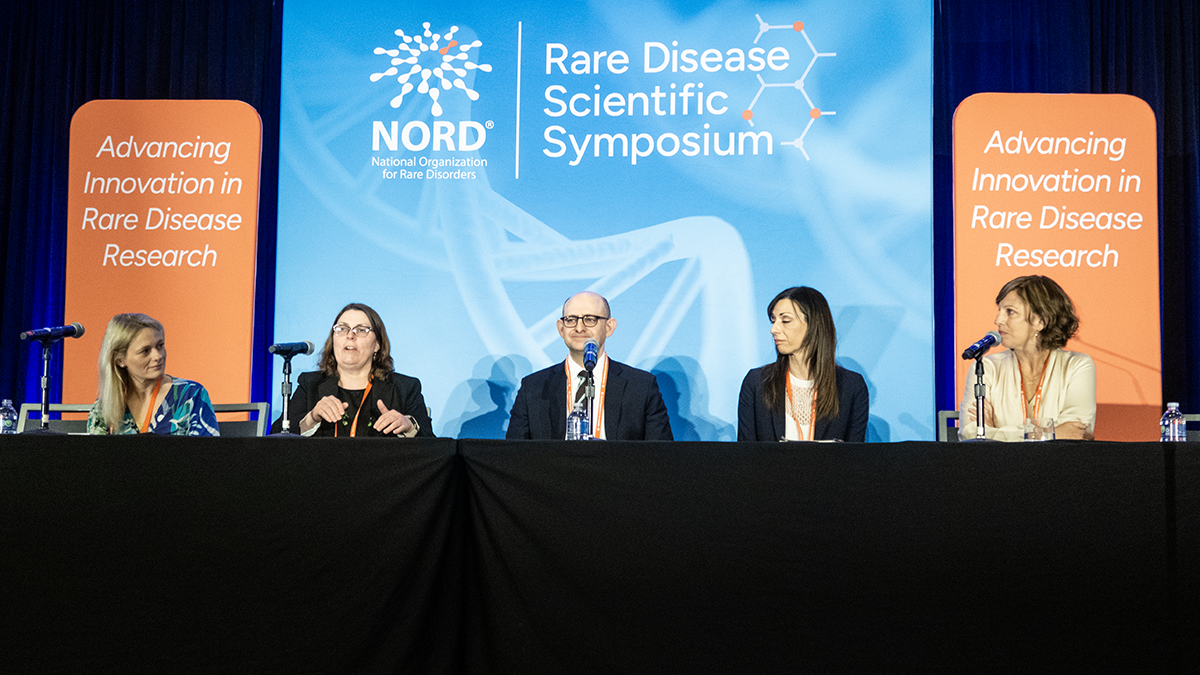
FDA's Theresa Buracchio (second from the left) spoke at the 2026 National Organization for Rare Diseases (NORD) Rare Disease Scientific Symposium. (credit: Ferdous Al-Faruque)
ARLINGTON, VA – A US Food and Drug Administration (FDA) official acknowledged significant regulatory hurdles in the development of products for ultra-rare diseases, necessitating the agency’s recently proposed plausible mechanism framework.
In February, issued a draft guidance proposing the plausible mechanism framework, several months after FDA Commissioner Marty Makary and outgoing Center for Biologics Evaluation and Research Director (CBER) Vinay Prasad announced the intent to develop such a pathway in an article in the New England Journal of Medicine. (RELATED: FDA proposes plausible mechanism pathway for ultra-rare disease therapies, Regulatory Focus 23 February 2026)
Theresa Buracchio, director of the Office of Neuroscience at CBER, discussed the plausible mechanism framework and the agency’s recent draft guidance at the 2026 National Organization for Rare Diseases (NORD) Rare Disease Scientific Symposium. However, she noted that researchers who wish to use the framework should begin collecting data as soon as they decide they have a good patient candidate and potential treatment.
Buracchio emphasized that one of the key aspects of the draft guidance is that it focuses on data quality from the earliest stages in individual patients, which was not a major consideration in the past as part of INDs in these types of ultra-rare disease studies.
"Now that we're talking about approval, data quality becomes quite important," said Buracchio. "As soon as you've identified a patient that could be treated and identified a drug, you start collecting data in a very rigorous and systematic way on those patients.
"You don't wait for getting the right patient-reported outcome, or trying to find the ideal scale," she added. "You just want to start following them in a systematic way so that when the time comes to initiate treatment, you start collecting data and data collection becomes a continuous process as part of treating the patient."
She emphasized that researchers need to leverage every bit of data they can from their patients to secure approval for new ultra-rare treatments.
Under the plausible mechanism framework, FDA defines individualized therapies as treatments that target a specific pathophysiologic abnormality underlying a disease or condition affecting a small number of patients, for which a randomized controlled trial is typically not feasible. It also states that the individualized therapies must target a specific genetic, cellular or molecular abnormality, and should be designed to correct or modify the underlying cause of disease.
As co-lead for the guidance, Buracchio said she and her colleagues wanted to design a framework that cuts through the traditional bureaucracy associated with filing an investigational new drug (IND). She noted that FDA has had experience in recent years approving several treatments for ultra-rare diseases, but each application had to start from scratch as sponsors and regulators worked through the application process.
"With each new IND that would come in, we had a lot of work to do," said Buracchio. "It was a very labor-intensive process of working with new investigators.
"A lot of people were coming in with a patient identified from an academic background, but they've never really developed a drug before, so there was a lot of in-depth engagement on how to move things forward, what studies would be needed, what non-clinical studies would be needed, what kind of manufacturing data would be needed," she added. "With each IND that came in, we often had different investigators come in, and we would have to have the same conversations again."
Buracchio said FDA realized it needed guidance to streamline the process and developed individualized investigational antisense oligonucleotide (ASO) drug product guidances that address the administrative process, manufacturing, non-clinical studies, and clinical considerations. While those guidances were well received and helped move the IND process forward, the products were still not approved.
"Each of these INDs was being treated as a compassionate use or expanded access [product], so we would help get the treatment initiated, and then our role at the agency was largely to allow the treatment to proceed while we monitor safety," said Buracchio. "We didn't really have any requirements necessarily for assessing efficacy, and there wasn't really an intent for an approval or commercialization.
"To the extent that efficacy was assessed, it was really primarily to inform a risk-benefit assessment of whether to continue treatment or not," she added.
Buracchio noted that over the past six years, the agency has given the green light to treat about 80 patients for ultra-rare diseases, and FDA realized that there were potential administrative costs and other considerations, especially in the gene editing space, that it wanted to address. As a result, she said CDER and CBER began a working group in the summer of 2025 to figure out how to advance individualized therapies.
Buracchio said FDA hosted the Rare Disease Innovation, Science, and Exploration (RISE) workshop in November around the same time that Makary and Prasad published the NEJM article about the pathway. While the agency had planned to publish only a white paper on the workshop's outcomes, the excitement and urgency of the meeting led regulators to begin work on what would become the recently published draft guidance on the plausible mechanism framework. She also emphasized that the agency decided to propose a framework rather than a pathway because a pathway would imply the need to create a new one, whereas the agency wanted to work within the current regulatory pathways.
