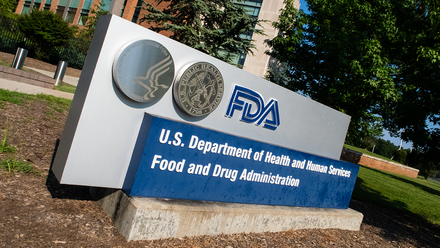
FDA proposes waiving GDUFA facility fees for domestic manufacturers
The US Food and Drug Administration (FDA) has proposed waiving annual facility fees for the first three years for companies that establish manufacturing operations to manufacture finished generic drugs or active pharmaceutical ingredients (APIs) domestically. However, the pharmaceutical industry has opposed this proposal, arguing that there are more effective ways to enhance domestic manufacturing capacity.This recommendation was one of four made by FDA as part of the negotiation process to renew the user fee program under Generic Drug User Fee Amendments (GDUFA IV) for fiscal years 2028 to 2032. The proposal was noted in the recent meeting minutes of GDUFA discussions with industry on 7 January.
Most of the FDA's user fee programs, which include those for prescription and generic drugs, medical devices, and biosimilars, are scheduled to expire on 30 September 2027.
The meeting included representatives from the FDA’s Center for Drug Evaluation and Research (CDER), the Office of Compliance (OC), and the Office of Inspections and Investigations (OII). On the industry side, attendees included representatives from the Alliance for Accessible Medicines (AAM), Amneal, Apotex, Teva, and Sandoz, as well as members of the Pharma and Biopharma Outsourcing Association (PBOA) and the Bulk Pharmaceutical Task Force (BPTF).
FDA stated that the waiver proposal aims to reduce the nation’s overreliance on foreign drug manufacturers, which may pose risks to patient access and national security, particularly concerning the supply of critical medications.
The industry opposed the proposal, arguing it would unfairly subsidize new competitors at the expense of established US manufacturers who have already invested in domestic production. Instead, industry members suggested that expanding capacity at existing US facilities or retrofitting unused ones would be a faster way to increase domestic manufacturing capacity in the short term, as building new facilities takes several years. There was no agreement reached on this plan.
FDA also proposed raising the foreign facility fee from $15,000 to $25,000 to account for inflation. Additionally, the FDA intends to adjust this fee for inflation in the future. This increase aims to facilitate more unannounced inspections of foreign facilities that manufacture human generic drugs.
This action aligns with the Administration's onshoring objectives and Executive Order 14293 aimed at enhancing domestic manufacturing of essential medicines. The FDA has indicated that foreign fees have remained unchanged since the inception of GDUFA in FY 2013.
The industry opposed the proposal, raising concerns that the fee hike may lead to companies leaving the US generic drug market.
In the third area, FDA also proposed an update to its Manual of Policies and Procedures (MAPP) to include a new prioritization category for firms that conduct pivotal bioequivalence testing in the US, those whose Abbreviated New Drug Application (ANDA) qualifies for a waiver from bioequivalence testing, and manufacturers of finished dosage forms based in the US. The pilot was announced last October. (RELATED: This week at FDA: ANDA prioritization pilot, CDRH guidance priorities, and more, Regulatory Focus 3 October)
The proposal, said FDA, is intended to incentivize domestic manufacturing and testing to address risks associated with over-reliance on foreign drug manufacturing.
The industry agreed that the plan could encourage companies to manufacture and test products in the US. However, there was a question about whether the FDA could grant priority review to companies that only met a subset of the three established criteria. No consensus was reached on this matter.
In the fourth proposal, the FDA suggested extending the goal date for Abbreviated New Drug Applications (ANDAs) by 180 days if there are issues with data fidelity or data integrity related to bioequivalence or bioanalytical data associated with a manufacturing facility. If these data fidelity issues are not resolved after the 180-day extension, the FDA will send a second notification letter to the applicant, and the goal date will be considered as met.
The industry agreed with the proposal but questioned how it would address the root causes of data fidelity.
Minutes