FDA ramps up routine surveillance inspections, grapples with backlog
The US Food and Drug Administration (FDA) is ramping up its onsite surveillance inspections both domestically and internationally as it seeks to return to normal operations.
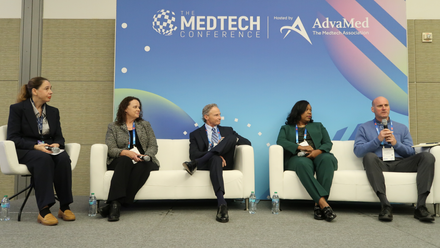
Douglas Stearn, acting deputy associate commissioner for regulatory affairs in FDA’s Office of Regulatory Affairs (ORA), said the agency has been increasing its onsite inspections after lifting the pause on inspections due to COVID-19 pandemic and the ensuing travel restrictions.
“There was a real dip in inspections during COVID and we limited surveillance inspections fairly sharply” during this period, Stearn said at the recent Food and Drug Law Institute (FDLI) meeting in Washington, DC.
At the height of the pandemic, FDA conducted 7,147 onsite domestic inspections and 186 foreign inspections in FY 2021. In FY 2022, this grew to 12,203 domestic and 907 foreign inspections, and in FY 2023, increased to 13,305 domestic inspections and 2,716 foreign inspections.
Stearn acknowledged that while there has been an “improvement,” the current figures are “still far below the pre-pandemic level.”
The agency is now grappling with a heavy backlog of routine surveillance inspections that were delayed due to the pandemic. To catch up, FDA is using additional authorities under the Food and Drug Omnibus Reform Act of 2022 (FDORA) to inspect sites virtually.
FDORA offers a partial solution
Donald Ashley, executive vice president for regulatory compliance for Greenleaf Health and former director of the Office of Compliance in FDA’s Center for Drug Evaluation and Research, said “hundreds and hundreds of routine surveillance inspections” were put on hold during the pandemic, but FDORA has “offered a partial solution” to address the backlog.
The law permits FDA to use a records request to resolve deficiencies identified during a preapproval or a risk-based surveillance inspection, instead of an onsite inspection.
Some of the records that may be requested by FDA include: a list of complaints, out of specifications (OOS) test results, change control documents and Corrective and Preventive Actions (CAPAs) for the past two years. FDA may also ask manufacturers for a detailed summary of product recalls, field alert reports (FARs), rejected batches for the last two years, a master validation plan and a cleaning validation master plan.
Demand for specialization
Another challenge for the agency is being able to attract a “specialized workforce” that is familiar with the newer and more complex products in FDA’s inventory. Additionally, FDA must compete with the private sector to attract this talent. “We are seeking to build up the workforce in terms of size and expertise,” Stearn said.
He noted that “there is a demand for increased specialization” as FDA is seeing new technologies that require more specialized expertise.
The agency already has “cadres” of investigators in place that work in specialized areas, such as infant formula. However, this type of specialization comes at a cost as inspectors will no longer be situated in field offices but are located far from manufacturing sites.
ORA restructuring will allow a ‘nimble’ FDA
Stearn and Ashley also discussed how a pending ORA reorganization could help address some of the inspection and workflow challenges.
In August 2023, FDA officials provided an update on a proposed major reorganization that would establish a new united Human Foods Program (HFP) and shift the mission of ORA. A formal plan was slated to be released this fall (RELATED: FDA updates on proposed foods reorganization, shifting some of ORA’s functions, Regulatory Focus 23 August).
“I’ll just say, at a real general level, this is a huge reorganization,” Stearn said. The proposed reorganization will enable streamlined and “nimble” decision making to position the agency to better respond to a crisis, he said.
Ashley emphasized the significance of the reorganization, noting that it “is not just about the human foods program and it is not just about ORA” and that it “will impact every center and program at FDA.” He cited FDA Commissioner Robert Califf’s statement that this would be the “biggest reorganization within FDA” (RELATED: Califf: FDA will be a ‘more activist agency, Regulatory Focus 24 August).
“This is big,” Ashley said.