

FDA warns device maker, contract testing lab for GMP violations
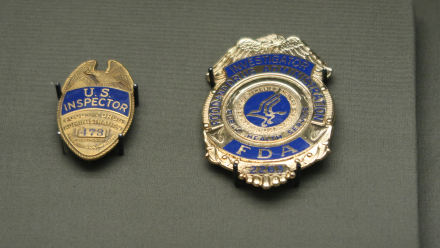
The US Food and Drug Administration (FDA) has cited a medical device manufacturer and a contract drug testing laboratory for violations of current good manufacturing practices (CGMP). Additionally, regulators said the medical device maker has been selling products without marketing authorization, despite the company arguing that its products should be considered pre-amendment devices and therefore not regulated by the agency.
Physitemp Instruments
Physitemp Instruments, a New Jersey-based medical device maker that makes clinical electronic thermometers, clinical temperature monitoring probes, and needle microprobes, was cited for CGMP violations, including failing to adequately ensure that, when a manufacturing process cannot be reliably verified, it is followed up for validation and approved in accordance with established procedures. For example, the agency said it failed to validate the sterilization method in its customer sterilization guides to ensure the products meet predetermined sterility specifications. It also took issue with the lack of proper validation of the laser welding device used to produce certain products, stating its installation was incomplete and that it did not validate the laser to ensure it consistently manufactured products that met specifications.
Furthermore, FDA said Physitemp failed to establish and maintain procedures to ensure the final products met acceptance criteria, failed to maintain procedures to control products that do not conform to requirements, and failed to maintain procedures that detail what to do with products that don't meet requirements. Additionally, the agency said the company failed to establish and maintain proper procedures detailing how a designated unit should address product complaints and failed to investigate complaints regarding possible products, labeling, or packaging.
"Specifically, you did not review, evaluate, and investigate complaints which involved the possible failure of a device, labeling, or packaging to meet any of its specifications, as required by 21 CFR 820.198(c)," said FDA. "For example, there was no documented investigation (or reference to another investigation) for the complaint received via email on [redacted], [redacted] for incorrect display values of the TH-5 Clinical Electronic Thermometer."
Physitemp was also cited for marketing its products without FDA authorization. The agency explained why the products fall under its regulatory oversight and why the company should have first applied for marketing authorization before selling them in the US. While some thermometers do not require marketing authorization, regulators noted that Physitemp's products do need FDA review because their thermometers have continuous temperature measurement functions.
"Your marketing materials indicate that these thermometers are intended for recording human temperature measurements," said FDA. "In addition, your firm’s website (https://www.physitemp.com/) states that all of the thermometer model numbers referenced above are 'ideal for laboratory or hospital use' and are 'intended for continuous monitoring in the hospital or laboratory.'
"Because these products are intended to continuously measure human body temperature, they are not exempt from premarket notification requirements (see 21 CFR 880.2910(b)(2))," the agency added.
Similarly, FDA said that since Physitemp markets its probes and microprobes to measure continuous body temperature, they too require marketing authorization.
"During the inspection, you stated that you believe the subject devices are pre-amendment devices," said FDA. "However, you have not provided evidence beyond your assertions to demonstrate that the subject devices, in their present form, were labeled, promoted, and introduced into interstate commerce as clinical electronic thermometers prior to May 28, 1976.
"Your firm's failure to submit 510(k)s for these devices has prevented FDA from determining whether these devices are substantially equivalent to an appropriate predicate device and whether there is reasonable assurance of the safety and effectiveness of these devices," the agency added.
FDA also cited Physitemp for medical device reporting (MDR) violations, stating it failed to develop, maintain and implement MDR procedures, and unique device identification (UDI) violations because its product labels do not include UDIs.
Microbiological Testing & Consulting
Microbiological Testing & Consulting, an Illinois-based contract testing laboratory that tests drug products, received a warning letter from FDA for CGMP violations as well. The agency said it failed to establish laboratory controls to ensure the drugs it tested were manufactured in accordance with specifications and failed to appropriately test the products to ensure the results it sent to its clients were accurate and scientifically sound.
FDA said Microbiological Testing routinely failed to document test attributes such as equipment number, sample size
media batch number, sample dilutions, incubation temperatures, and identifiers of the performing analyst. Furthermore, the agency said the company lacked appropriate media qualification.
"You lack adequate controls to ensure the reliability of your microbiological testing results," said FDA. "For example, the media used to test your customers drug products was inadequately qualified.
"You lacked screening for inhibitory properties of your incoming lots of [redacted]," the agency added.
FDA said Microbiological Testing's quality control unit (QU) also failed in its duties to ensure the drugs the company tests comply with CGMP requirements. The agency said the unit lacked adequate oversight of documentation, media qualification, and other critical microbiology laboratory programs. Additionally, it was told that it lacked adequate systems for investigations and for ensuring its analysts were competent.
Microbiological Testing was also told that its training program was inadequate.
"CGMP training is not regularly performed at your firm as required by your established procedure," said FDA. "During the inspection, you could not provide records of CGMP training."
Furthermore, the FDA said Microbiological Testing's quality system does not adequately ensure the accuracy and integrity of data to support the safety, effectiveness, and quality of the drugs it tests and recommended that it retain a qualified consultant to help remediate its shortcomings. However, the agency also noted that retaining a consultant does not relieve the company of its duties to comply with CGMP requirements, which ultimately rest with its executive management team.
"FDA considers contractors as extensions of the manufacturer’s own facility," said FDA. "Your failure to comply with CGMP may affect the quality, safety, and efficacy of the drugs you test for your customers.
"It is essential that you understand your responsibility to operate in full compliance with CGMP, and that you inform all your customers of any [out-of-specification (OOS)] results or significant problems encountered during the testing of these drugs," the agency added.
Physitemp Instruments, LLC, Microbiological Testing & Consulting, LLC
