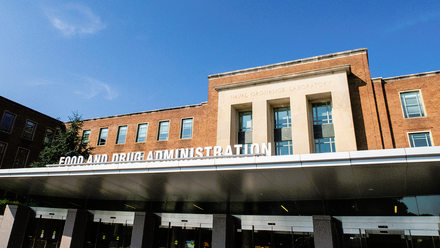
FDA warns Illinois eye clinic for conducting study without IND
The US Food and Drug Administration (FDA) recently warned a clinical trial sponsor for failing to submit an investigational new drug application (IND) for its drug-device combination eye treatment and failing to obtain approval from an Institutional Review Board (IRB) before initiating clinical studies.In a warning letter posted on 29 November, FDA told clinical investigator David Lubeck, of Arbor Center for EyeCare in Orland Park, IL that it found “objectionable conditions” during a mid-April inspection conducted under the agency’s Bioresearch Monitoring Program (BIMO). The sponsor’s written response following the inspection was deemed inadequate.
According to FDA, the sponsor failed to submit an investigational new drug applications (IND) before conducting a clinical trial involving investigational drugs that are subject to 21 CFR 312.2(a).
Lubeck and the institutional review board (IRB) considered the clinical study to be a “nonsignificant risk (NSR) device study” that did not require an investigational device exemption (IDE).
In response, FDA said the investigational product is a combination product comprising drug and device components with a pharmaceutical primary mode of action. FDA said the study’s protocol even identified the Center for Drug Evaluation and Research (CDER) as having primary jurisdiction of the product.
“We emphasize that FDA regulations require a sponsor to submit, and to have in effect, an IND before initiating a clinical investigation that must be conducted under an IND in accordance with 21 CFR 312.40,” FDA wrote.
The sponsor also failed to provide a corrective action plan to address how it will determine when an IND is required for clinical investigations and how it will comply with IND regulations. FDA said that “without this information, we are unable to determine whether you will comply with IND regulations in the future.”
The agency noted that “as a sponsor-investigator, you are responsible for compliance with IND requirements, and it is your responsibility to be aware of and to follow all applicable FDA regulations. Your failure to submit, and to have in effect, an IND before initiating a clinical investigation with investigational drugs raises significant concerns regarding the safety and welfare of enrolled subjects, and also raises concerns about the validity and integrity of data collected at your site during the conduct of the clinical investigation.”
FDA told Lubeck to provide a written response to the violations with 15 business days.
According to data from FDA, failure to submit and IND was one of the top BIMO violations in fiscal year 2021.
Warning Letter