OGD director touts drop in refuse-to-receive determinations
The top generic drug regulator at the US Food and Drug Administration (FDA) on Wednesday touted the drop in refuse-to-receive (RTR) decisions his office issued for abbreviated new drug applications (ANDAs) in FY 2025 as a significant achievement for the agency.
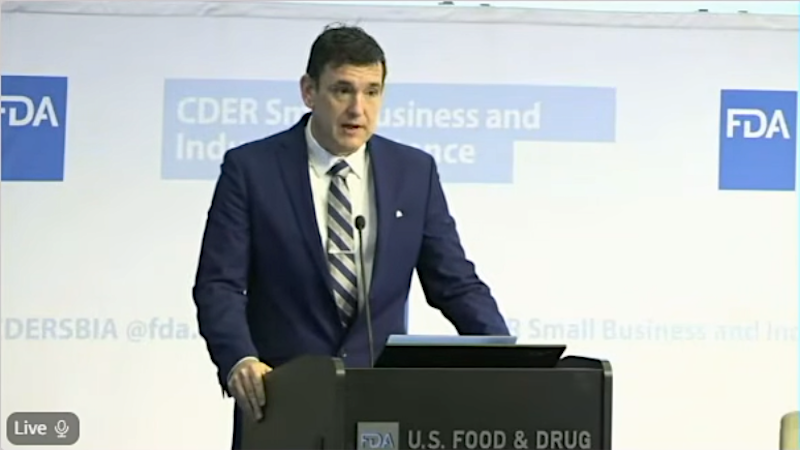
Speaking at the Generic Drugs Forum on Wednesday, Darby Kozak, deputy director of the Office of Generic Drugs, also highlighted the passage of the Consolidated Appropriations Act, 2026, which requires FDA to discuss with applicants whether their drug is qualitatively (Q1) and quantitatively (Q2) the same as the reference listed drug, and if not, to provide details about why the drug was determined not to be qualitatively or quantitatively the same.
Prior to the act, ANDA filers often lacked clarity regarding the reasons for their application denials. The FDA would respond to controlled correspondence by simply indicating whether the drug product met or did not meet Q1/Q2 sameness criteria, without providing any explanation for the outcome.
Kozak reported that there were 939 ANDAs approved or tentatively approved in FY 2025. Among these, 125 were classified as complex generic ANDAs, 92 were the first approvals for generic ANDAs, and 107 generic ANDAs received the competitive generic therapy (CGT) designation.
In 2024, the FDA approved a total of 900 ANDAs, which included both granted and tentative approvals. This total comprised 92 complex generics, 76 first generic drug approvals, and 132 generics designated as competitive therapeutic alternatives. (RELATED: FDA official says data integrity issues are the main reason for ANDA delays, Regulatory Focus 10 April 2025)
Some of the notable first generics approved by the agency in 2025 include generic versions of Saxenda (liraglutide injection) for chronic weight management, Venofer (iron sucrose injection) for the treatment of iron deficiency anemia in patients with chronic kidney disease (CKD) on dialysis, and Janumet XR, a combination of sitagliptin and metformin XR, was approved for the treatment of Type 2 diabetes.
Other significant approvals include generic versions of Xarelto (rivaroxaban), which is used for anticoagulation therapy and Mayzent (siponimod) for the treatment of multiple sclerosis.
Kozak said he was encouraged by a decrease RTR decisions in FY 2025. He said that only 3% of ANDAs were RTR, a slight decrease from 3.2% in FY 2024 and a notable drop from 4.5% in FY 2023, continuing a trend in declining RTR determinations in recent years. For reference, in FY 2017, the RTR percentage was 10.9%, which rose to 12.2% in FY 2018 before falling to 5.7% in FY 2019.
Darby also discussed several reasons why some applications exceed the 60-day goal date. One significant factor is data integrity problems, which caused nearly 15 ANDAs to surpass the 60-day review target in the third quarter of FY 2025. Other challenges affecting applications include issues related to nitrosamine impurities, poor inspection results, and complex regulatory matters.
Another bright spot, according to Darby, was Congress’s passage of the Consolidated Appropriations Act in February, which requires the FDA to provide detailed feedback on whether a proposed generic product is Q1 and Q2 the same as the RLD.
“I am really excited by the recent Q1 and Q2 legislation that was enacted this year.” This legislation has led to “more specific led regulatory feedback from us that will reduce the regulatory guesswork and facilitate more timely generic drug development,” Darby said.
Update on KASA, ELSA, and nitrosamines
During the meeting, Susan Rosencrance, deputy director for science in the Office of Pharmaceutical Quality (OPQ) in FDA’s Center for Drug Evaluation and Research (CDER), provided an update on the agency’s Knowledge-aided Assessment and Structured Application (KASA) program and its use of the new artificial intelligence (AI) assistant Elsa for reviews.
Rosecrance said that the KASA program has expanded to over 60 different dosage forms and now covers 95% of all generic drug submissions. When it was first introduced, the program only applied to a limited number of drug substances and drug products. Under the KASA review program, FDA uses a machine-readable structured data field, enabling reviewers to quickly identify information, such as high-risk impurities, and to apply consistent standards in assessing applications.
The KASA program was first announced in 2019 as part of FDA’s work to improve and modernize the quality assessment of drug applications, and the agency has since said it would take a step-wise approach to implementing KASA in drug reviews.
In other areas, Rosencrance said that reviewers are also using the agency’s AI tool called ELSA to expedite its review of nitrosamine assessments, which had to be completed by sponsors in August 2025.
On 2 June 2025, FDA Commissioner Martin Makary announced the agency had launched Elsa almost a month ahead of schedule, claiming the AI tool had been proven to help staff streamline their work significantly.
Rosencrance was quick to point out, however, that use of this tool will “not replace scientific judgment, it just makes the reviewer’s challenging job easier by pulling all the necessary information for them.
In August 2023, FDA issued a final guidance that outlined a framework for predicting the mutagenic and carcinogenic risk of nitrosamine drug substance-related impurities (NDSRIs) and sets recommended acceptable intake (AI) limits for these compounds that are identified in drug products and active pharmaceutical ingredients (APIs). (RELATED: FDA set acceptable intake limits for nitrosamines in drugs, Regulatory Focus 7 August 2023)
The agency also called on manufacturers of approved products to evaluate these NDSRI risks within three months of final guidance’s publication, and recommends these assessments be completed by 1 November 2023. The guidance further specifies that by 1 August 2025, manufacturers and applicants should ensure that any NDSRIs in their drug products meet the FDA-recommended AI limit and its carcinogenic potency category.