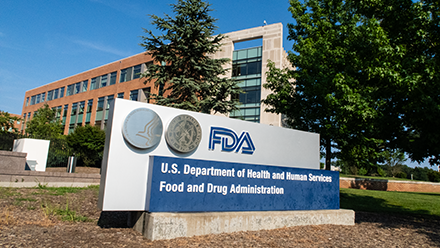
Warning letters: Same old, same old at FDA
Four warning letters posted earlier this year highlight that everything old is new again when it comes to enforcement problems for the US Food and Drug Administration.Specifically, FDA warned two companies for claiming their human cell and tissue products (HCT/P) can treat diseases or conditions without having an approved biologics license application (BLA), as seen in two recent warning letters. Additionally, the agency issued warning letters to two over-the-counter drug firms – one in the US and one in South Korea – for not testing incoming materials for contamination.
FDA officials back in June 2021 said they were disappointed with the slow update of approvals of stem cell therapies and were stepping up their enforcement efforts against companies making unapproved therapies (RELATED: FDA disappointed with slow uptake of approvals for stem cell therapies, Regulatory Focus 9 June 2021).
FDA issued a warning letter to MiMedx Group in December following a three-week inspection in February 2023 for its product derived from the placenta. The product, called AXIOFILL, is also referred to as a “Placental Collagen Matrix” and is applied topically to treat wounds.
During inspections of the companies’ sites in Kennesaw and Marietta, GA, FDA said that information gathered during the inspection, and information on its website, said the product “is intended for use in the diagnosis, cure, mitigation, treatment, or prevention of disease or a condition in humans.”
The labeling says the product can replace or supplement “damaged or inadequate integumental tissue” which can result from trauma wounds or diabetic foot ulcers.
FDA told the firm that “to lawfully market a drug that is a biological product, a valid biologics license application (BLA) must be in effect …. Your product, AXIOFILL™, is not the subject of an approved BLA nor is there an IND in effect for this product. Based upon this information, we have determined that your actions have violated the FD&C Act and the PHS Act.”
The firm was given 15 days to respond to the warning letter.
FDA also sent a warning letter to Kimera Labs, which manufactures exosome products derived from stem cells and an amniotic fluid product. The plant in Miramar, FL, was inspected over a ten-day period in July 2022.
FDA said the exosome products (XoGlo and XoGloPro) and the amniotic fluid product (Amnio2X) are being manufactured without an approved biologics license applications (BLAs) or investigational new drug application (IND), even though the products are labeled as intended to treat various diseases or conditions.
“Please be advised that to lawfully market a drug that is a biological product, a valid biologics license must be in effect [42 U.S.C. 262(a)]. Such licenses are issued only after showing that the product is safe, pure, and potent,” FDA wrote.
The warning letter added that “none of your products are the subject of an approved biologics license application (BLA).”
The firm was given 15 days to respond to the warning letter.
Two firms failed to screen incoming ingredients
Two other recent warning letters dinged manufacturers for not testing incoming ingredients for contaminants, an oft repeated theme cited in warning letters.
Prime Labs of Ponce, Puerto Rico, was taken to task for not testing quality of raw materials used to make antibacterial hand soap and hand sanitizer.
FDA told the company that “you did not adequately test incoming raw materials, including identity testing of each component lot used in the manufacture of your OTC drug products. You also stated that you relied on your suppliers’ certificate of analysis (COA) without establishing the reliability of your component suppliers’ test analyses at appropriate intervals. Without adequate testing, you do not have scientific evidence that the components conform to appropriate specifications prior to use in the manufacture of your drug products.”
Specifically, the firm was reprimanded for not testing these products for diethylene glycol (DEG) and ethylene glycol (EG).
The firms has since stopped producing drugs at this facility.
Another firm, Woorilife & Health, an OTC maker of toothpaste in Namyangju Gyeonggi-do, South Korea, was also lambasted for its lax testing approach for incoming components.
FDA told the firm that “based on the records and information you provided, you did not demonstrate that you are adequately testing each shipment of each lot of the incoming components at high-risk of diethylene glycol (DEG) or ethylene glycol (EG) contamination. These include, but are not limited to, testing of glycerin, propylene glycol, and sorbitol solution, you use in manufacturing drug products to determine their appropriate identity.”
FDA officials also expressed concerns about the growing number of contaminated products containing DEG or EG at a meeting last year. (RELATED: FDA official cites concerns with benzene and DEG contamination, Regulatory Focus, 8 May 2023).
The firm was placed on an import alert.
MiMedx warning letter; Kimera Labs; Prime Warning Letter; Woorilife warning letter