FDA official details top GMP violations cited in inspection reports
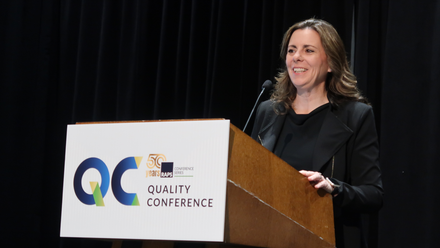
Simone Pitts, a national expert pharmaceutical investigator in the Office of Human and Animal Drug Inspectorate (OHADI) at the US Food and Drug Administration (FDA), stated that inadequate oversight of manufacturing operations by the quality control unit (QCU) was the top deviation identified in Form 483 inspection reports for pharmaceutical companies during FY 2024.She noted that the QCU is tasked with overseeing all manufacturing processes, and a robust quality unit helps minimize deviations from Good Manufacturing Practices (GMPs). Pitts delivered these remarks at the 50th International GMP Conference held in Athens, Georgia, which was sponsored by FDA and the University of Georgia School of Pharmacy.
Pitts provided an update on the most common deficiencies noted in Form 483 reports related to good manufacturing practices (GMP). The most frequently identified issue for FY 2024 is the failure to follow written procedures, as outlined in 21 CFR 211.22(d). This violation was cited 184 times in the Form 483 reports.
The second most frequently cited violation was of 21 CFR 211.192, which pertains to the failure to investigate discrepancies, and it was cited 116 times. The third most cited violations were for 21 CFR 211.100(a) for the absence of procedures, and 21 CFR 211.160(b) for a lack of scientifically sound laboratory controls, both of which were cited 109 times.
Pitts stated that the leading citations have mostly stayed consistent over the years. She noted that companies should be aware that “quality touches everything. Quality is the beginning and quality is in the end. Without quality you don’t have an adequate program in place.” She further noted that the role of quality “needs to be defined in written procedures.”
She also discussed what investigators will be looking for during an inspection. “We are going to watch your processes. That is what we do. We are going to stand there and watch. We’re not going to be watching for five minutes. We are going to be camping out and watching your process.”
Pitts noted that initially “everyone will be on their best behavior” but then will “forget and go back to their normal routine activities.”
Peter Baker, a former FDA investigator, emphasized the importance of robust quality management practices in pharmaceutical manufacturing, and recommended that companies refer to FDA's 2025 guidance on Quality Management Maturity (QMM) to beef up these practices. He spent 11 years as an investigator with FDA, including several years in the agency’s overseas offices in India, China, and Chile. Currently, he is the president of Live Oak Quality Assurance, a consulting firm.
“The key takeaway is that mature quality management practices advance the paired goal of increasing profits while delivering a better product. It is very rare that you will see a regulatory guidance document talk about profits, but I will tell you what. It’s about time. It's about time we talk about quality being a partner in the business instead of a roadblock,” he said.