Convergence: Global landscape evolves on real-world evidence, but at an uneven pace
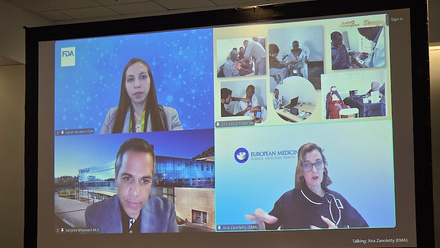
PHOENIX, AZ – Real-world evidence (RWE) is gaining a foothold as an important part of regulatory decision making but health authorities around the world are at different stages of acceptance and policy development.“We do expect [real-world data] and RWE to play an increasing role in drug development and regulatory decision making,” Seema Betigeri, PhD, Executive Director of Global Regulatory Affairs at Merck, said at RAPS Convergence 2022. She noted that the United States has established a legal framework for the use of RWE in regulatory decision making but not all countries are as far along, which creates a challenge for companies considering a global development program.
“Efforts are needed toward global harmonization on RWE and RWD programs so that we can ensure effective use of these data to drive further innovation in drug development,” Betigeri said.
US and Europe
Across the globe, RWE has been widely accepted to support post-approval safety surveillance studies and that has not changed. What is evolving is the integration of RWD and RWE into the early development of drugs or for the assessment of products during various phases of drug development, Betigeri explained. In the US, RWE received a boost from the 21st Century Cures Act, which required the US Food and Drug Administration (FDA) to create a framework to evaluate the use of RWE in regulatory decision making. The agency published that framework document in 2018.
More recently, the FDA published a series of draft guidance documents for industry related to the use of registry data, electronic health records and medical claims data, data standards for RWE and the use of non-interventional studies with RWD.
In Europe, the European Medicines Agency (EMA) published the “Regulatory Science to 2025” strategic reflection document in March 2020, which outlined an effort to enable the use of RWE in regulatory decision making by 2025 across a spectrum of use cases.
Sabine Haubenreisser, PhD, Principal Scientific Administrator at the EMA, said the goal is to use RWD analyses to have a better informed and more efficient regulatory system. “It will help us to fill gaps. It will provide additional information, such as additional sensitivity analyses or access to more and different databases,” Haubenreisser said.
Following the commitment to using RWE, the EMA also issued a guideline on registry-based studies in September 2020.
The UK Medicines and Healthcare products Regulatory Agency (MHRA) published guidelines in 2021 related to randomized controlled trials using RWD to support regulatory decisions.
In July 2022, Swissmedic, the Swiss agency for therapeutic products, published a position paper on the use of RWE as supportive evidence to data from clinical trials. The guidance document is brief but is intended to start a dialogue on this topic, Betigeri said.
Asia-Pacific region
Meanwhile, the RWE landscape in the Asia-Pacific region has been “dynamic,” Betigeri said.
In China, the National Medical Products Administration (NMPA) developed three guidelines between 2020-2021 on the use and evaluation of RWE for drug development and regulatory decisions, addressing pediatric drug development as well as RWD quality and data security.
In Japan, the Pharmaceuticals and Medical Devices Agency (PMDA) established a working group in 2021 to discuss regulatory issues related to RWD and RWE, which has addressed data reliability and methodology. Additionally, PMDA’s new scientific advice program for database studies offers the opportunity for discussion with investigators and sponsors, Betigeri said. “They want to initiate a transparent dialogue in this regard,” she said.
In Taiwan, regulators published a series of guidelines on RWD from 2020-2021, focused on RWD considerations in research and development, pragmatic study designs, and data reliability and relevance.
In 2021, Australia’s Therapeutic Goods Administration (TGA) provided a review on the use of RWE and patient-reported outcomes in regulatory evaluations. Additionally, in South Korea, the Ministry of Food and Drug Safety (MFDS) has taken steps to develop a framework to leverage RWD in regulatory decision making, Betigeri said.
More recently, there have been some steps toward global harmonization. In June 2022, the International Collaboration of Regulatory Medicines Authorities (ICMRA), which includes members from more than 30 regulatory agencies worldwide, held a workshop on RWE to identify opportunities for collaboration and to address challenges on RWE integration into regulatory decision making.