Expert: ‘Significant advances’ made in RWD use thanks to new regulatory initiatives
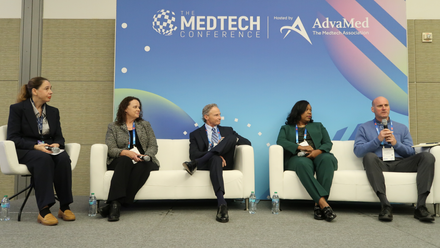
BOSTON – International regulators have made “significant advances” in incorporating real-world data (RWD) in their decision making to understand the safety of marketed drugs, while at least one company – Amgen had made use of these databases to understand the safety of its marketed drugs.These views were presented at the Drug Information Association’s (DIA) Global Annual Meeting on 28 June at a panel discussion on RWD. The session featured regulators from the US Food and Drug Administration (FDA), the European Medicines Agency (EMA), and Health Canada (HC), who explained how their RWD networks have evolved and expanded over the years to make more informed decisions on drug safety.
According to Amgen’s Brian Bradbury, “Over the last few decades we have seen significant advances in the use of this data to address a multitude of healthcare questions. The development of federated networks has advanced our use of real-word data to address critical questions, and regulators have really pushed the field along with the academic community and the biopharma industry.” Bradbury is vice president of the company’s Center of Observational Research and an adjunct professor of epidemiology at the University of California Los Angeles.
He said that regulatory decision making using RWD has “rapidly evolved” in every jurisdiction, including the US, Europe, and Japan.
EMA plans to expand DARWIN network
Catherine Cohet, senior pharmacoepidemiologist in the real-world evidence workstream at EMA, described some of the work underway to expand the agency’s Data Analysis and Real World Interrogation Network (DARWIN EU) to more data partners in more countries.
DARWIN EU aims to provide EMA, the European Commission, and national competent authorities in the 27 member states access to the results of analyses of real-world healthcare databases. EMA recommended the establishment of DARWIN EU in January 2020. (RELATED: EU ‘ramping up quickly’ with more partners coming on board, Regulatory Focus 22 March 2023)
Currently, EMA has data partners in eight countries to supply data to DARWIN EU. The data partners are in the United Kingdom, Belgium, France, Spain, Finland, Estonia, Netherlands and Germany. EMA is currently selecting data partners for Phase 2 of the project.
Cohet said that DARWIN can answer questions spanning the lifecycle of a medicinal products at each stage and can support the validity of applicant studies and can shed light on the disease epidemiology. She also said it can be used to investigate the effectiveness of safety studies as well as the impact of regulatory actions.
She said that by 2025, DARWIN will deliver 150 RWD studies annually.
Canada’s new RWD program
Melissa Kampman, manager and senior epidemiologist at Health Canada’s Marketed Health Products Directorate, described the launch of a new postmarket drug evaluation program last fall to improve the collection of RWD.
She said that “a 2019 evaluation of [the RWD program] highlighted the need for improved responsiveness to the evidence needs of decision-makers.” One of these limitations of the former program was its inability to conduct research through contracts; it could only conduct research through grants.
The new RWE program is run by the Canadian Agency for Drugs and Technologies (CADTH), which replaced the former Drug Safety and Effectiveness network (DSEN).
Since 2009, more than 100 research queries have been completed for Health Canada though these RWD networks. Some examples of the research questions include the incidence of gastrointestinal or intracerebral hemorrhage following new uses of oral anticoagulants in patients with atrial fibrillation; as well as examining the data to examine the occurrence of rhabdomyolysis and acute kidney industry (AKI) events following new use of statins.
FDA wants to improve ARIA
Other regulators also described efforts that are underway to address shortcomings of current phenotyping methods in RWD models in the postmarket area.
Patricia Bright, associate director of Sentinel in FDA’s Office of Surveillance and Epidemiology (OSE), described how the agency is planning to upgrade its Sentinel system by “improving ARIA sufficiency” through better phenotyping methods, which are used to observe certain traits in patients.
Bright said that problems with the ARIA system and such phenotype limitations were discussed at the 2022 Sentinel Innovation Day on 12 April 2022.
Bright noted that “traditional approaches to phenotyping are expensive and time-consuming.” What is needed is a “general framework including principles and best practice to guide scale development of phenotypic algorithms.”
FDA conducts safety assessments in Sentinel using the active risk identification and analysis (ARIA) system to assess a known serious risk related to the use of the drug, assess a signal of serious risk related to the use of the drug, or to identify an unexpected serious risk, as described in Section 505(o)(3)(B) of Food, Drug, and Cosmetic Act.
Amgen leveraged Sentinel data
Bradbury described how Amgen leveraged Sentinel data in 2016 to evaluate the safety of a marketed drug. First, the company integrated this data into their own postmarket environment, then incorporated a series of add-ons. Over time the company has been “enhancing” this system to help address questions across the life cycle of a products.
“We ran an analysis of our medicines against a standard of care because there were questions about the safety of the medicines,” Bradbury said.
He added that “it is not well-recognized that federated network can be used to address important public health questions.”
DIA meeting