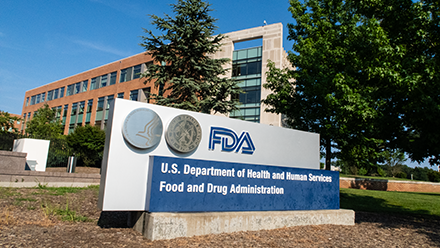
FDA draft guidance sets impurity controls for most antibiotics

The US Food and Drug Administration (FDA) has released a draft guidance document aimed at setting impurity limits for antibiotics produced through fermentation or semi-synthetic methods. This guidance is meant to address a gap in managing impurities for these products, as existing guidelines do not cover controlling impurities and degradation products for these types of antibiotics.
The document applies to antibiotic drugs subject to approval under new drug applications (NDAs), abbreviated new drug applications (ANDAs), and type II drug substance drug master files (DMFs) referenced in antibiotic NDAs and ANDAs.
The guidance emphasizes that a significant number of antibiotics are produced through fermentation processes or semi-synthetic methods, rather than through chemical synthesis. Due to the complexity of these fermentation and semi-synthetic processes, there is a higher likelihood of various potential impurities. However, existing guidelines do not offer recommendations for controlling impurities and degradation products in drugs produced by these methods, including certain antibiotics.
To bridge this gap, the guidance provides recommendations for identifying, qualifying, and managing impurities and degradation products in fermentation-derived and semi-synthetic antibiotics.
FDA emphasizes the importance of fully characterizing these mixtures to identify any impurities, antibiotic-related analogs in the drug substances, and degradation products in the drug products.
Manufacturers should follow the terminology for listing impurities and degradation products set in the International Council for Harmonisation’s (ICH) Q3A(R) guidance on controlling impurities in new drug substances, ICH Q3B(R2) on controlling impurities in new drug products, and ICH Q6A on setting product specifications.
For drug products, specifications should address each identified degradation product, each specified unidentified degradation product, any unspecified degradation product with an acceptance criterion that does not exceed the identification threshold, and the total degradation products.
For drug substances, specifications should include each specified identified impurity, each specified unidentified impurity, any unspecified impurity with an acceptance criterion that does not exceed the identification threshold, and the total impurities.
Manufacturers should also describe the analytical procedures used to test for degradation products and provide evidence that the analytical procedures have been validated and are suitable under actual conditions of use. The validation of analytical procedures for evaluating impurities and degradation products should follow the ICH Q2(R2) guidance for industry on validating analytical procedures.
The guidance further notes that the acceptance criteria for impurities and degradation products should be established based on data from various sources, including clinical trials, nonclinical studies, and a comparative analyses of degradation products in a drug product relative to its respective reference listed drug (RLD). Other considerations include the context of use, prior knowledge, publicly available information, and the accuracy of analytical procedures as appropriate.
Acceptance criteria for specified impurities in drug substances or for specified degradation products in drug products are considered appropriate if they do not exceed the qualification thresholds outlined in ICH Q3A(R) or ICH Q3B(R2). This recommendation is valid only in the absence of toxicological concerns. If there are any structural alerts for mutagenicity or signals for carcinogenicity, follow ICH M7(R2).
If applicants wish to use acceptance criteria for specified impurities in drug substances or specified degradation products in drug products at levels exceeding the qualification thresholds in ICH Q3A(R) or ICH Q3B(R2), they must justify the proposed limit. This justification may include a repeat-dose general toxicology study with the appropriate route of administration, conducted over 14 to 90 days, depending on the indication. Additionally, applicants should submit a risk assessment for mutagenic potential as outlined in ICH M7(R2).
The deadline to comment is 22 June. Submit comments to www.regulations.gov. Refer to docket number FDA-2025-D-6130.