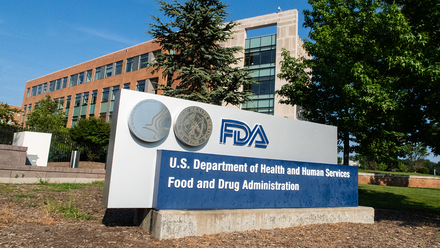

FDA warning letters raise concerns about CGMP, GLP violations
The US Food and Drug Administration (FDA) has issued warning letters to several drug manufacturers for failing to meet current good manufacturing practices (CGMP) requirements, and to a research laboratory for failing to comply with good laboratory practices (GLP). The specific issues include concerns about ensuring that final products are sterile and meet specifications, and, in the case of the research laboratory, that the final report adequately details the experience of its animal subjects.
Jiangmen Shuizirun Sanitary Articles in China and Hanlim Pharm in the Republic of Korea both received letters outlining several CGMP violations, including failing to ensure their products were manufactured under sterile conditions. While Jiangmen produces products labeled as sterile, investigators said their over-the-counter products are not produced in accordance with CGMP requirements that would allow them to be considered sterile. The company argued that its products are manufactured under a controlled process to meet microbial limits specified in its Certificate of Analysis; the agency said it does not indicate the products are sterile.
Hanlim was also cited for failing to establish and follow written procedures to prevent microbiological contamination of drug products that claim to be sterile. Investigators found that products were being manufactured using poor aseptic practices, and smoke studies showed that the airflow patterns in the manufacturing facility failed to adequately protect the aseptic processing line.
While Hanlim said it would redesign its filling line to address the deficiencies and conduct smoke studies to ensure the airflow patterns were corrected, the FDA said the company lacks a comprehensive program to effectively monitor personnel practices during production or provide a plan to improve its airflow visualization program. The company was also cited for failing to have specific manufacturing areas to prevent contamination or mix-ups, or the necessary control procedures in place to monitor output.
"Your aseptic processing operation is inadequately designed to prevent contamination of your sterile [redacted] drug products," said FDA. "For example, you did not appropriately sterilize critical container-closure contact surfaces, such as the [redacted], bowl, track and [redacted] equipment, as well as the [redacted], bowl, track, and [redacted] equipment.
"Instead, you wipe these surfaces with sporicidal disinfectants," the agency added. "To ensure sterility, it is imperative that only sterilized equipment comes into direct contact with the sterile formulation, containers, and closures."
Drug compounder SCA Pharmaceuticals in Arkansas also received a warning letter for several CGMP violations, including manufacturing, packing, and storing sterile products in insanitary conditions. Among the more specific complaints, the FDA said its facility lacked routine and rigorous certification for ISO 5 areas, failed to take corrective action after microbial contamination was discovered, and failed to design and maintain its production line to prevent foreign contamination. While the company proposed corrective actions, some of which the agency said appear adequate, investigators said they are unable to fully evaluate them due to insufficient documentation.
Jiangmen, Hanlim, and several other companies were cited for failing to test samples of each component of their products to ensure they meet purity, strength, and quality specifications. Some were also cited for failing to validate and establish the reliability of the component supplier’s test analyses at appropriate intervals. Wisconsin-based Eurofins SF Analytical Laboratories and Virginia-based Silgan Dispensing Systems were among the companies that failed to ensure their final product met specifications.
FDA said Eurofins' quality unit (QU) lacked adequate oversight and control over its laboratory operations to ensure its products met quality standards.
"Significant findings in this letter demonstrate that your firm does not operate an effective quality system in accord with CGMP," said FDA. "In addition to the lack of effective management oversight of your laboratory operations, we found your QU is not enabled to exercise proper authority and/or has insufficiently implemented its responsibilities.
"Executive management should immediately and comprehensively assess your company’s global manufacturing operations to ensure that your systems, processes, and products conform to FDA requirements," the agency added.
Similarly, FDA admonished Silgan's QU for failing to adequately oversee the company's OTC production and for failing to validate and establish the reliability of its component supplier’s test analyses at appropriate intervals, to follow a testing program to ensure the stability characteristics of its final products, and to maintain written records. Additionally, the company was cited for marketing products without FDA authorization, based on claims in its product labeling and on its website.
"Based on the above labeling evidence, [redacted] intended for use as [redacted] drug product," said FDA. "As such, these drug products are 'new drugs' under section 201(p) of the FD&C Act, 21 U.S.C. 321(p), because they are not generally recognized as safe and effective (GRASE) for use under the conditions prescribed, recommended, or suggested in their labeling.
"With certain exceptions not applicable here, a new drug may not be introduced or delivered for introduction into interstate commerce without an approved application from FDA in effect, as described in section 505(a) of the FD&C Act, 21 U.S.C. 355(a)," the agency added.
In July, FDA held a teleconference with Silgan which led to a voluntary recall of certain products in the US, and the company also said it has suspended production of all drugs at its facility. The agency asked the company to notify regulators if it plans to restart manufacturing at the facility and recommended engaging a qualified consultant to ensure it meets CGMP requirements. Regulators also recommended that Jiangmen, Hanlim, Eurofins, and SCA Pharmaceuticals seek help from independent, qualified consultants.
FDA investigators issued a warning letter to New Mexico-based Lovelace Biomedical Research Institute (LBRI) as well. The contract research organization (CRO) was inspected under the agency's Bioresearch Monitoring (BiMo) program and cited for violating good laboratory practices (GLP) for nonclinical laboratory studies.
"From our review of the FDA Establishment Inspection Report, the documents submitted with that report, and your written response dated May 9, 2025, it appears that you did not adhere to the applicable statutory requirements in the Federal Food, Drug, and Cosmetic Act (FD&C Act) and applicable regulations contained in 21 CFR 58 governing the conduct of nonclinical laboratory studies," said FDA.
More specifically, FDA said the CRO's quality assurance unit (QAU) failed to ensure that the reported results accurately reflected the raw data of the nonclinical laboratory study. Investigators noted that the study’s animal subjects exhibited several abnormalities not included in the final report, such as the animals pulling out their venous catheters during infusion of the test or control article, lying on the bottom of their cages after infusion, and irregular breathing.
"For 20 out of 34 animals, the final study report did not include all the abnormal cageside clinical observations that were documented between October 1 and January 3, 2024, including but not limited to sneezing; runny or bloody nose; liquid, loose, mucoid, or semisolid stool; sunken eyes; swollen perineum; bloating; hunched posture; low appetite; and heavy breathing," said FDA. "The final study report did not include all the abnormal cageside clinical observations for all 48 animals, documented between November 21, 2022, and July 13, 2023, including incidences of abnormal stool observations, such as bloody or dark-red, liquid, loose, mucoid, or unformed stools."
As with other entities that responded to FDA's warning letters, the agency said LBRI's commitment to taking corrective and preventive actions was inadequate because it lacked details.
"Specifically, you did not provide sufficient details regarding the updated [standard operating procedures (SOP)], including the nature of the proposed or completed updates," said FDA. "Your corrective action plan also did not include any training on the updated SOPs or on FDA regulations governing the conduct of nonclinical laboratory studies, including the QAU’s role and responsibilities.
"In addition, the revised final study reports did not completely address the individual dosing issues," the agency added. "Finally, your corrective action plan did not include a description of any planned audits to check for compliance with updated procedures, as applicable. Without these details, we are unable to determine whether your corrective actions are adequate to prevent similar violations in the future."