

Makary stresses urgency to approve new treatments quickly
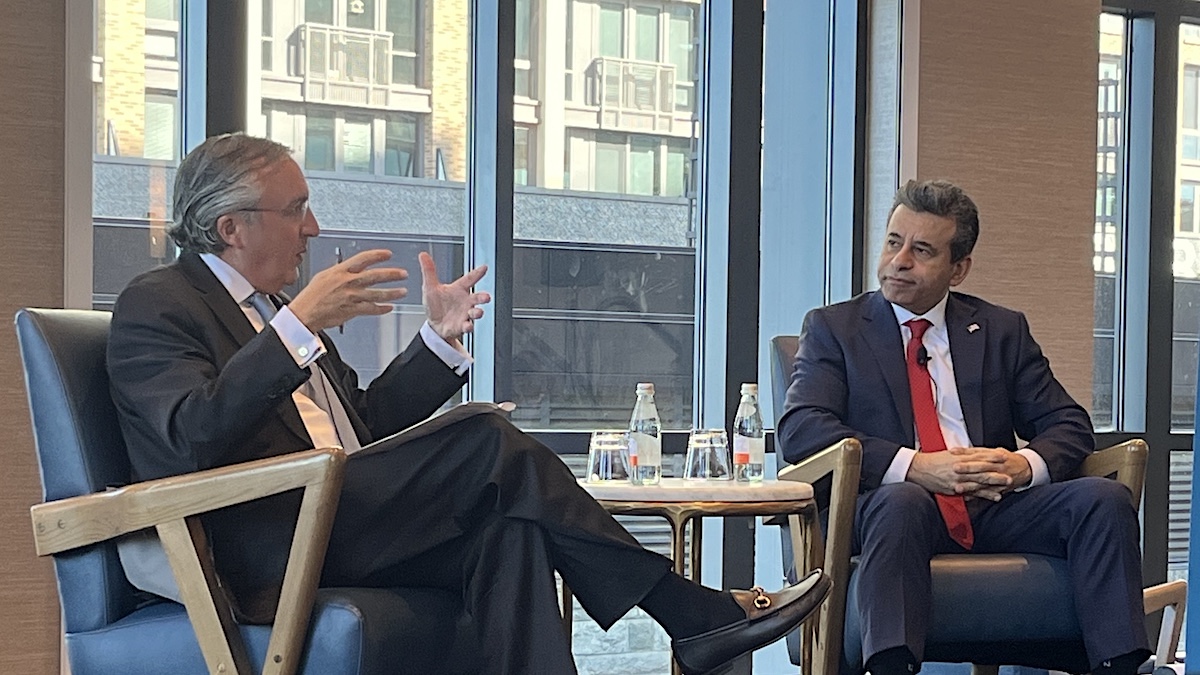
WASHINGTON – US Food and Drug Administration Commissioner Marty Makary said the agency should apply the same urgency as it did to approve the first treatments for HIV/AIDS in the 1990s to new drugs and medical devices, including those for Alzheimer’s disease, Type 1 diabetes, and cancer.
Makary made these remarks at the Medical Device Manufacturers Association (MDMA) annual meeting on Thursday. He also touted some of his achievements as FDA Commissioner, including the recent effort to consolidate the agency’s various adverse event reporting systems into a single platform. He also praised the Elsa artificial intelligence tool, which rolled out to staff across the agency last year.
Additionally, he emphasized the importance of establishing a new clinical trial notification pathway for manufacturers conducting Phase 1 studies with investigational new drugs in the US.
MDMA CEO Mark Leahey moderated the session and asked Makary about his accomplishments, what he would like to change, and future goals for the agency.
When asked if there was anything about working for the government that surprised him, Makary said he was surprised that "you can actually get things done quickly."
One of the achievements he is proud of over the past year is the expedited approval of Otarmeni (lunsotogene parvec-cwha), the first dual adeno-associated virus (AAV) gene therapy for pediatric and adult patients with genetic hearing loss. This biologic-device combination therapy received approval in just 61 days, making it tied for the fastest biologics license application (BLA) approval in FDA history.
Along those lines, Makary said that the same level of urgency that was applied to the approval of drugs to treat HIV/AIDS—which was driven largely by grassroots activism—should be applied more broadly to drugs and devices. The fastest approval in the FDA’s history was for the HIV drug Crixivan (indinavir), a protease inhibitor developed by Merck. The drug was approved by the FDA in March 1996 in a record-setting 42 days after the company filed the drug.
“This was during a tragic epidemic, and our understanding of how to control it was still limited,” Makary said.
Makary emphasized that other drugs and devices should also be fast-tracked for approval. This includes drugs to treat post-traumatic stress disorder (PTSD), Type 1 diabetes, Alzheimer’s disease, and cancer. These drugs should be approved “without cutting corners on safety,” Makary said. “Devices are potential cures and they are powerful treatments … that is what we want to see more of.”
Makary also highlighted the consolidation of the agency's adverse event reporting systems into a single platform. Previously, these systems were spread across seven different platforms. By consolidating them, he said the FDA has saved $20 million, which is being reinvested into hiring additional scientists.
DOGE cuts
In other areas, Makary acknowledged that some cuts made by the Department of Government Efficiency (DOGE) "did some damage to the FDA." However, he remarked that "there was some good there." He pointed out that the agency’s information technology (IT) department had 1,500 employees before the cuts, but after the reductions, the number decreased to 700. Makary stated that these cuts have allowed for a better focus moving forward.
“FDA right now is incredibly strong,” he said.
ELSA update
Leahey asked Makary for his insights on the agency’s direction regarding artificial intelligence. Leahey pointed out that “the device industry was the first one with AI capabilities, now over 1,000 reviews with AI embedded in technology, we have trodden a well-worn path.”
“We adopted AI before any agency in the US,” Makary said. “We were the first agency to make an AI tool available to employees, called Elsa. It’s an interactive tool” that allows reviewers to conduct research and navigate applications. He said that 90% of the agency’s reviewers are using ELSA.
Makary further noted that reviewers are mostly using Elsa as a checklist to ensure that an application is complete before reviewing it. Using this tool has brought the initial screening of an application from the standard 60 days to just two minutes.
“AI will not make an approval decision, but our reviewers love it,” Makary said.
Makary also announced that the agency is set to release a new Elsa 4.0 version next week.
Future goals
Leahey also asked Makary about his top priority as commissioner. Makary stated that maintaining global competitiveness is essential. “We have been getting clocked by China and Australia” in terms of approvals, he said.
Makary pointed out that US companies have invested $150 billion in deals with China. “We want that money spent in the United States,” he said. He acknowledged that some factors, like the lower cost of clinical trials in China, are beyond his control.
However, he noted that one aspect that can be improved is the review process for investigational new drug applications (INDs). While it takes about 220 days to get an IND approved following a pre-IND meeting in China, the process in the US can take up to 380 days.
Makary said that “we are actively looking at [this process] right now.” The Administration’s budget proposal for FY 2027 would address this by reforming the IND approval system. The request includes the establishment of an optional expedited pathway for manufacturers conducting IND studies in the US, utilizing existing preclinical data and alternative non-animal-based testing methods. (RELATED: FDA budget proposal: New clinical trial pathway; permanent authorization of rare pediatric disease voucher program, Regulatory Focus 7 April 2026)
