MedCon: FDA reaches agreement in principle with industry for MDUFA VI negotiations in ‘record timeline’
COLUMBUS, OH – The US Food and Drug Administration (FDA) and representatives from industry have reached an agreement in principle on negotiations for reauthorization of the Medical Device User Fee Amendments (MDUFA VI) program, an FDA official told attendees at the 2026 MedCon conference, sponsored by the AFDO/RAPS Healthcare Products Collaborative.
Barb Marsden, acting office director in the Office of Regulatory Programs (ORP), Office of Product Evaluation and Quality in the Center for Devices and Radiological Health (CDRH) at FDA, said the agency and industry have “tentatively concluded negotiations pending resolution of documents that will memorialize the agreement.”
The negotiations, which began in October 2025, focused on performance goals, improvements to regulatory processes, program resources, and infrastructure improvements (RELATED: MDUFA VI: FDA, industry make headway in reauthorization negotiations, Regulatory Focus 17 March 2026).
“MDUFA VI is about advancing regulatory excellence by strengthening our proven total product life cycle approach, creating a smarter, more agile, and more transparent system to oversee medical devices from concept to patients and back,” Marsden said.
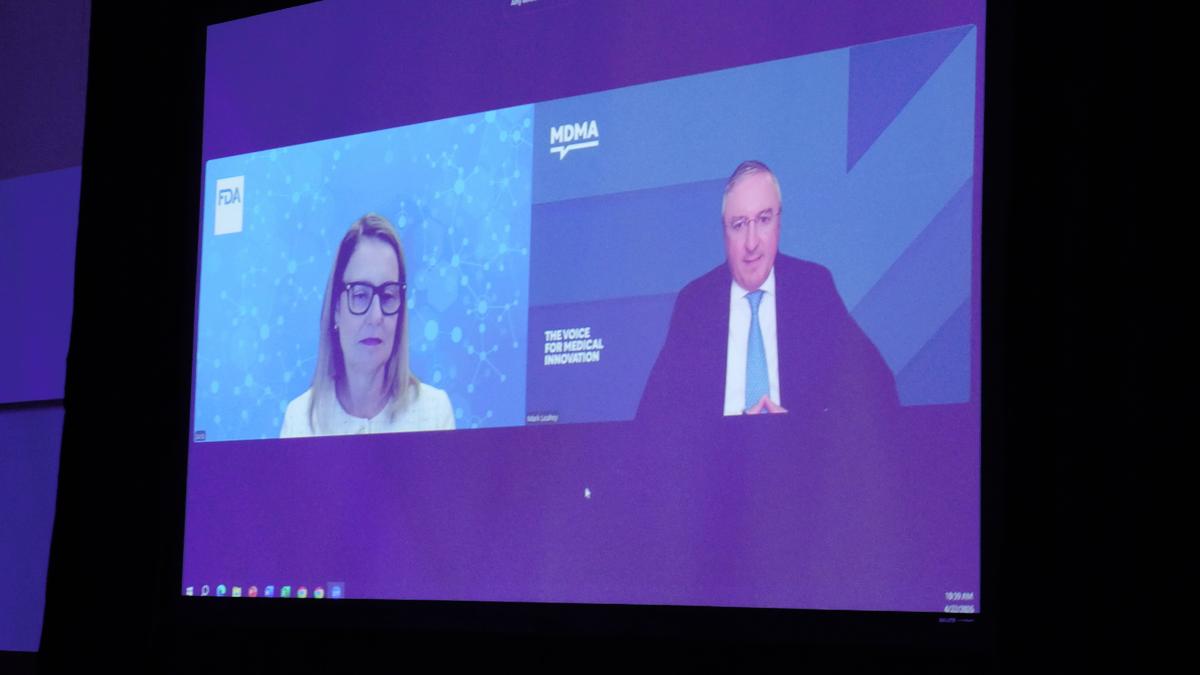
Mark Leahey, president and chief executive officer of the Medical Device Manufacturers Association (MDMA), said that what’s left in the negotiation process is just “working to smooth out the details.” He said negotiations normally take about 18 months and noted that this is the first time in six user fee agreement negotiations that the negotiation teams met their timeline.
“I think the record timeline here, from my perspective, is directly attributable to the transparency I think that FDA had during this negotiation when there’s been obviously broader dynamics that that were impacting staffing and resources,” Leahey told attendees.
Leahey noted that these dynamics predated the change in presidential administrations and go back to 2024. Another change, he said, was that the negotiation teams met in person for the first time since the COVID-19 pandemic. In-person meetings created “the level of transparency and collaboration and the focus on patient safety, I think, that all allowed us to lean in and find those win-wins, which ultimately resulted in a really efficient process,” he said.
MDUFA VI changes
Marsden said that under the agreement in principle, user fee funding will stay largely the same between MDUFA V and MDUFA VI. She noted that the agency set and met performance goals at or above 90% in many cases, and these goals will be very similar to MDUFA V.
“MDUFA VI has no new major initiatives, programs, or pilots, but rather focuses on strengthening what is already working from MDUFA V and investing resources in targeted programmatic enhancements. Performance will remain strong, with steady state free market performance goals,” she explained.
Marsden highlighted three pillars of MDUFA VI under the agreement-in-principle: strengthening core review fundamentals, elevating the quality of the journey, and optimizing transparency and accountability. There will be a more focused 45-day follow-up timeline for certain presubmissions, an interactive navigator tool to point applicants to resources, and an increase in user fees for presubmissions “to encourage more strategic and thoughtful utilization of the program.”
“The fee will function as a credit toward subsequent future fee-paying marketing submissions,” Marsden explained. “The fee will exclude breakthrough and STeP-designated devices, as well as some other submissions.”
De novo submissions will now have a specific PreSTAR template, and a 30-day walkthrough process aimed at improving efficiency that includes an extended hold time and a new “not grantable” decision option for devices.
Marsden said the idea for a “not grantable” decision option came from the success of the “not approvable” letter for premarket approval (PMA) applications. Creating a “not grantable” letter for de novo devices would give the applicant "another bite at the apple, per se, before getting the decline letter, and so we're going to try that in MDUFA VI and see if that is helpful in getting more applicants to a grant decision,” she said.
MDUFA VI will also focus more on improving deficiencies through dedicated programmatic support, an ongoing industry survey, and staff training on clearer communication regarding deficiencies. FDA officials will also increase review consistency by focusing on improving review practices in one target area per year (RELATED: MDUFA VI: Industry seeks changes to de novo, pre-submission programs, Regulatory Focus 11 February 2026).
Marsden said MDUFA VI will expand seven areas in the total product lifecycle of the medical device, including real-world evidence, consensus standards, global alignment, a new version of the Total Product Life Cycle Advisory Program (TAP 2.0), improvements to digital infrastructure, digital health, and patient science.
“The bottom line, these efforts work together to create a more coordinated, predictable, and innovative, friendly regulatory ecosystem,” she said.
Other changes to MDUFA VI include changing the fee structure for small businesses and foreign establishment registration. The program is also gaining more operating reserve and carryover levels, “doubling our operating reserve floor to protect the program from lengthy lapses in appropriations,” Marsden said.
“Collectively, these efforts provide greater clarity into how the program is funded, resourced, and managed,” she said. “MDUFA VI strengthens the foundation for a transparent, accountable, and sustainable program that can continue to deliver for patients.”
Staffing and capacity
Marsden acknowledged several times throughout the presentation that the agency had achieved its MDUFA goals despite resourcing and capacity constraints.
Responding to a comment from an attendee about FDA reviewers not responding timely to 513(g) submissions, Marsden noted that “these are things that happen when we are pushed to our limit.”
“We’re running out of bandwidth to get all of our work done, and over the past year, it's been a challenge for us,” she said.
“We've lost staff that used to manage that program, as well as the reviewers in general are just limited in bandwidth,” she added.
Under MDUFA VI, resource capacity planning and management will be built into the agreement in principle to allow FDA officials to make capacity decisions and ensure performance goals continue to be met.
MDUFA VI timeline
Marsden said FDA is currently drafting the formal commitment letter, and will send it to the agency, the Department of Health and Human Services, and the Office of Management and Budget between April and July.
Between August and December, FDA plans to brief Congress, publish the draft in the Federal Register, and seek public comment. The goal is to send the package to Congress for reauthorization by January 15, 2027.
“This timeline ensures we meet all statutory requirements while providing ample opportunity for careful drafting, needed reviews, and external stakeholder input,” Marsden said.