Diamantas backtracks on Makary’s policies issued in journal articles
The acting commissioner of the US Food and Drug Administration (FDA) has clarified that certain policies disseminated in medical journals by former FDA Commissioner Marty Makary are not official agency policy or guidance.
Makary and former Center for Biologics Evaluation and Research (CBER) Director Vinay Prasad authored two journal articles that purported to establish policies related to trial designs for chimeric antigen receptor T-cell therapies in oncology and a plausible mechanism pathway for personalized medicines. The publication of these articles raised questions from several observers, as they appeared to define agency policies outside of formal rulemaking or notice and comment processes.
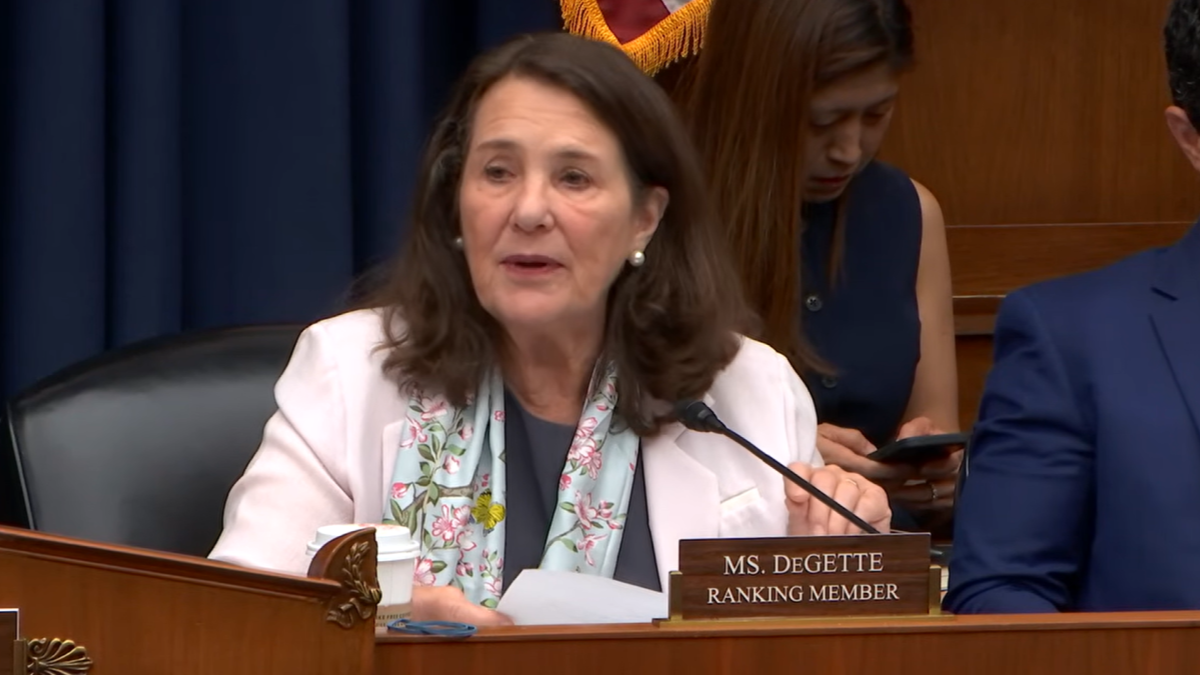
During a House Energy and Commerce (E&C) hearing on Monday, Rep. Diana DeGette (D-CO) said that Acting FDA Commissioner Kyle Diamantas has assured her that some of the agency's major policy announcements from the past year are not to be treated as guidance or policy. DeGette, the ranking member of the E&C health subcommittee criticized Makary for circumventing the agency’s typical policymaking processes by making major policy announcements in journal articles, press releases, and podcasts.
“In February, I sent a letter to FDA regarding the agency's failure to follow its own good guidance practices, announcing policies through journal articles, etc., etc., which is expressly prohibited in regulation,” said DeGette. “Last week, the agency finally responded indicating the announcements we asked about were not in fact guidance and did not communicate FDA policies on those issues.”
In a letter to Makary dated 11 March 2026 and reviewed by Focus, DeGette asked whether an article published in JAMA by Makary and Prasad on CAR T-cell therapies was being treated as guidance by regulators. In the JAMA article, Makary and Prasad said the agency will generally require randomized controlled trials to support the approval of CAR T-cell therapies to treat cancer, except in certain circumstances, such as treatments for rare or multiple relapsed or refractory populations. (RELATED: FDA to tighten approval requirements for CAR T-cell therapies, Regulatory Focus 9 December 2025)
"Communicating through informal means an overhaul of clinical trial requirements for CAR T-cell therapy approval—what appears to be a significant change in FDA’s regulatory expectations of sponsors—is expressly prohibited by FDA’s [good guidance practices (GGP)]," said DeGette. "Publication of such information behind an academic journal’s paywall, with no opportunity for public comment in an open docket, prevents meaningful public access and input.
"Further, the evidentiary standards for CAR T-cell therapies outlined in the article contradict those published through formal guidance and still available on FDA’s website, clouding and likely complicating the pathway to approval for therapies with high magnitude for impact," she added.
In a response from Diamantas obtained by Focus, the acting commissioner assured DeGette that the article is not being used by the agency in its regulatory decisions and is not considered a guidance.
“No, the intent of the article was not to communicate FDA policy on, or interpretation of, a regulatory issue,” said Diamantas. “The purpose was to provide a retrospective analysis of experience to date with Chimeric Antigen Receptor (CAR) T-cell therapies, and to describe possible considerations for future CAR T-cell products as the field continues to mature based on scientific and clinical experience.”
Similarly, DeGette raised concerns about Makary's April 2025 announcement on the Megyn Kelly Show podcast that the agency would establish a new approval pathway for ultra-rare diseases, which was followed up by an article in November 2025 in the New England Journal of Medicine (NEJM) authored by Makary and Prasad. The NEJM article indicated that the pathway had already been established. That too was followed up by a draft guidance on the topic by FDA in February 2026 and announced during a press conference at the Health and Human Services Department. (RELATED: FDA proposes plausible mechanism pathway for ultra-rare disease therapies, Regulatory Focus 23 February)
"Communication of significant policy ideas through a talk show does not give industry the tools it needs to pursue new evidentiary standards, nor allow scientists to deliberate it. Your use of the term 'conditional approval' and 'plausible mechanism' on the Megyn Kelly Show raises questions about whether they were intended as general, non-technical descriptions viewers of the show would understand, or as deliberate signals of new approval criteria," said DeGette. "Neither the NEJM article nor the Megyn Kelly Show announcements indicated FDA intended to clarify by releasing formal guidance.
"Industry had to wait more than six months, with no opportunity to comment on the new framework, for additional information that still came through informal methods of communication, and four additional months for draft guidance," she added.
Finally, DeGette raised concerns about FDA’s authority to approve new drugs under the Commissioner’s National Priority Voucher (CNPV) program which was announced in a frequently-asked-question (FAQ) document. The program gives non-transferrable vouchers to drug manufacturers that make drugs in the US and meet national security requirements, allowing a shorter review period, better access to agency officials, and eligibility for accelerated approval. (RELATED: FDA announces new voucher program for drugs tied to national priorities, Regulatory Focus 17 June 2025)
The authority to implement the program has also been of concern for industry stakeholders. (RELATED: Industry groups press FDA for transparency, next steps for CNPV program, Regulatory Focus 7 July 2025)
“Announcement of a brand-new priority review pathway via FAQ document, rather than formal guidance, raises questions about the program’s durability,” said DeGette. “Developers’ time horizons for planning extend over many years; they cannot dramatically change direction in existing studies or investments without the assurances of consistency that typically accompany formal and deliberate guidance development.
“The improper method of communication also risks disparate treatment of industry and inconsistent application of the program across review divisions, given FDA’s failure to provide agency staff precise guidance for implementing an amended review process,” she added. “FAQ documents, press releases, and public videos achieve an entirely different objective than technical guidance documents do for division staff.”
In both cases, Diamantas again reassured DeGette that neither the NEJM article nor the FAQ document was to be considered FDA policy or interpreted for regulatory purposes. In terms of the CNPV, he said the agency is evaluating the need to issue guidance and the agency may be further updating and refining the program based on stakeholder feedback.
"Evaluations have been made on a case-by-case basis, consistent with the (CNPV) pilot's need for flexibility," said Diamantas. "Importantly, receiving a voucher does not indicate a higher likelihood of approval or any reduction in evidentiary standards.
"Through an iterative screening process involving discussion with relevant subject matter experts, review of the scientific literature and consensus-based selection, the final voucher selection decision rests with the Commissioner or a delegated official (e.g., Deputy Chief Medical Officer), who considers input from relevant FDA components, as well as the overall balance between national priority alignment and operational feasibility," he added. "The Commissioner or delegated official has three options: select a product for voucher issuance, defer the decision pending additional information, or decline selection without prejudice to future consideration."
Following receipt of Diamantas’ response, DeGette voiced more confidence in the acting commissioner to helm FDA compared to his predecessor. She noted that the agency seems to be returning to more normalcy and is rebuilding its capabilities after last year’s mass firings by the Department of Government Efficiency (DOGE).
“Luckily, with the evidence that Makary is gone, things do seem to be slowly improving, and this is what I'm hearing from the community,” said DeGette. “The agency is now in the process of hiring thousands of staff to fill critical gaps, though it is hindered by the reputational damage to the agency by Makary and DOGE.
“There are responsible leaders atop the FDA and acting Commissioner Kyle Diamantas has shown every indication that he will empower career experts to do their jobs and protect American patients and get good products to market,” she added.