Expert: FDA’s real-time release of CRLs may violate law, hinder discussion with sponsors
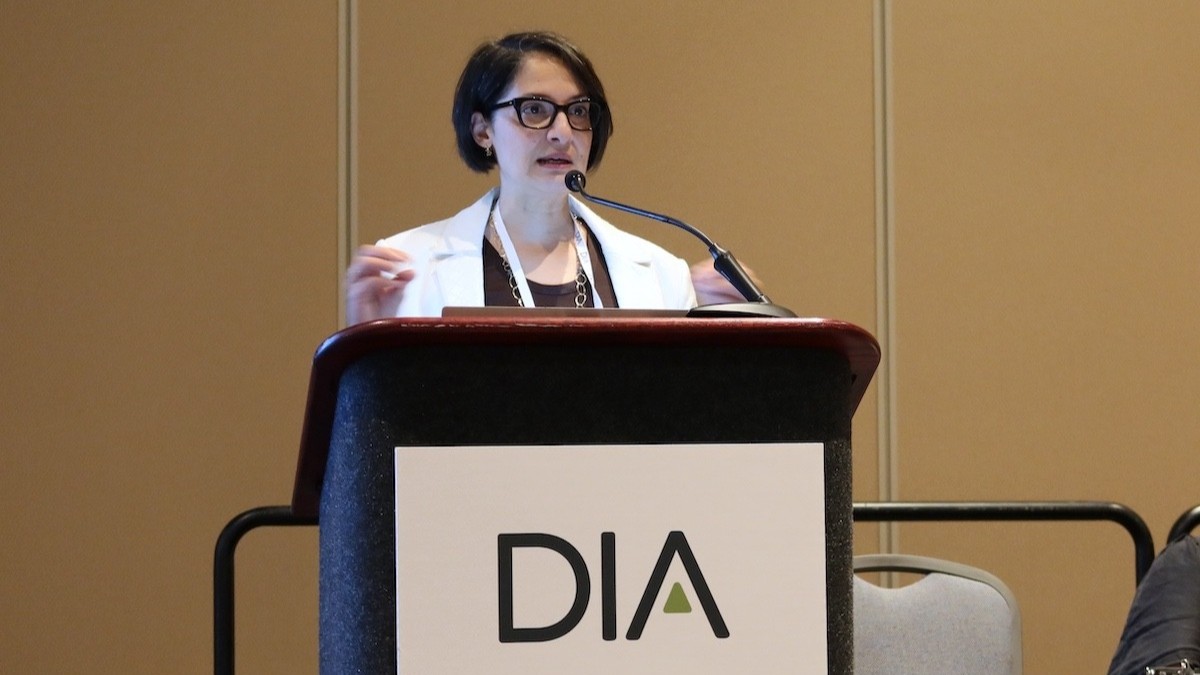
PHILADELPHIA – The US Food and Drug Administration’s (FDA) publication of complete response letters (CRLs) for unapproved drugs violates the agency’s own regulations and the Administrative Procedure Act, asserted Eva Temkin, an attorney with Arnold & Porter who spoke at the DIA Global Annual Meeting on Monday.
A recent citizen petition filed by law firm Covington & Burling also questions the FDA's authority to issue CRLs before applications have been approved and without providing the sponsors of those applications an opportunity to engage in the redaction process.
In July 2025, the FDA announced it would publish CRLs for unapproved products as part of a move towards "radical transparency" under former Commissioner Marty Makary. (RELATED: FDA publishes 200 complete response letters in transparency effort, Regulatory Focus 10 July 2025)
Temkin said that FDA regulations prohibit the agency from disclosing the existence of an application before issuing an approval letter or a tentative approval letter to the applicant. This restriction also applies to the existence of an Investigational New Drug (IND) application.
These regulations, outlined in 21 CFR 20.61, require the FDA to protect much of the information obtained in a pending application as a commercial secret. Information is only made public after a drug is approved, and any disclosures are redacted to safeguard confidential commercial information and trade secrets.
She added that “there is an exception to this prohibition once the existence of the application or abbreviated application has been previously publicly disclosed or acknowledged,” but said this exception is rarely used.
Temkin stated that FDA took this action without any public engagement. She emphasized that this matter should have undergone the public hearing process and argued that the FDA’s failure to adhere to the notice and comment rulemaking also constitutes a violation of the Administrative Procedure Act.
During a question-and-answer session, the panel moderator, Lina AlJuburi of Sanofi, asked the panelists to discuss whether the publication of these letters has changed sponsors’ regulatory strategies.
Temkin said that one consequence of this action is she is already seeing “a lot of retrenchment” from the open dialogue that used to characterize the discussions between FDA and the industry in meetings on their applications.
“There is a lot more concern about what will be reflected in the meeting minutes,” she said, adding that “if the CRL letters can be published on a dime, what is to prevent them from disclosing other parts of an application?”
Amanda Conti, a senior research analyst at AgencyIQ, reported that in its annual federal budget request published on 3 April 2026, the FDA sought enhanced legislative authority regarding the publication of CRLs. The agency is requesting an amendment to the Federal Food, Drug, and Cosmetic Act (FDCA) to strengthen the current disclosure requirements, which could potentially expand the range of information it makes available.
“Another read of the request is that the agency is also concerned it might lack the authority to release CRLs” before drugs are approved,” Conti said.
Conti noted that the FDA is already being challenged by its July action. On 21 April 2026, FDA received a citizen petition from Covington & Burling concerning the release of CRLs. The petition, which was filed on behalf of a pharmaceutical company, requests that the FDA establish a clear process that provides sponsors with notice and an opportunity to respond to proposed disclosures of CRLs associated with unapproved applications, whether they are pending or withdrawn.
She further noted that “similar to other Makary-led projects and programs, the future of the new CRL approach is unclear.”