ICH adopts M13A guideline on bioequivalence testing
The International Council for Harmonisation (ICH) recently adopted its M13A guideline, which aims to harmonize the framework for assessing the bioequivalence (BE) of immediate-release (IR) solid oral dosage forms and assessing BE after postapproval changes. ICH also released a questions and answers (Q&A) document to provide more clarity on the concepts in the guideline.The guideline aims to eliminate the need for sponsors to conduct additional BE studies due to divergent regulatory requirements to support marketing authorizations in different jurisdictions.
FDA released the guidance for public consultation on 1 February 2023 after the draft guidance reached Step 2 of the ICH process in December 2022. (RELATED: ICH releases draft guideline proposing harmonized bioequivalence testing, Regulatory Focus 3 January 2023).
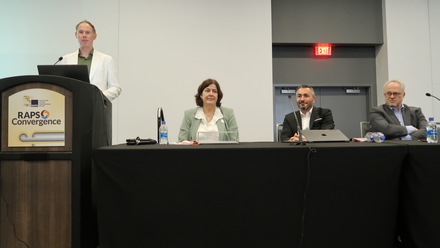
Lei Zhang, of the US Food and Drug Administration (FDA) and the rapporteur of the M13A Expert Working Group, told a PQRI/EUFEPS meeting earlier this year that adoption of the guideline was expected this summer, further noting that the guideline will impact a “large portion of the generic drug market” and its adoption means FDA will have to revise a majority of its product-specific guidance (PSGS) for IR solid oral dosage products. (RELATED: ICH M13A BE testing guideline expected to be adopted this summer, Regulatory Focus 17 April 2024).
This is the first in a series of three ICH guidelines to address BE; a forthcoming M13B guideline will describe biowaiver considerations for additional strengths not investigated in BE studies and M13C will address BE assessments for highly variable drugs.
The guideline covers BE study designs, including study populations, study designs, the test and comparator products, fasting and fed study conditions, the dose or strength to be studied, and the moieties to be measured.
Some of the high-level principles are as follows:
- The BE study should be performed in healthy subjects unless the drug carries safety concerns that make this approach unethical;
- The guidance recommends a randomized, single-dose, crossover study design when comparing test and comparator formulations and treatment periods should be separated by a sufficiently long washout period;
- The test product should originate from a batch of at least 1/10 of production scale or 100,000 units, whichever is greater, unless otherwise justified. In the case of a production batch smaller than 100,000 units, a full production batch is required;
- The design of a BE study depends on whether the study is conducted under fasting or fed conditions and the meal type and whether the test product is a non-risk or high-risk product;
- The BE study report should be written in accordance with ICH E3, Structure and Content of Clinical Study Reports.
The adopted guideline does not differ significantly from the Step 2 version, though there is some additional text in the section 2.1.1 on the study population. The text states that “If the investigated active substance is known to have adverse effects and the pharmacological effects or risks are considered unacceptable for healthy subjects, the study may instead be conducted in a targeted patient population under suitable precautions and supervision.” There is also additional text in section 2.1.5 on fasting and fed study conditions.
ICH M13A, Q&A