Repurposing generic drugs: Experts envision new regulatory pathway
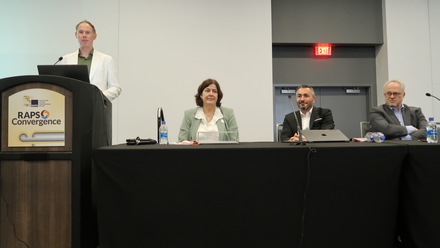
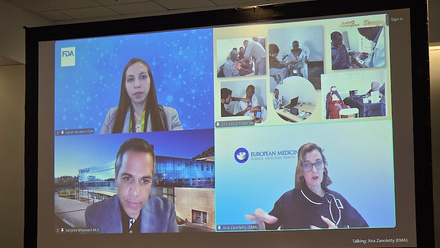
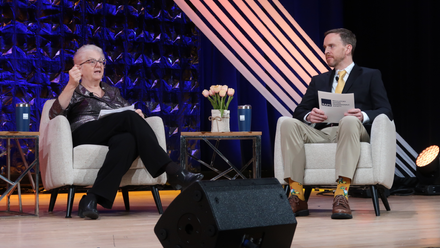
Officials from nonprofit organizations, along with a former high-ranking US Food and Drug Administration (FDA) official, are considering mechanism to encouraging nonprofits to repurpose existing generic drugs for new uses. This discussion took place during a workshop on 29 May, hosted by the Duke Margolis Institute for Health Policy.One proposal would be to create a new regulatory pathway for labeling-only 505(b)(2) submissions specifically designed for nonprofit organizations. Supporters argue that this pathway would address a gap in the repurposing of older generic drugs for new uses, as there is currently limited financial incentive for generic drug companies to pursue these repurposing efforts.
David Fajgenbaum, founder of Every Cure, said that “we have done a pretty good job of treating the same 4,000 diseases with the same 4,000 drugs, but there are 14,000 diseases without a single approved therapy.” He added that “many of these 4,000 drugs can be used in new ways for these diseases.”
Devon Crittendon, director of strategy and operations for Reboot RX, noted that nonprofit organizations are increasing their efforts to repurpose existing drugs for new purposes because manufacturers lack the financial incentives to explore new uses of existing non-patented drugs.
To further promote these efforts, Crittenden proposed extending the existing 505(b)(2) program for new drug applications by introducing a labeling only option. This would allow non-manufacturers, such as nonprofit organizations, to reference the chemistry, manufacturing, and controls (CMC) information from previously approved applications while providing the FDA with samples of these products. Additionally, these sponsors would be required to submit studies from the scientific literature to support the repurposing of the drug.
Janet Woodcock, former principal deputy commissioner director of FDA and long-time director of the Center for Drug Evaluation and Research (CDER), agreed on the need for such a regulatory framework.
“There are no real incentives for drug companies to [repurpose]. For profits don’t do this, and nonprofits lack the resources and can’t navigate the regulatory process.”
Woodcock said that the 505(b)(2) labeling option would fulfill a need to get more product labeling up to date. “Drug labels are supposed to be a gold standard for regulators; they often get out of date once generics are available. I can tell you that labels are rarely used by practitioners. Practitioners do not look at old labels; they will look at anything else. This is not a good look for the agency; they can't maintain this as a gold standard and have out-of-date labels.”
Woodcock added that the generic drug and new drug review processes and user fees programs “were put into place for the profit drug industry in mind.” Yet traditional drug manufacturers “are not fit for this type of work. There is no FDA infrastructure for nonprofit reimbursements and the current label update processes do not fit.”
Although a regulatory platform does not currently exist, the FDA has encouraged drug repurposing through its CURE ID platform, said Heather Stone, a health policy analyst at FDA.
The CURE ID platform was developed to enable clinicians to report off-label uses of drugs with the goal of generating information for treating diseases with no known cure. CURE ID is a collaborative program involving FDA and the National Center for Advancing Translational Sciences (NCATS), part of the National Institutes of Health (NIH).
Stone explained that, through the CURE programs, clinicians were able to repurpose a drug to treat a patient with Balamuthia mandrillaris, a rare infection of the central nervous system caused by an amoeba. After receiving experimental treatment with nitroxoline, a drug commonly used for urinary tract infections, the patient survived and made a full recovery. His medical team at UCSF discovered a study published several years earlier that demonstrated the drug's effectiveness against the infection in laboratory settings.
Stone mentioned that the program was launched to tackle the need for drug repurposing. This often begins in clinical practice through off-label use when clinicians face challenging diseases. However, these experiences are seldom documented, making it difficult to determine whether these drugs are effective, ineffective, or potentially harmful.